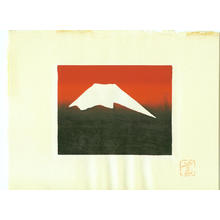
Mt Fuji
by Kaoru Kawano
- Medium:
- Woodblock print
- Source:
- Japanese Art Open Database
- Image courtesy of
- Japanese Art Open Database
Description
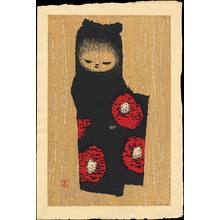
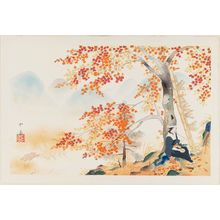
Kawano's treatment of Mount Fuji represents a departure from the [bijin-ga](/glossary/bijin-ga) figure work for which he is best known, placing him in dialogue with the long [meisho-e](/glossary/meisho-e) tradition of famous-place prints that runs from Hokusai through Hiroshi Yoshida and into the postwar [sosaku-hanga](/glossary/sosaku-hanga) movement. A second variant in his Fuji series, this print likely presents a distinct viewpoint, season, or palette from its companion. Kawano's sosaku-hanga approach to landscape would emphasize strong, simplified forms over the atmospheric gradation of [bokashi](/glossary/bokashi) seen in earlier meisho-e: the mountain's geometry reduced to a bold silhouette, foreground elements — water, shore, or vegetation — treated as flat graphic planes. The carving would retain the expressive directness of his figure work, carrying the gesture of the artist's hand into the natural subject. A limited Japanese print tradition connects Fuji's geometry to modernist formal reduction, and Kawano's version contributes to this lineage through the same graphic economy he applied to his figure compositions.