
Ichikawa Danjuro V as a Travelling Warrior
- Date:
- late 1780s
- Medium:
- color woodblock print
- Source:
- Cleveland Museum of Art
Description
Dated to the late 1780s and held by the Cleveland Museum of Art, this Katsukawa Shunkō print depicts Ichikawa Danjūrō V as a travelling warrior. Ichikawa Danjūrō V (1741–1806) was perhaps the most celebrated kabuki actor of the entire eighteenth century — the head of the Ichikawa acting family, the defining performer of aragoto (rough-style) male roles, and the central star of Edo theater for over three decades. His portraits dominate the Katsukawa-school print output of the 1770s and 1780s, and Shunkō, like his teacher Shunshō, produced numerous portraits of him in various roles. The travelling-warrior role (a wandering samurai, often disguised or undercover) was a recurring kabuki type that gave actors opportunities to display both martial skill and the visual interest of road costume — straw sandals, kasa (woven hat), bundled travel gear. Shunkō's print captures Danjūrō V's distinctive features, including the strong-jawed face that became one of the most recognizable likenesses in late-eighteenth-century Edo print culture. The late-1780s date places this work in Shunkō's last productive years before his stroke. The Cleveland Museum of Art's collection of Danjūrō V portraits across multiple designers and roles provides an exceptional record of the period's most important kabuki star.
More Prints by Katsukawa Shunkō
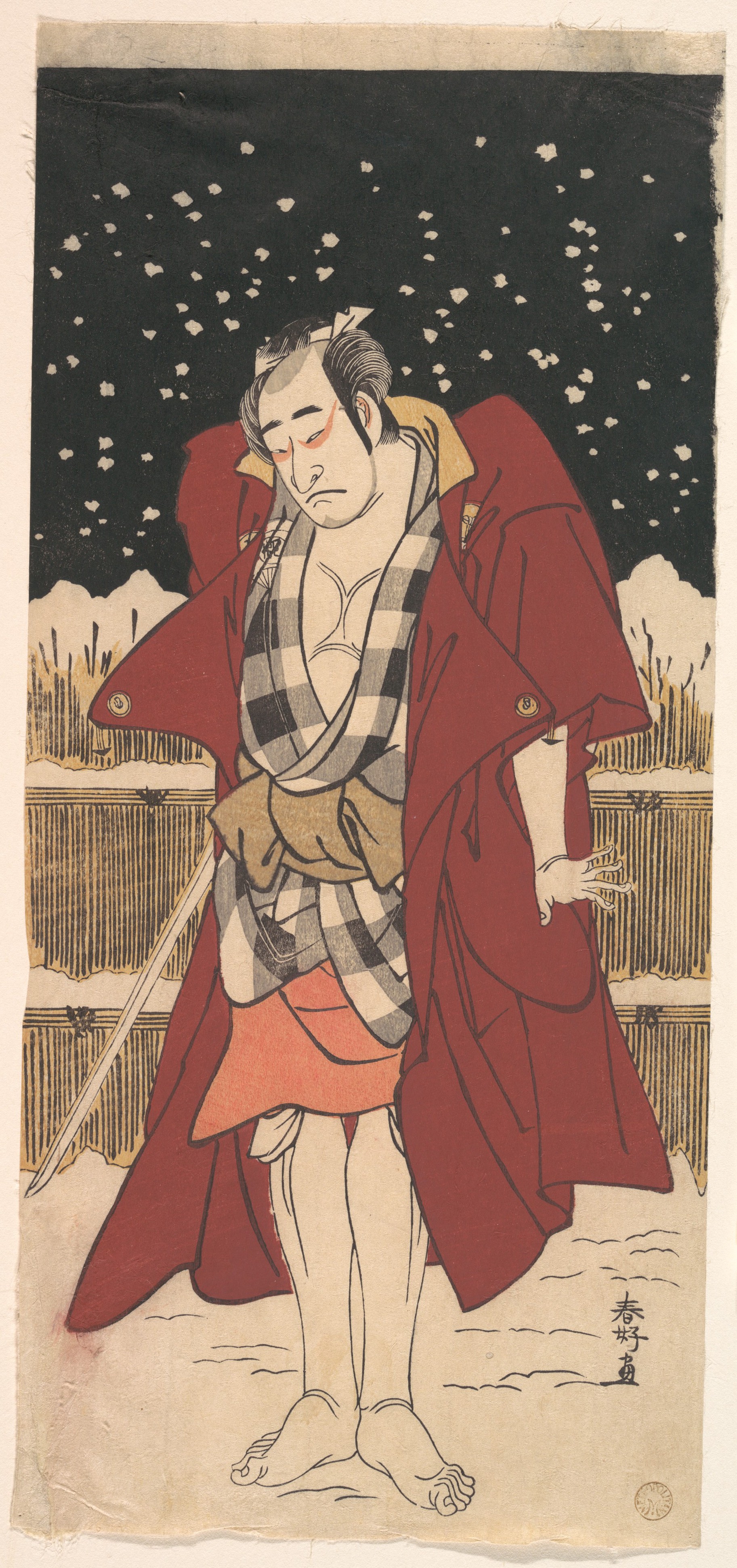
Onoe Matsusuke as Man Armed with a Sword, Standing in Snow before a Fence
1786
Woodblock print; ink and color on paper

Blue and Red Macaws
early 20th century
Color woodblock print

Waitress at a Seaside Teahouse
late 18th century
Color woodblock print; hashira-e
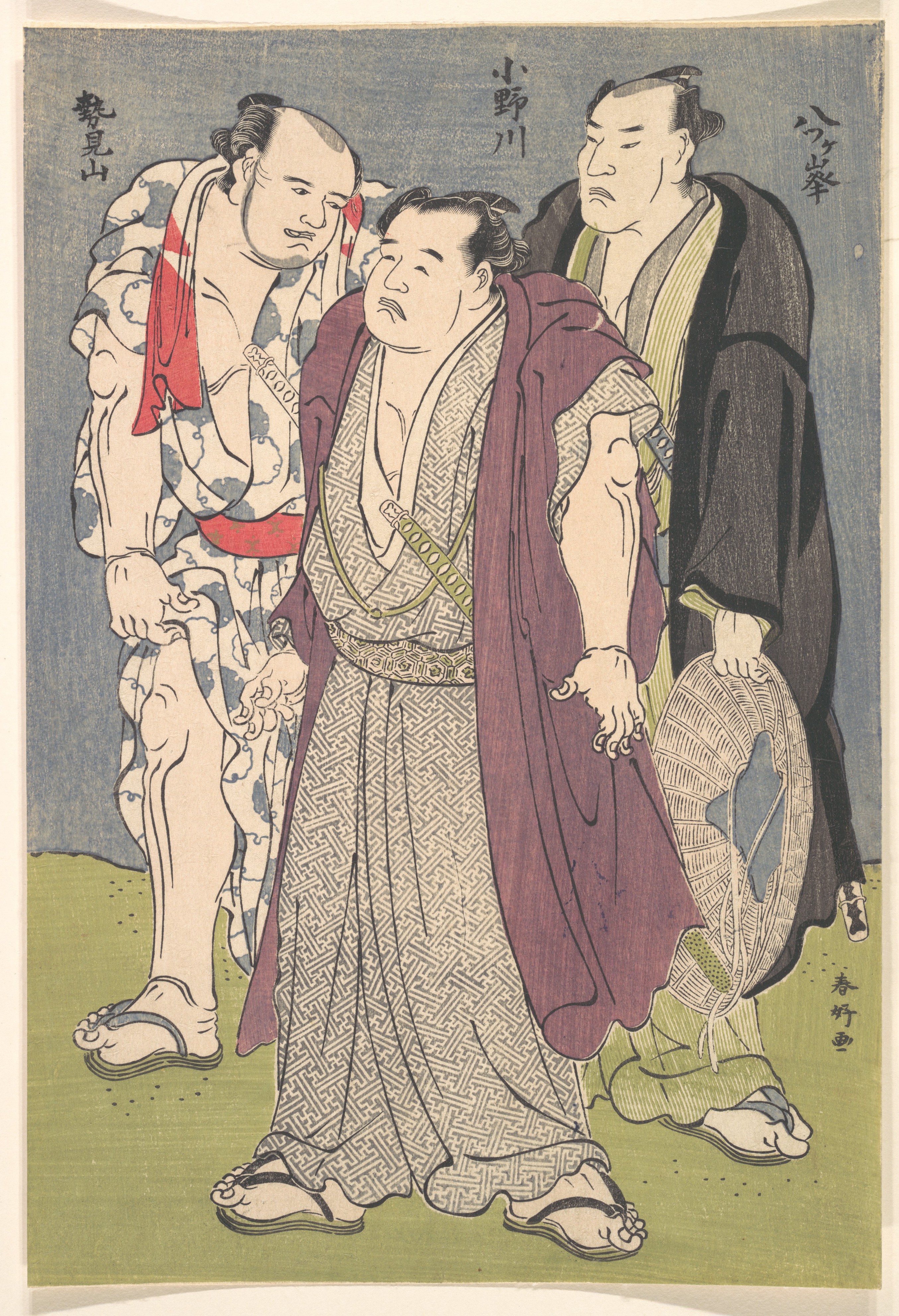
Three Sumō Wrestlers: Onogawa, Seimiyama, and Yatsugamine
ca. 1790s
Woodblock print; ink and color on paper
Frequently Asked Questions
Ichikawa Danjuro V as a Travelling Warrior was created by Katsukawa Shunkō (勝川春好) in late 1780s.