
Onoe Matsusuke as a Kannen-Butsu or Mendicant Buddhist Monk
- Date:
- ca. 1790?
- Medium:
- Woodblock print; ink and color on paper
- Source:
- Metropolitan Museum of Art
Description
This Katsukawa Shunkō print, dated circa 1790 and held by the Metropolitan Museum of Art, depicts Onoe Matsusuke in the role of a kannen-butsu — a mendicant Buddhist monk who travels from house to house chanting nembutsu ("Namu Amida Butsu") to solicit alms. Kannen-butsu were a recognizable type within Edo street life and figured frequently in kabuki and ukiyo-e as representatives of religious itinerancy, social marginality, and concealed identity. The role provided actors with opportunities for vocal display (the chanted nembutsu) and for visual transformation through monastic robes, a wide straw hat (komusō-style or amigasa), and a hand bell or wooden mokugyo drum. Onoe Matsusuke I (1744–1815) was a prominent late-eighteenth-century actor who founded the Onoe acting family that would later include the celebrated Onoe Kikugorō line. Shunkō's portrait captures both the costuming of the role and the recognizable face of the actor underneath — the Katsukawa-school commitment to individual likeness within the conventions of the part. The Metropolitan's dating of circa 1790 places this work in Shunkō's last productive years, just before his stroke ended his print designing career.
More Prints by Katsukawa Shunkō
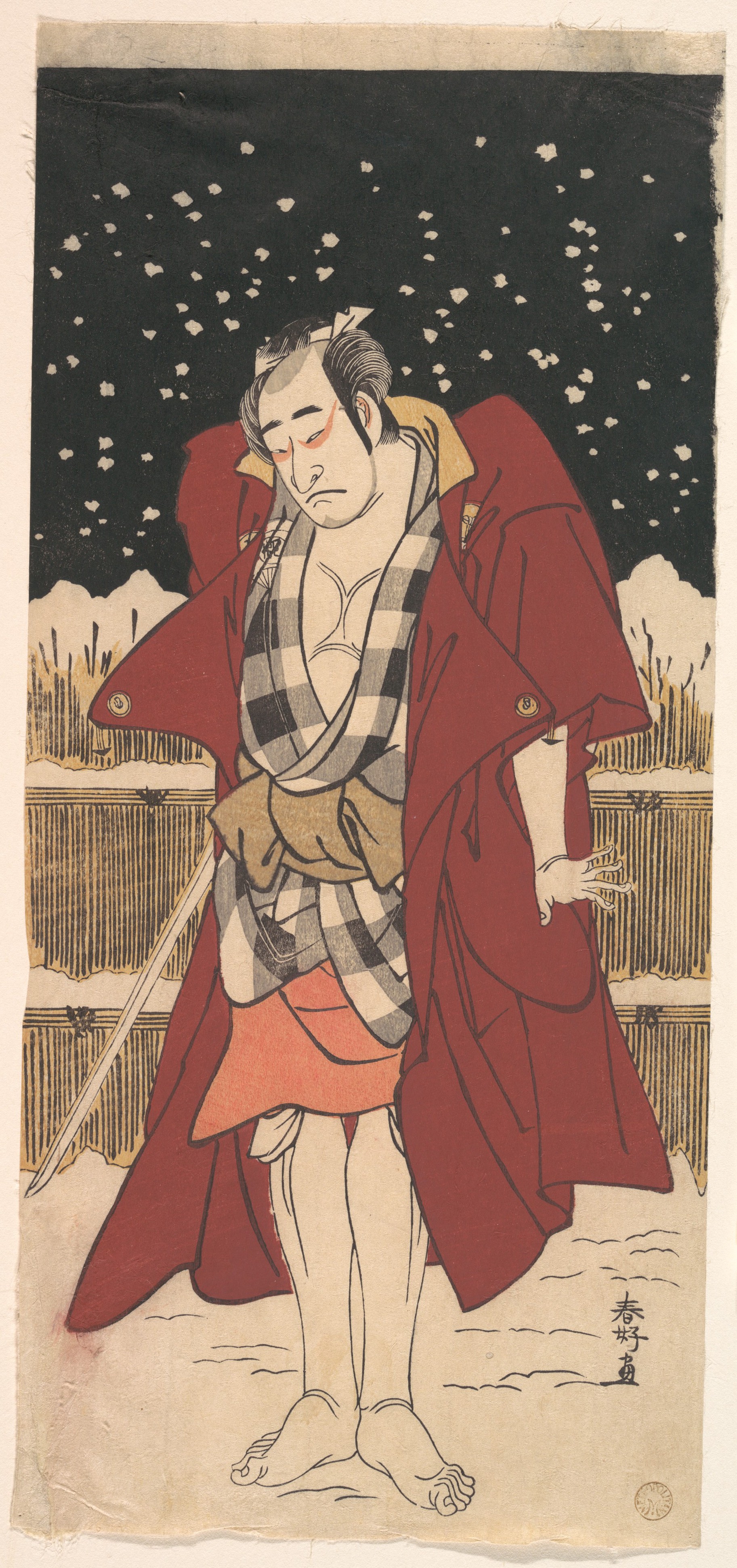
Onoe Matsusuke as Man Armed with a Sword, Standing in Snow before a Fence
1786
Woodblock print; ink and color on paper

Blue and Red Macaws
early 20th century
Color woodblock print

Waitress at a Seaside Teahouse
late 18th century
Color woodblock print; hashira-e
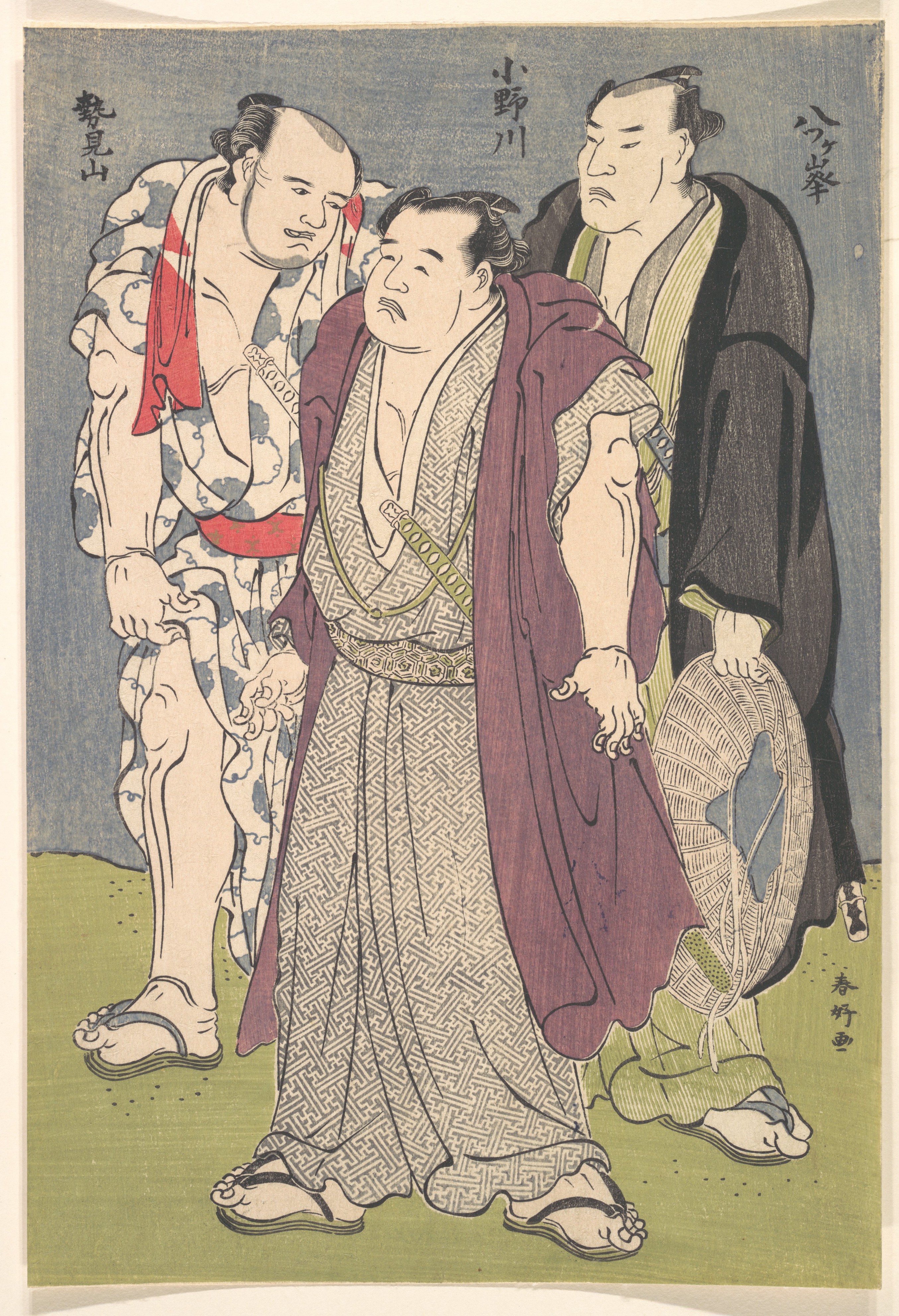
Three Sumō Wrestlers: Onogawa, Seimiyama, and Yatsugamine
ca. 1790s
Woodblock print; ink and color on paper
Frequently Asked Questions
Onoe Matsusuke as a Kannen-Butsu or Mendicant Buddhist Monk was created by Katsukawa Shunkō (勝川春好) in ca. 1790?.