
No. 3: Kato Kiyomasa, from the series "Three Tales of Valor (Buyu sanban tsuzuki)"
- Date:
- 1820
- Medium:
- Color woodblock print; shikishiban, surimono
- Source:
- Art Institute of Chicago
Description
Dated 1820 and held by the Art Institute of Chicago (accession 1954.718), this Katsukawa Shuntei shikishiban surimono is the third print in the series Three Tales of Valor (Buyu sanban tsuzuki). The subject is Katō Kiyomasa (1562–1611), one of the most celebrated warrior figures of the late sixteenth-century Sengoku period and Edo-period popular imagination. Kiyomasa was a leading general under Toyotomi Hideyoshi, played a prominent role in the Japanese invasions of Korea in 1592 and 1597, and later became the first Tokugawa-period daimyō of Higo Province. By the late eighteenth and early nineteenth centuries his historical figure had been fully absorbed into Edo popular culture as a quintessential exemplar of samurai valor — celebrated in kabuki plays, illustrated histories, and warrior prints — and his appearance in a surimono series titled Three Tales of Valor reflects this canonical status. The shikishiban surimono format used here was the standard for privately commissioned poetry-club prints of the Bunka and Bunsei eras: small (roughly 20 cm square), executed with maximum technical refinement, and distributed to members of literary networks rather than sold through commercial publishing channels. Shuntei's design participates in the late-Edo tradition of warrior surimono in which heroic historical figures supplied subject matter for poetry-club commemoration. The series belongs to Shuntei's late period: he died in 1820, the same year this print is dated, and works from his final years carry particular interest as the conclusion of a career that had developed warrior imagery as its central concern.
More Prints by Katsukawa Shuntei

A Woman as Ebisu, from the series "Seven Women as the Gods of Good Fortune for the Hanagasa Poetry Club (Hanagasaren shichifukujin)"
c. 1820
Color woodblock print; shikishiban, surimono

Chohi (Zhang Fei) on Black Horse
1810s
Color woodblock print
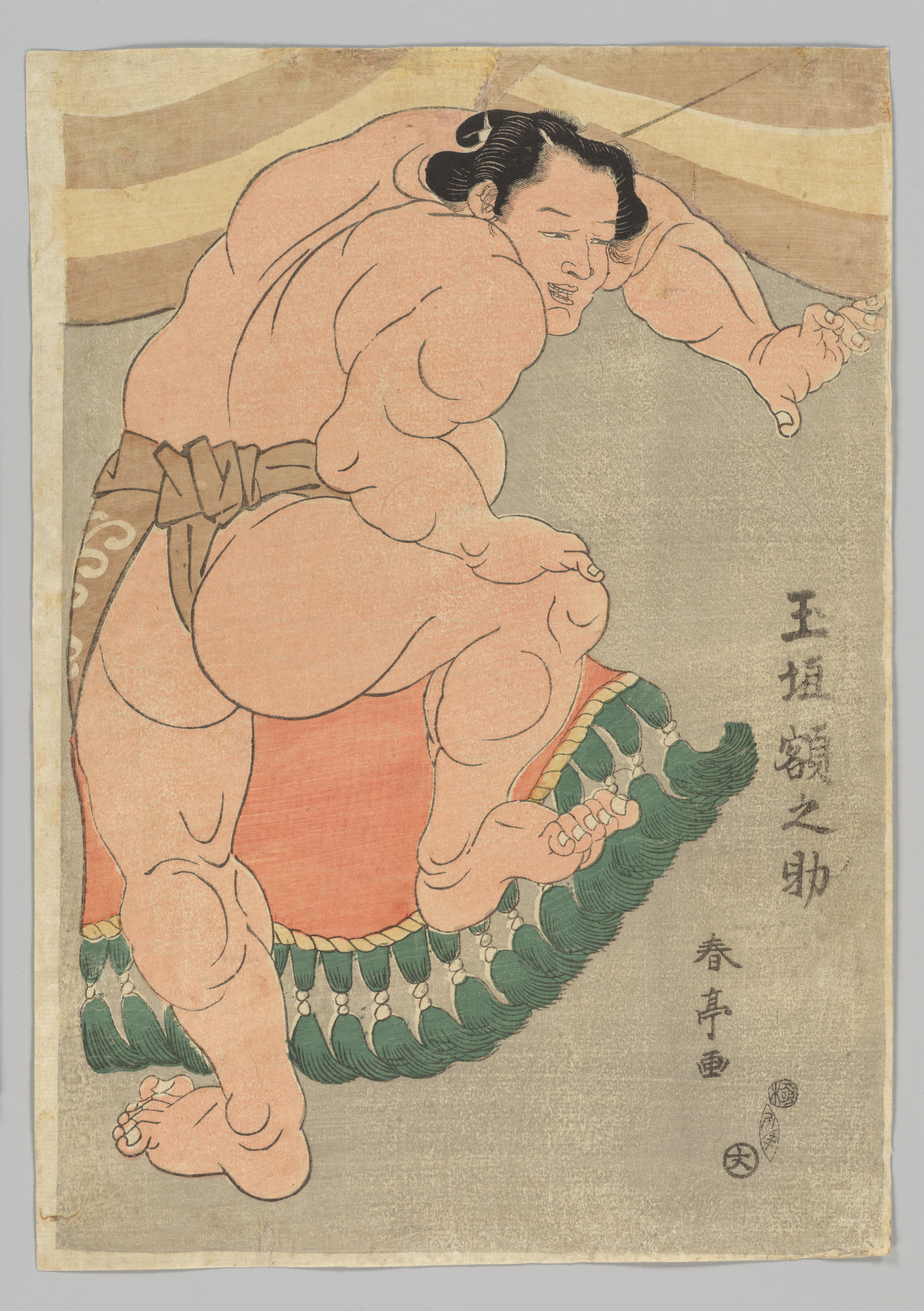
Sumo Wrestler Tamagaki Gakunosuke IV
1811-14 (possibly ca. 1813)
Wood-block print (nishiki-e); ink and color on paper

A Court Lady as Daikoku, from the series "Seven Women as the Gods of Good Fortune for the Hanagasa Poetry Club (Hanagasaren shichifukujin)"
c. 1820
Color woodblock print; shikishiban, surimono
Frequently Asked Questions
No. 3: Kato Kiyomasa, from the series "Three Tales of Valor (Buyu sanban tsuzuki)" was created by Katsukawa Shuntei (勝川春亭) in 1820.