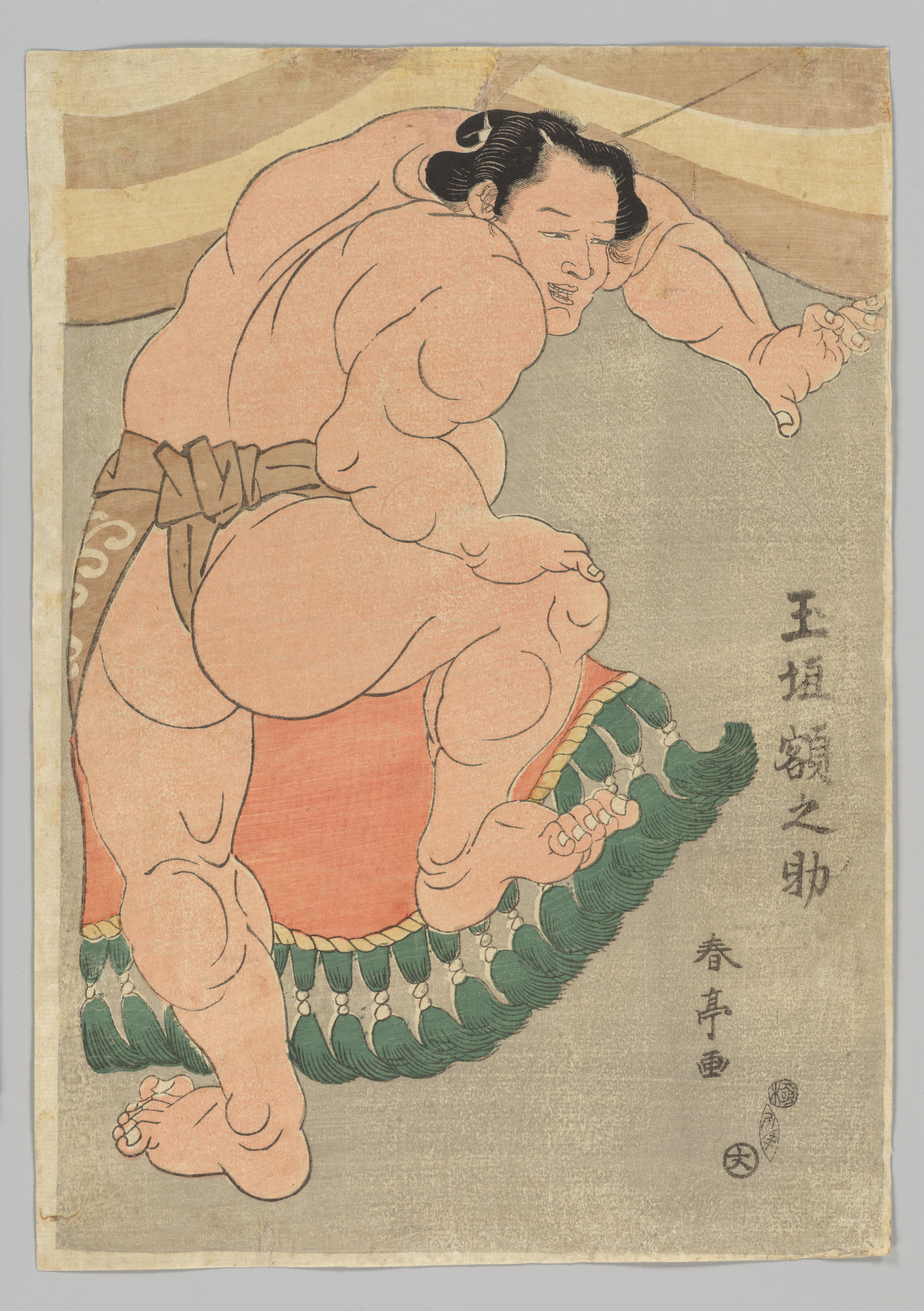
Sumo Wrestler Tamagaki Gakunosuke IV
- Date:
- 1811-14 (possibly ca. 1813)
- Medium:
- Wood-block print (nishiki-e); ink and color on paper
- Source:
- Metropolitan Museum of Art
Description
Dated to about 1813 (with a range of 1811–1814) and held by the Metropolitan Museum of Art (accession 2025.796.5), this Katsukawa Shuntei ōban print depicts the sumo wrestler Tamagaki Gakunosuke IV. Sumo prints (sumo-e) were a closely associated genre of the Katsukawa school from its founding period in the late eighteenth century onward: Katsukawa Shunshō had pioneered the documentary sumo portrait in the 1780s, and his successors Shun'ei (Shuntei's teacher) and Shunkō continued and elaborated the genre into the early nineteenth century. The vertical ōban format used here became the standard sheet size for individual wrestler portraits, accommodating the figures' substantial bulk and allowing detailed depiction of the elaborate ceremonial aprons (keshō-mawashi) that identified each wrestler by patron, gymnasium, and ranking. Edo sumo culture in the Bunka era (1804–1818) was at a peak of public popularity: regular tournaments at the Eko-in temple, ranked wrestlers as celebrity figures, and a substantial commercial print market documenting individual performers and matchups. Tamagaki Gakunosuke IV was an active wrestler of the period, his roman-numeral suffix indicating that he was the fourth holder of the Tamagaki Gakunosuke ring-name — a convention of sumo nomenclature analogous to the actor lineages of the kabuki world. Shuntei's portrait participates in the late-Katsukawa sumo-e tradition that paralleled and reinforced his warrior-print work; both genres celebrated physical prowess and individual identity in a heroic visual register. The Met acquired this impression in 2025 as part of the Pinkowitz Family gift, expanding the museum's representation of nineteenth-century sumo prints.
More Prints by Katsukawa Shuntei

No. 3: Kato Kiyomasa, from the series "Three Tales of Valor (Buyu sanban tsuzuki)"
1820
Color woodblock print; shikishiban, surimono

A Woman as Ebisu, from the series "Seven Women as the Gods of Good Fortune for the Hanagasa Poetry Club (Hanagasaren shichifukujin)"
c. 1820
Color woodblock print; shikishiban, surimono

Chohi (Zhang Fei) on Black Horse
1810s
Color woodblock print

A Court Lady as Daikoku, from the series "Seven Women as the Gods of Good Fortune for the Hanagasa Poetry Club (Hanagasaren shichifukujin)"
c. 1820
Color woodblock print; shikishiban, surimono
More Sumo Prints


Frequently Asked Questions
Sumo Wrestler Tamagaki Gakunosuke IV was created by Katsukawa Shuntei (勝川春亭) in 1811-14 (possibly ca. 1813).
Sumo Wrestler Tamagaki Gakunosuke IV depicts sumo.