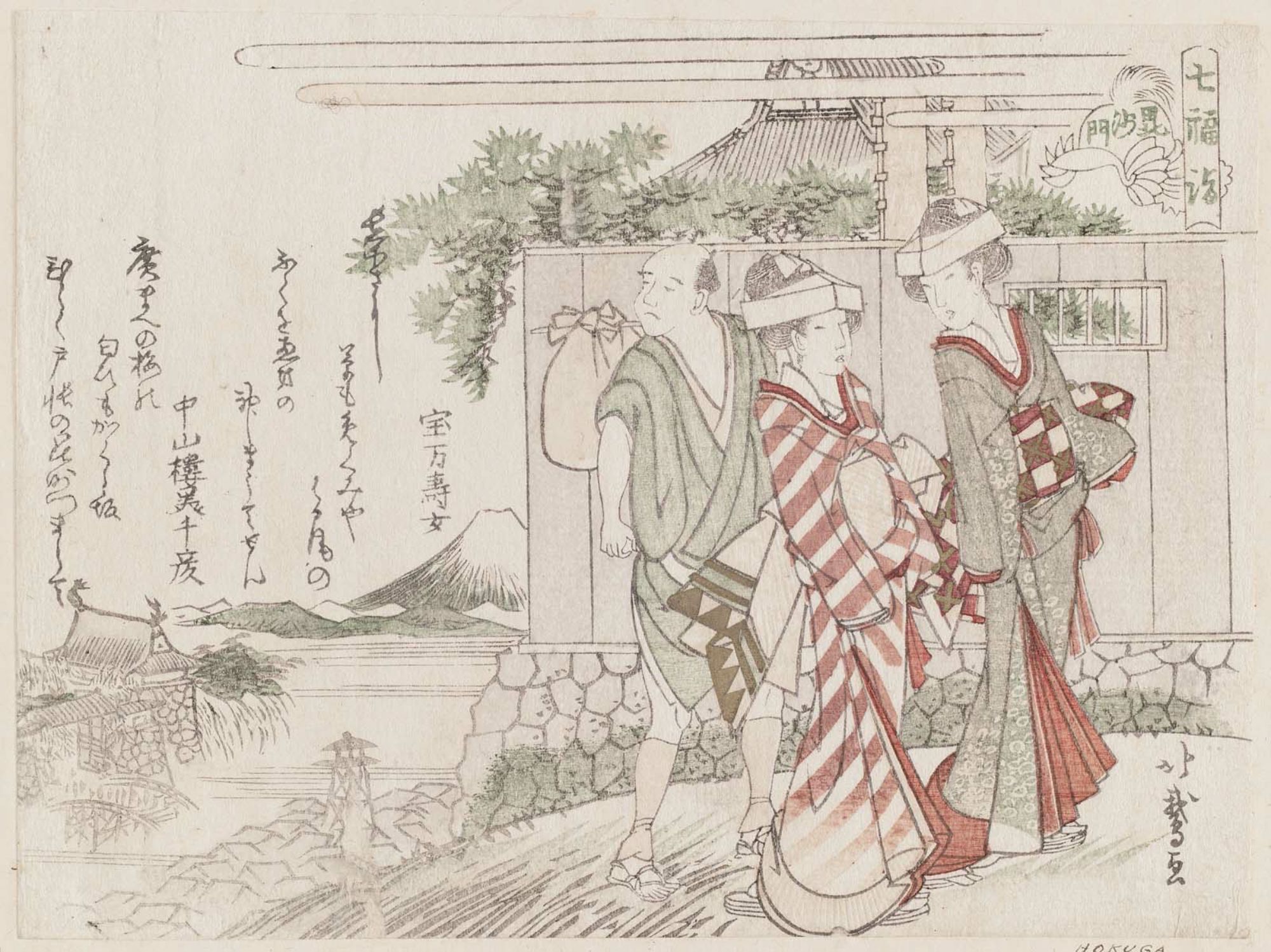
Bishamon, from the series Visiting the Shrines of the Seven Gods of Good Fortune (Shichifuku mairi)
- Date:
- Edo period, c. 1810
- Medium:
- Woodblock print (surimono); ink and color on paper
- Source:
- Museum of Fine Arts, Boston
Description
This Edo-period surimono by Katsushika Hokuga, dated to around 1810 and held by the Museum of Fine Arts, Boston (system collection identifier sc223684, MFA collection record 256100), depicts Bishamon (Bishamonten), one of the Seven Gods of Good Fortune (Shichifukujin), within Hokuga's series Visiting the Shrines of the Seven Gods of Good Fortune (Shichifuku mairi). Bishamonten, originally the Buddhist guardian deity of the north and protector of warriors, was assimilated into the Shichifukujin grouping as the patron of dignity, fortune in war, and protection from misfortune, and is typically depicted in armor holding a small pagoda in one hand and a spear or staff in the other. Hokuga's composition follows the surimono convention of pairing the figure with kyōka inscriptions occupying the upper portion of the design, with the print serving as a gift-exchange item among kyōka poetry clubs during the New Year season. The print is preserved as a woodblock print (surimono) in ink and color on paper at the MFA Boston, and belongs to a coherent acquisition group of sheets from the same series (Ebisu, Bishamon, Benten) that gives the museum a working representation of Hokuga's late-Bunka surimono practice. The series exemplifies the surimono format's documentary function: small-edition private prints that recorded specific moments of kyōka-club commemoration and gift exchange in the early-nineteenth-century Edo literary scene.
More Prints by Katsushika Hokuga

Frequently Asked Questions
Bishamon, from the series Visiting the Shrines of the Seven Gods of Good Fortune (Shichifuku mairi) was created by Katsushika Hokuga (葛飾北峩) in Edo period, c. 1810.