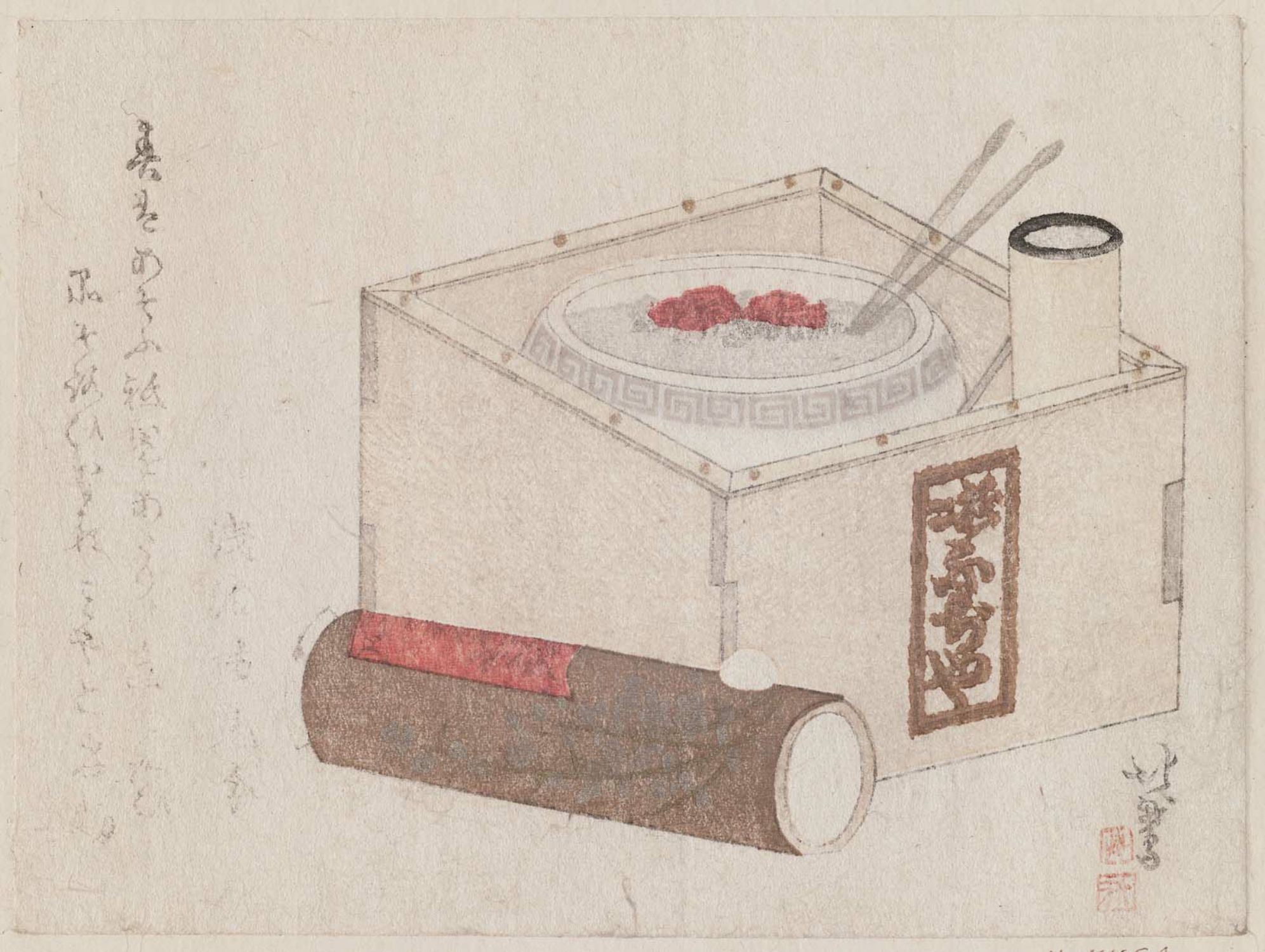
Hibachi, Scroll, and Poem
- Date:
- Edo period, c. 1810
- Medium:
- Woodblock print (surimono); ink and color on paper
- Source:
- Museum of Fine Arts, Boston
Description
This Edo-period surimono by Katsushika Hokuga, dated to around 1810 and held by the Museum of Fine Arts, Boston (system collection identifier sc223688, MFA collection record 256104), depicts a domestic still life of a hibachi (Japanese charcoal brazier) paired with an open hanging scroll bearing an inscribed poem. The composition belongs to the still-life surimono tradition in which everyday domestic objects were elevated through inclusion in the small-edition private-print format, with the inscribed scroll within the image serving as a visual analogue to the kyōka inscriptions that surround it in the printed design. The hibachi was a familiar Edo-period domestic furnishing — the principal indoor heat source through the long Tokugawa winters and a recurring object in surimono and bijin imagery — and its pairing with an inscribed scroll within the print frames the design as a meditation on indoor reading, poetic composition, and the seasonal warmth that supported them. The print is preserved as a woodblock print (surimono) in ink and color on paper at the MFA Boston, where it forms part of the museum's substantial early-Bunka holding of Hokuga sheets acquired in the first decade of the twentieth century and gifted by the Morse family in 1953. The technical register exhibits the careful registration and restrained palette that distinguished high-quality surimono from contemporary commercial output, and the design exemplifies the way the format incorporated everyday domestic objects as occasions for poetic and visual refinement.
More Prints by Katsushika Hokuga

Woman reading poems in a study room
c. 1833
Color woodblock print; shikishiban, surimono
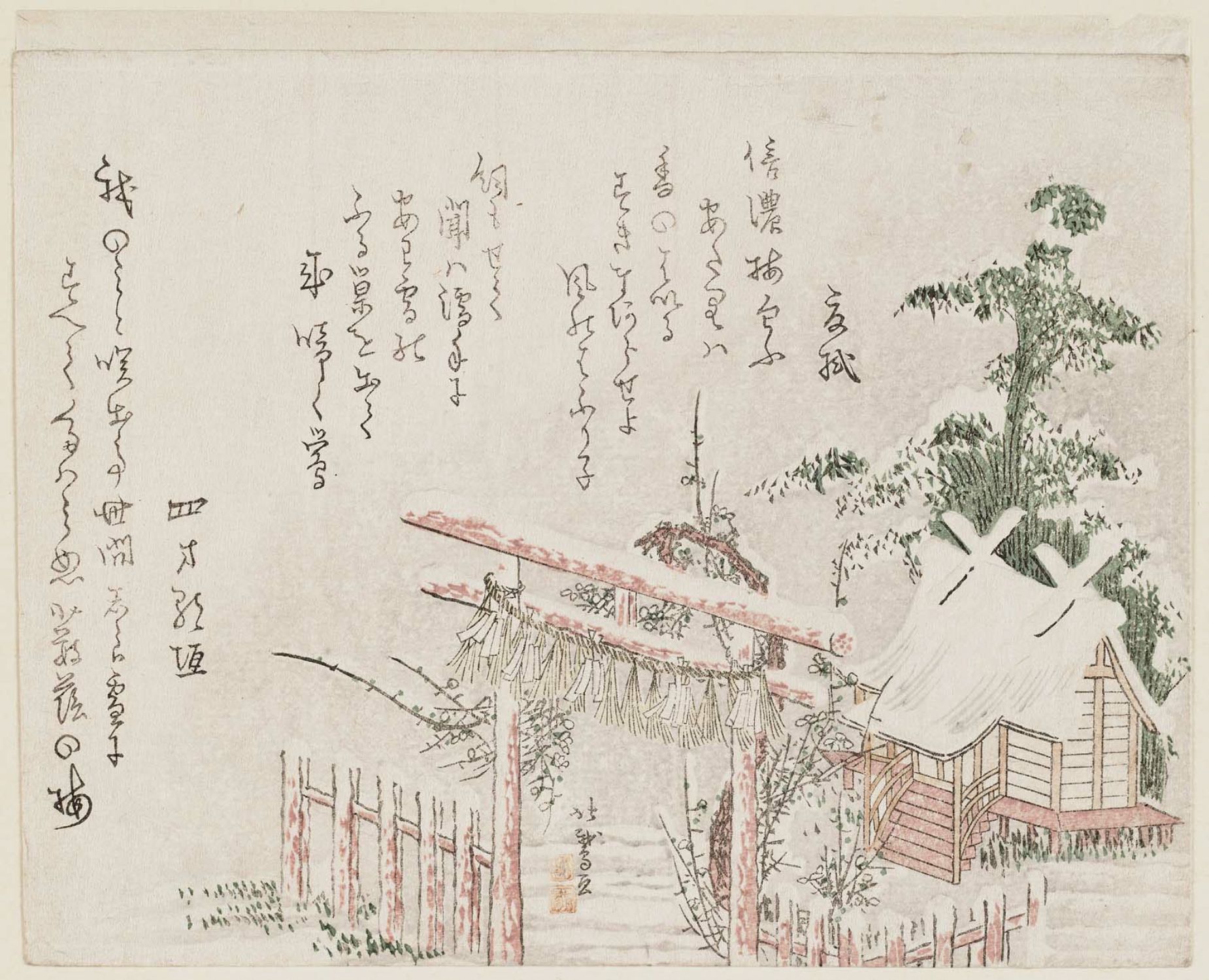
Shrine in Snow
Edo period, c. 1820
Woodblock print (surimono); ink and color on paper
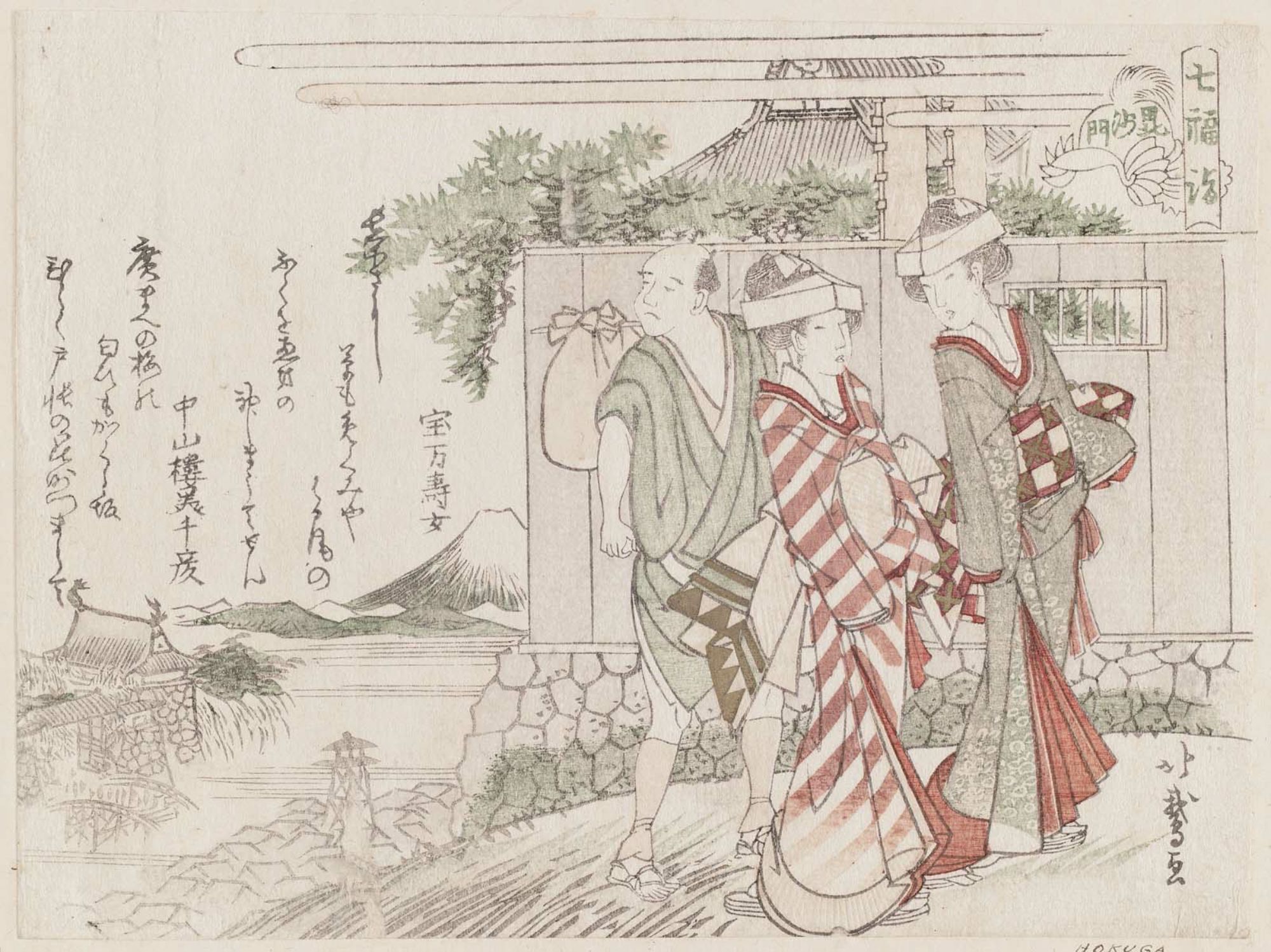
Bishamon, from the series Visiting the Shrines of the Seven Gods of Good Fortune (Shichifuku mairi)
Edo period, c. 1810
Woodblock print (surimono); ink and color on paper
Frequently Asked Questions
Hibachi, Scroll, and Poem was created by Katsushika Hokuga (葛飾北峩) in Edo period, c. 1810.