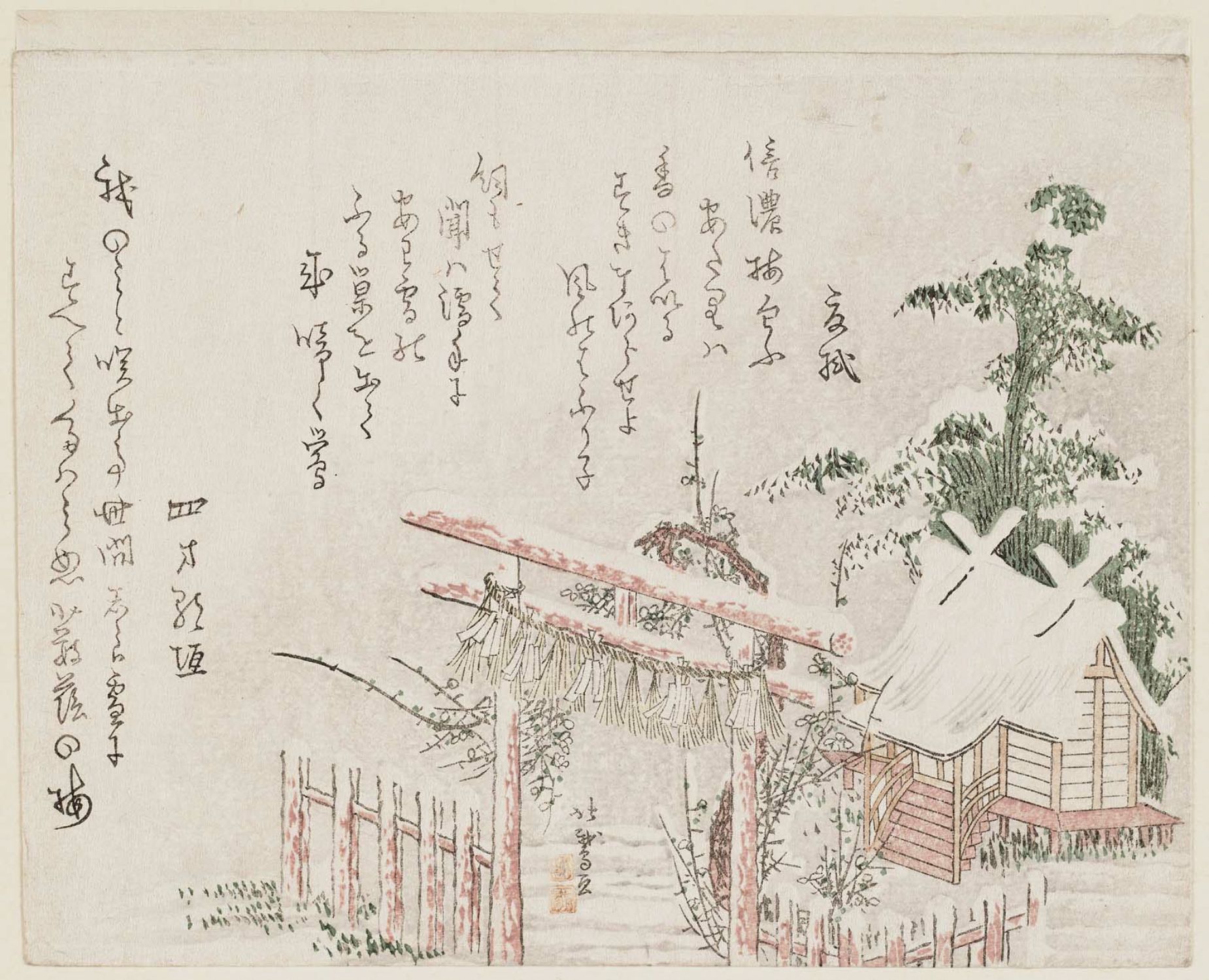
Shrine in Snow
- Date:
- Edo period, c. 1820
- Medium:
- Woodblock print (surimono); ink and color on paper
- Source:
- Museum of Fine Arts, Boston
Description
This Edo-period surimono by Katsushika Hokuga, dated to around 1820 and held by the Museum of Fine Arts, Boston (system collection identifier sc223673, MFA collection record 213261), depicts a Shinto shrine compound under a covering of snow. The winter-landscape surimono category was a familiar subject within the small-edition private-print tradition, with the technical possibilities of the format — blind printing (karazuri) for embossed snow effects, restrained color in the architectural and natural forms, and dense kyōka inscriptions occupying the upper register — particularly suited to the visual treatment of snow-covered scenes. The shrine-in-snow subject drew on a long Japanese pictorial tradition in which the silence and visual reduction of winter snowfall provided a contemplative backdrop for poetic inscription, and Hokuga's design follows the convention by integrating the inscribed kyōka verses into the upper field of the composition while reserving the lower portion for the architectural and landscape elements. The print is preserved as a woodblock print (surimono) in ink and color on paper at the MFA Boston, and belongs to the broader Bunsei-period surimono holding that the museum acquired through the Charles J. Morse and related early-twentieth-century gifts. The atmospheric treatment of the snow-covered shrine exemplifies Hokuga's mature surimono style of the late 1810s and early 1820s, in which the integration of landscape, architecture, and inscribed poetry achieved the refined balance that distinguished the format from contemporary commercial landscape ukiyo-e.
More Prints by Katsushika Hokuga
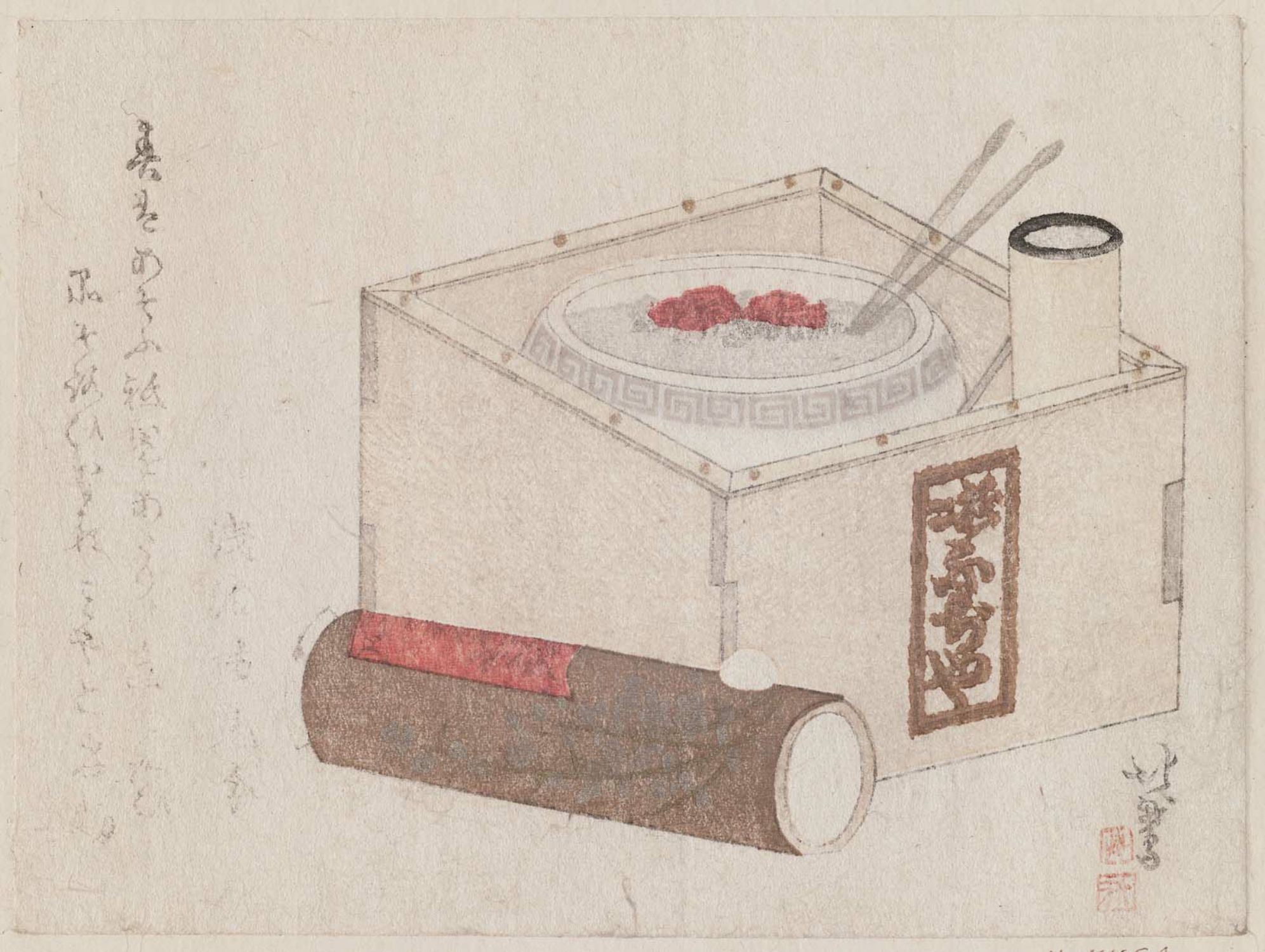
Hibachi, Scroll, and Poem
Edo period, c. 1810
Woodblock print (surimono); ink and color on paper

Woman reading poems in a study room
c. 1833
Color woodblock print; shikishiban, surimono
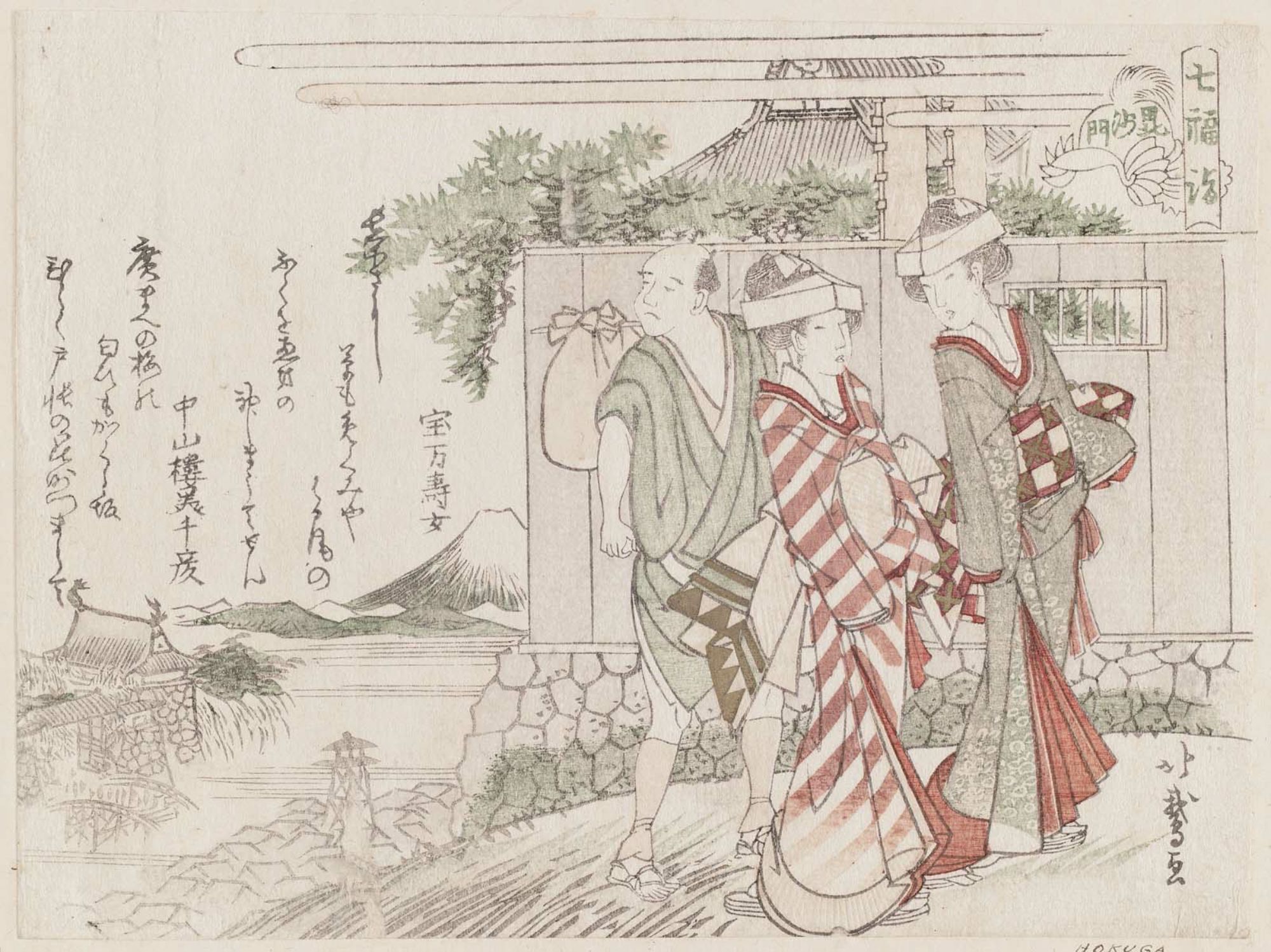
Bishamon, from the series Visiting the Shrines of the Seven Gods of Good Fortune (Shichifuku mairi)
Edo period, c. 1810
Woodblock print (surimono); ink and color on paper
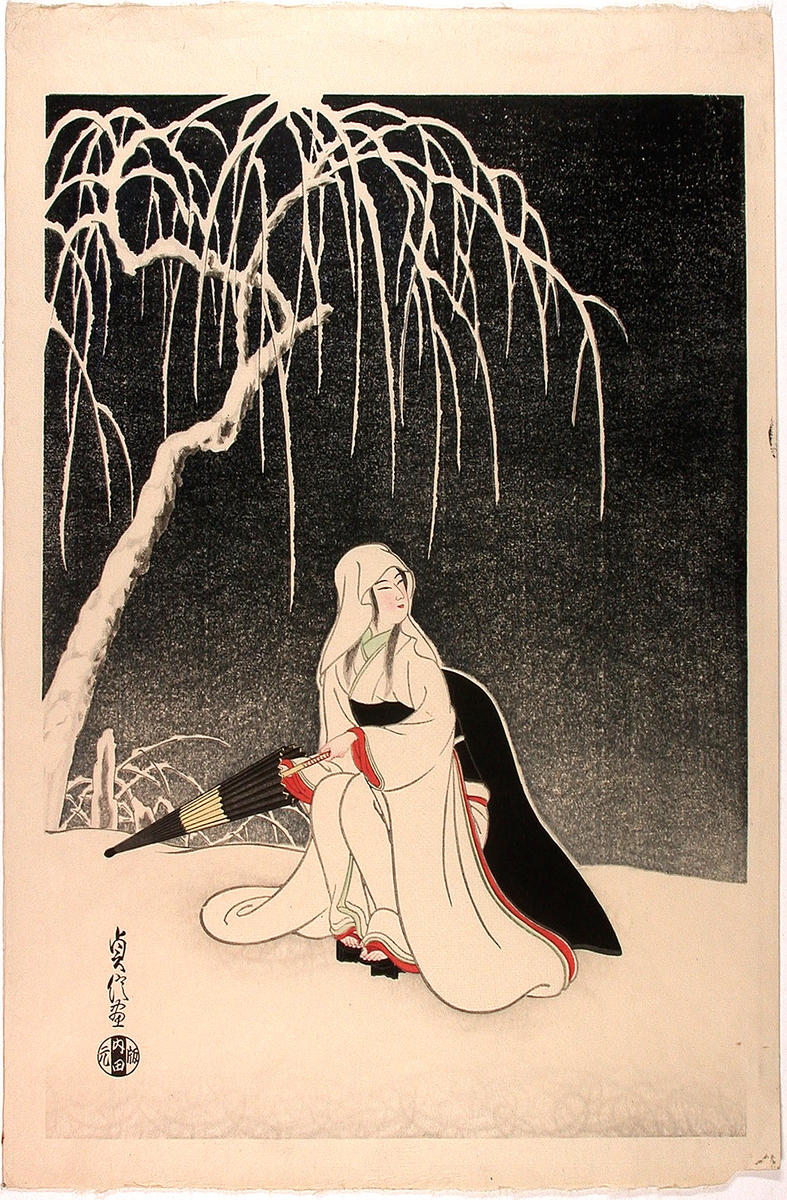
More Winter Prints
Frequently Asked Questions
Shrine in Snow was created by Katsushika Hokuga (葛飾北峩) in Edo period, c. 1820.
Shrine in Snow depicts winter.