
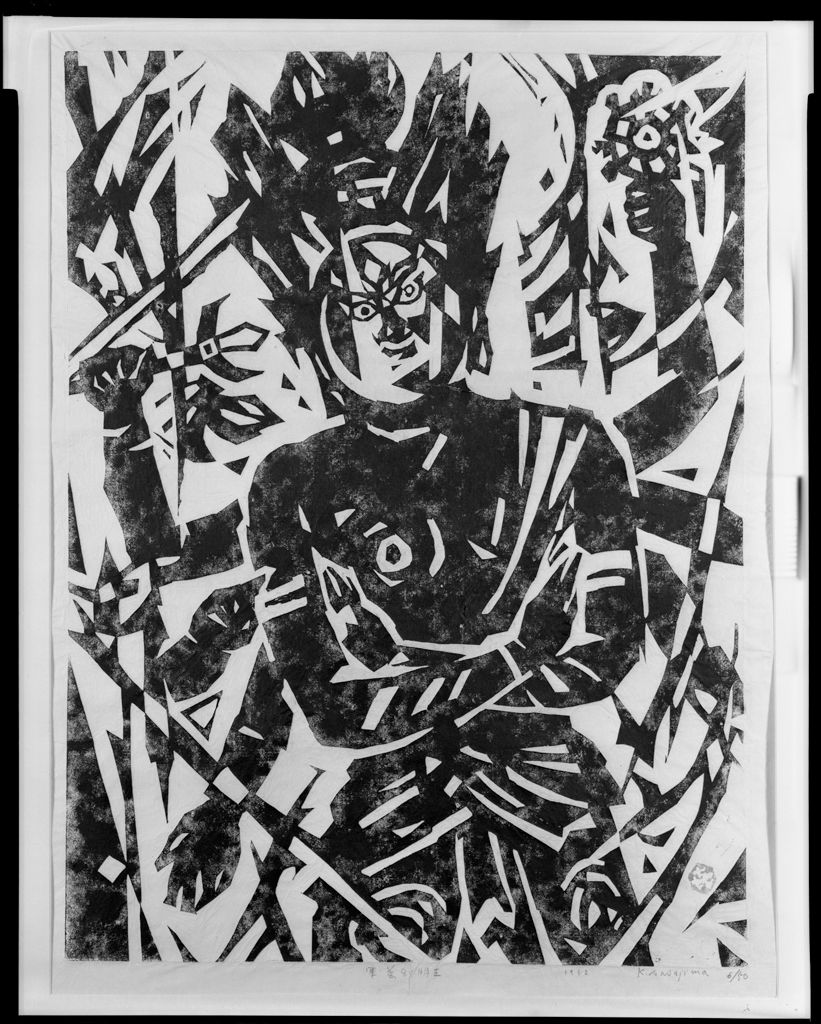
Parody of the play "Musume Dojoji"
- Date:
- c. 1801/05
- Medium:
- Color woodblock print; kokonotsugiri-ban, surimono
- Format:
- Oban
- Source:
- Art Institute of Chicago
Description
Musume Dojoji — the celebrated kabuki and dance piece depicting a young woman's jealous transformation into a vengeful demon — is here rendered as a playful parody in surimono format around 1801–05. Hokusai's parodic treatment (mitate) substitutes comic or contemporary figures for the play's tragic protagonists, deflating the drama's supernatural intensity through the gentle irreverence characteristic of Edo popular culture.
More Prints by Katsushika Hokusai
Hokusai manga (Hokusai Sketchbooks)
19th century
Woodblock-printed book; ink and light color on paper
Fukuroi
1804
Japanese woodblock print

The Fishermen of Katase Hauling in Their Nets: The Purple Shell (Murasakigai)
1821
Color woodblock print with metallic pigments; surimono shikishiban

Burdock Root (Kurama gobo), from the series "A Selection of Horses (Uma-zukushi)"
1822
Color woodblock print; shikishiban, surimono
More Figures Prints
Featured in Collections
Curated cross-cuts that include this print.
Frequently Asked Questions
Parody of the play "Musume Dojoji" was created by Katsushika Hokusai (葛飾北斎) in c. 1801/05.
Parody of the play "Musume Dojoji" depicts figures, kabuki, and mythology.