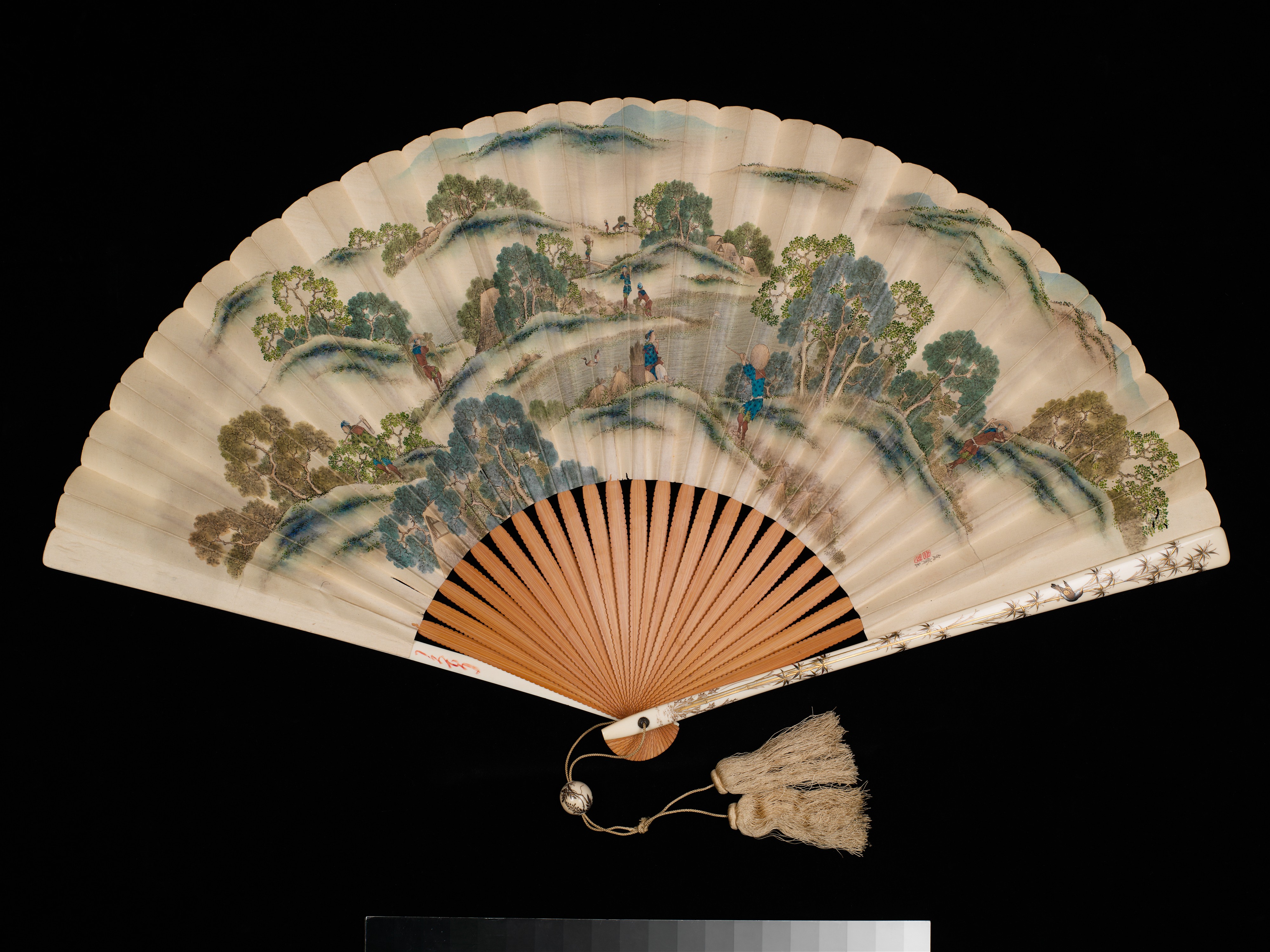
Winter Farming Scene; (verso) Autumn Farming Scene
冬耕図/秋耕図
- Date:
- Edo period (1615–1868)
- Medium:
- Folding fan; ink and color on paper, with mounting in ivory
- Source:
- Metropolitan Museum of Art
Description
Winter Farming Scene; (verso) Autumn Farming Scene is a double-sided folding fan by Katsushika Isai in ink and color on paper with ivory mounting, held by the Metropolitan Museum of Art (accession 2000.210). The work pairs winter and autumn agricultural imagery on the two faces of a single fan, continuing the cycle of four-season farming pictures (shiki kōsaku-zu) that descended from Chinese imperial "plowing and weaving" imagery and was widely adapted in Edo-period painting. Autumn is shown with the harvest of rice and other grains, the storing of crops, and the seasonal labor of late autumn, while the winter side foregrounds the dormant fields, the gathering of firewood, and the small interior scenes that characterize the Japanese agricultural year's quiet months. The double-sided format gave Isai scope to deploy his Hokusai-school capacity for compressed multi-figure composition in two related but distinct registers, and the use of an ivory mounting suggests the fan was made as a luxury object intended for use as well as display. The Met acquired the work in 2000, and it is one of the most ambitious of Isai's surviving paintings in a Western collection.
More Prints by Katsushika Isai
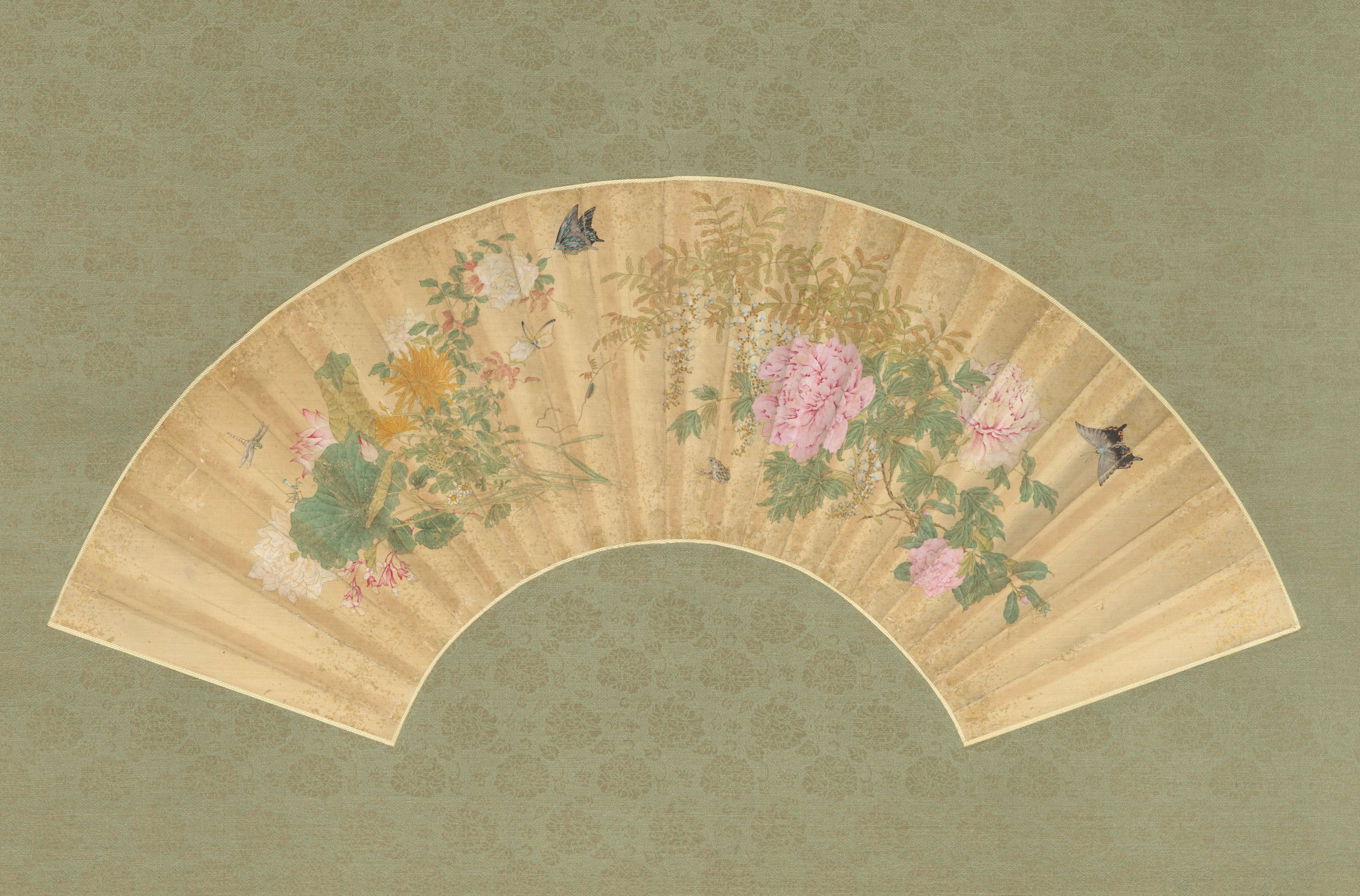
Summer Flowers
夏花図
Edo period (1615–1868)
Folding fan remounted as a hanging scroll; ink and color on silk
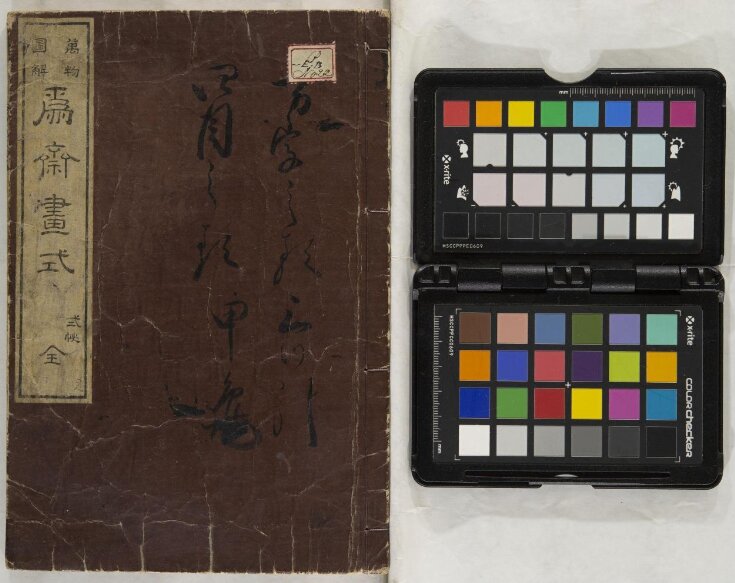
(Universal Illustrations) Isai's Drawing Method (Banbutsu zukai Isai gashiki), vol. 2
万物図会 為斎画式 二編
c. 1864
Woodblock-printed book; ink on paper
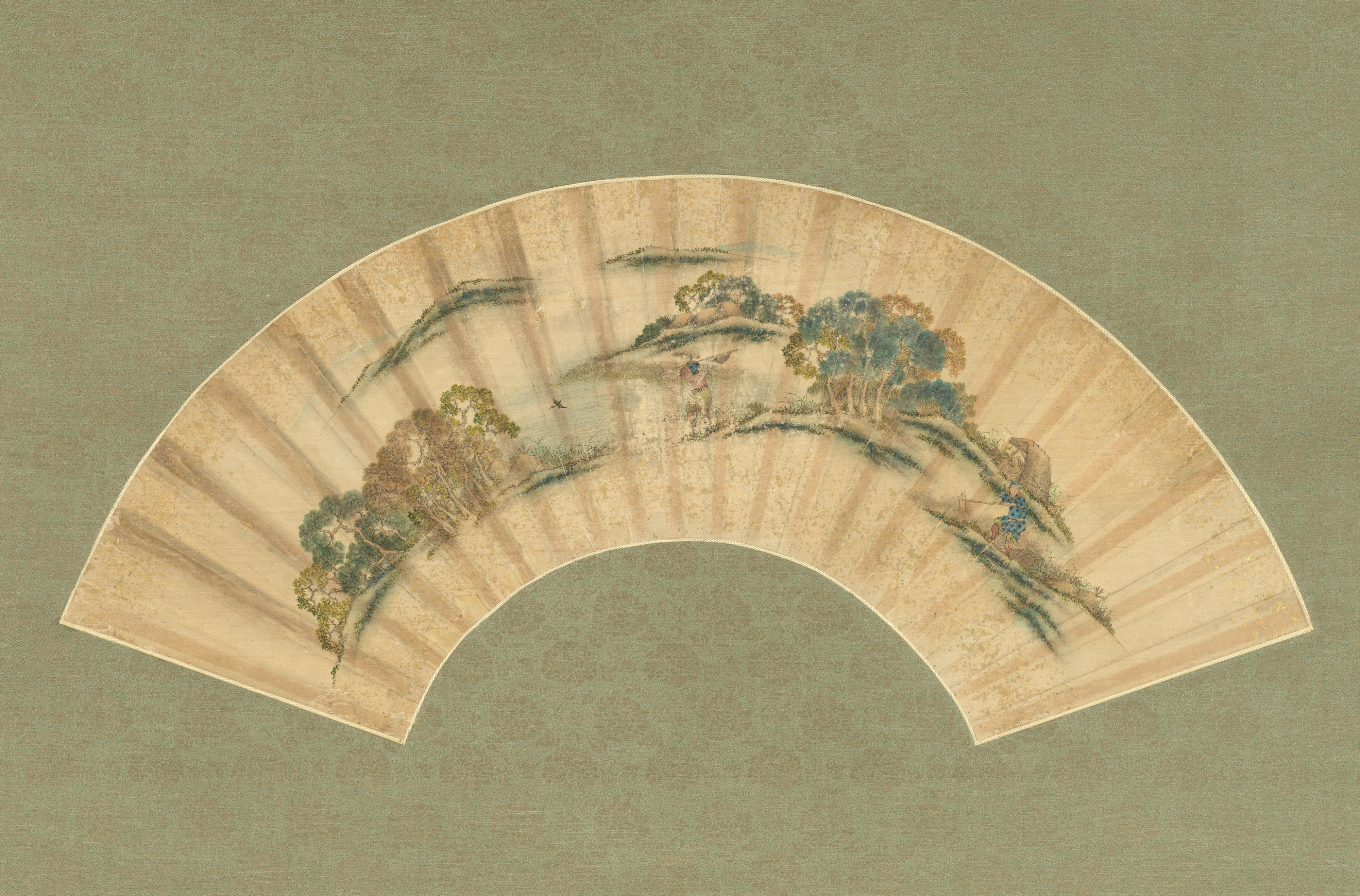
Spring Farming Scene
春耕図
Edo period (1615–1868)
Folding fan, remounted as a hanging scroll; ink and color on silk
Detailed Sketches for Drawings of Birds and Flowers and Landscapes (Kachō sansui saiga zushiki)
花鳥山水細画図式
1865 (Keiō 1)
Woodblock-printed book; ink on paper
More Autumn Foliage Prints

A Farmhouse in Autumn, Ayashi, Miyagi Prefecture (Noka no aki (Miyagi ken Ayashi)
Noka no aki (Miyagi ken Ayashi
1946
Color woodblock print
Yoro Waterfall in Mino Province (Mino no kuni Yoro no taki), from the series Tour of the Waterfalls in Various Provinces (Shokoku Takimeguri)
Woodblock print

Tengui Rock, Autumn in Shiobara (Shiobara no aki (Tenguiwa))
1950
Color woodblock print

Autumn at the Arayu Hot Spring, Shiobara
Autumn 1920
Woodblock print, ink and color on paper
Frequently Asked Questions
Winter Farming Scene; (verso) Autumn Farming Scene (冬耕図/秋耕図) was created by Katsushika Isai (葛飾為斎) in Edo period (1615–1868).
Winter Farming Scene; (verso) Autumn Farming Scene depicts autumn foliage.