
Autumn at the Arayu Hot Spring, Shiobara
by Kawase Hasui
- Date:
- Autumn 1920
- Medium:
- Woodblock print, ink and color on paper
- Format:
- Oban
- Dimensions:
- 36 × 24.3 cm
- Publisher:
- Watanabe Shozaburo
- Edition:
- Published by Watanabe Shozaburo
- Source:
- Art Institute of Chicago
Description
A narrow, rising village street is lined with dark wooden inns and shophouses on both sides, their upper-story balconies and eaves rendered in deep browns and blacks; a tall green tree stands at the bend where the street curves toward a large blue mountain silhouetted against a sky filled with white clouds. In the foreground a figure in a dark blue robe walks downhill carrying a bag, with a second, smaller figure further up the sloping path. Warm tan and orange tones along the horizon contrast with the cool blues of the mountain and sky, giving the scene a quiet, late-day atmosphere. Kawase Hasui, 1920, woodblock print, ink and color on paper.
More Prints by Kawase Hasui
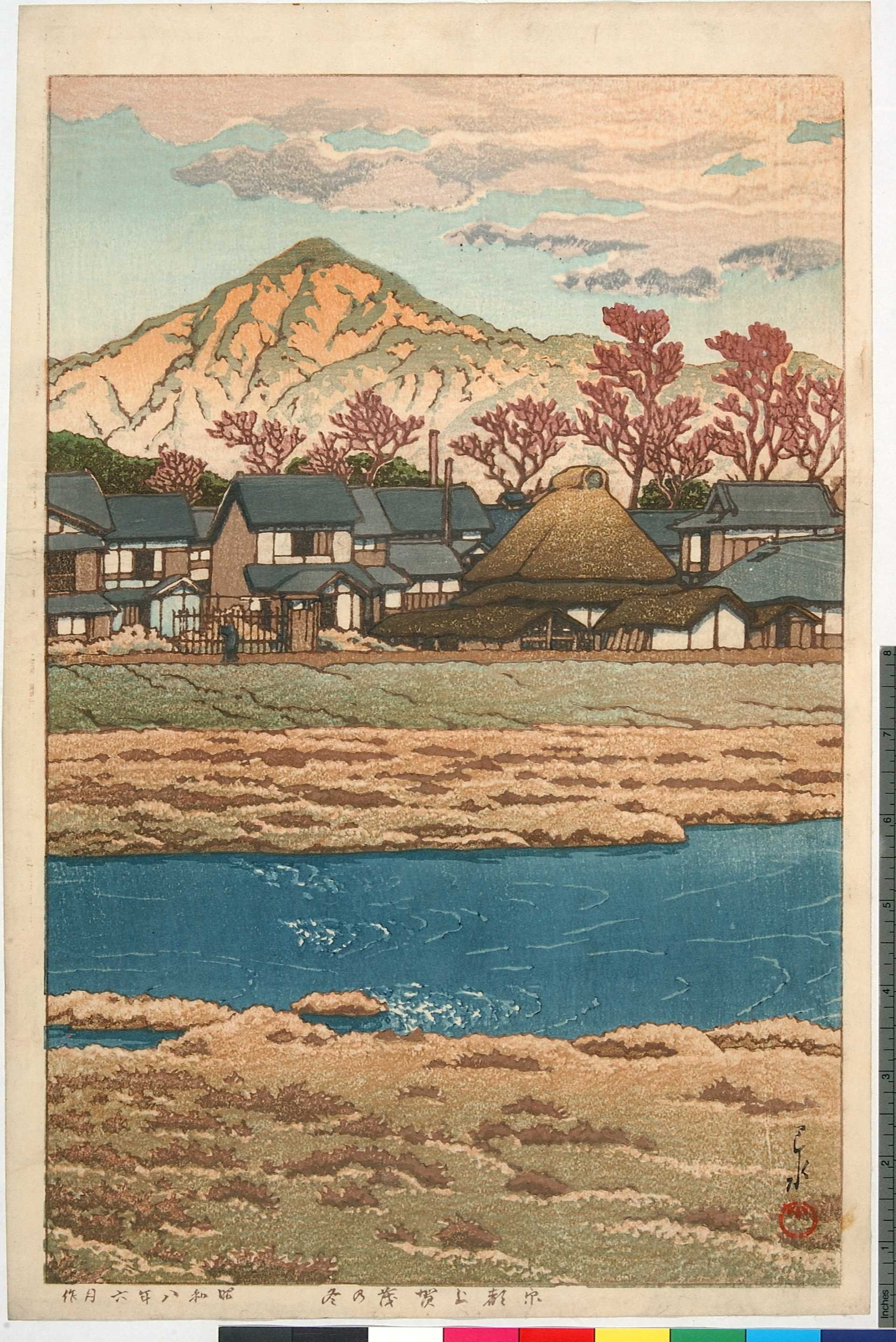
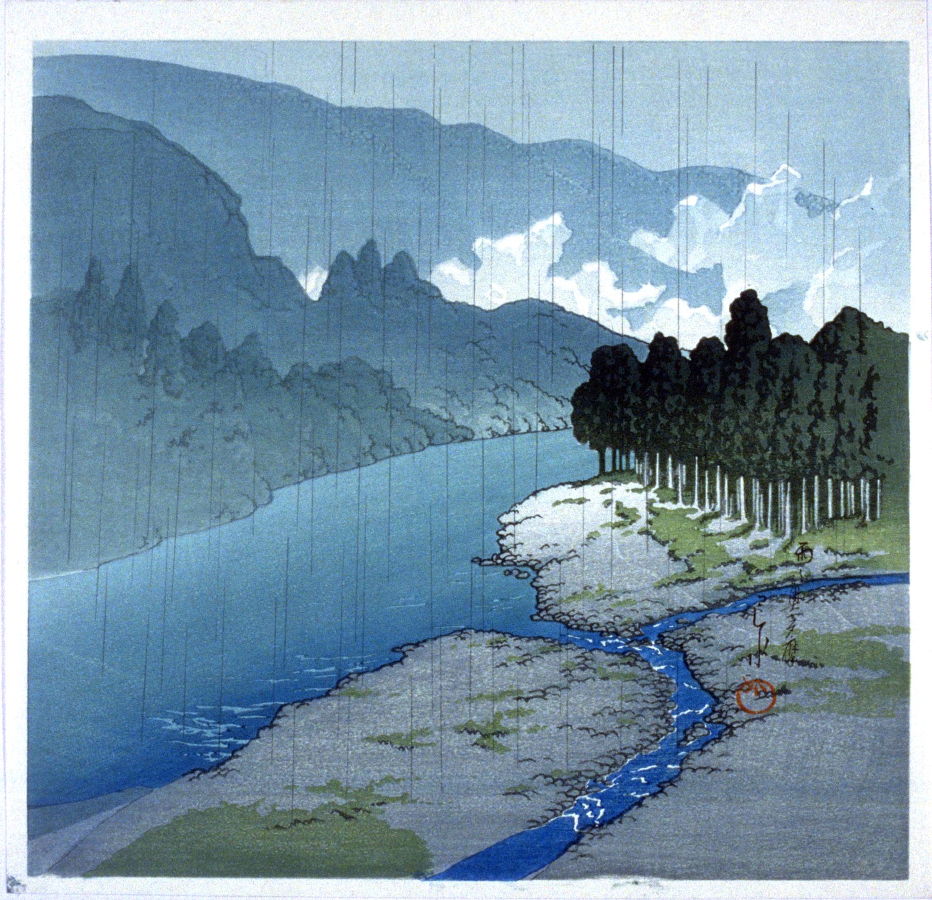

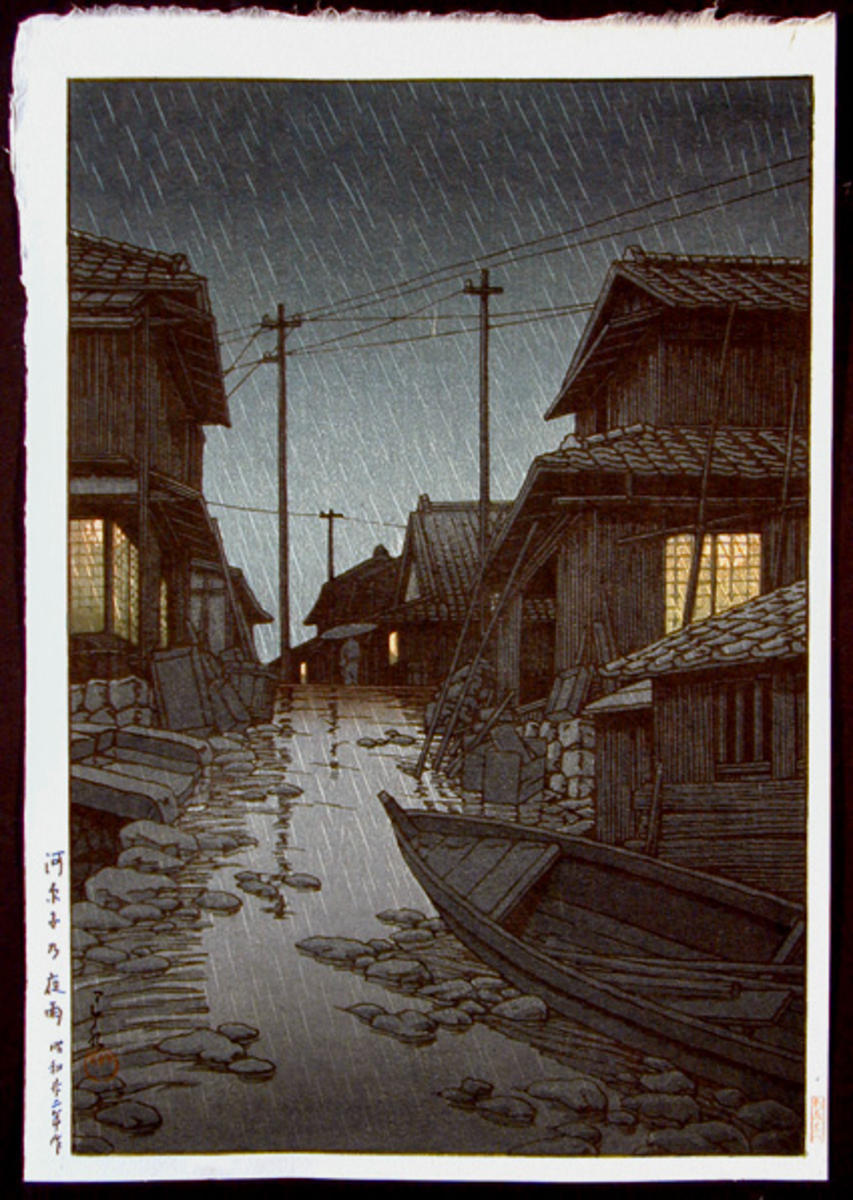
More Nude Prints

Tsuta Hot Springs in Mutsu Province (Mutsu Tsuta onsen), from the series "Souvenirs of Travel, First Series (Tabi miyage dai isshu)"
Mutsu Tsuta onsen
1919
Color woodblock print; oban

Namari Spa, Iwate Prefecture (Iwate ken Namari onsen)
1943
Color woodblock print

Arifuku Spa, Iwami, from the series "Souvenirs of Travel, Third Series" (Tabi miyage dai sanshu, Iwami Arifuku onsen)
1924
Color woodblock print
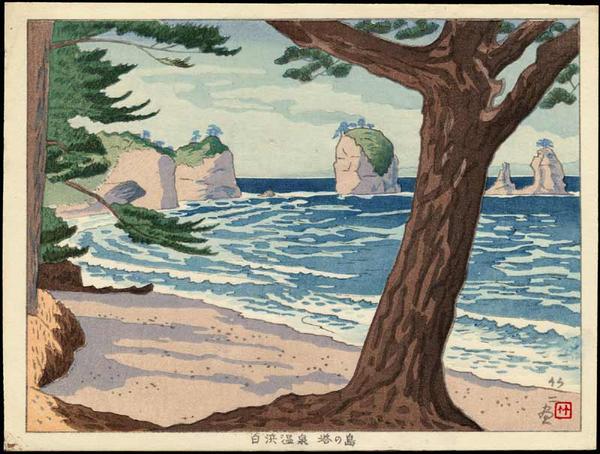
Shirahama Hot Spring
Woodblock print
Featured in Collections
Curated cross-cuts that include this print.
Frequently Asked Questions
Autumn at the Arayu Hot Spring, Shiobara was created by Kawase Hasui (川瀬巴水) in Autumn 1920.
Autumn at the Arayu Hot Spring, Shiobara uses Bokashi, on woodblock print, ink and color on paper.
Autumn at the Arayu Hot Spring, Shiobara was published by Watanabe Shozaburo (Autumn 1920).
Autumn at the Arayu Hot Spring, Shiobara depicts nude and autumn foliage.
Autumn at the Arayu Hot Spring, Shiobara measures 36 × 24.3 cm (Oban format).