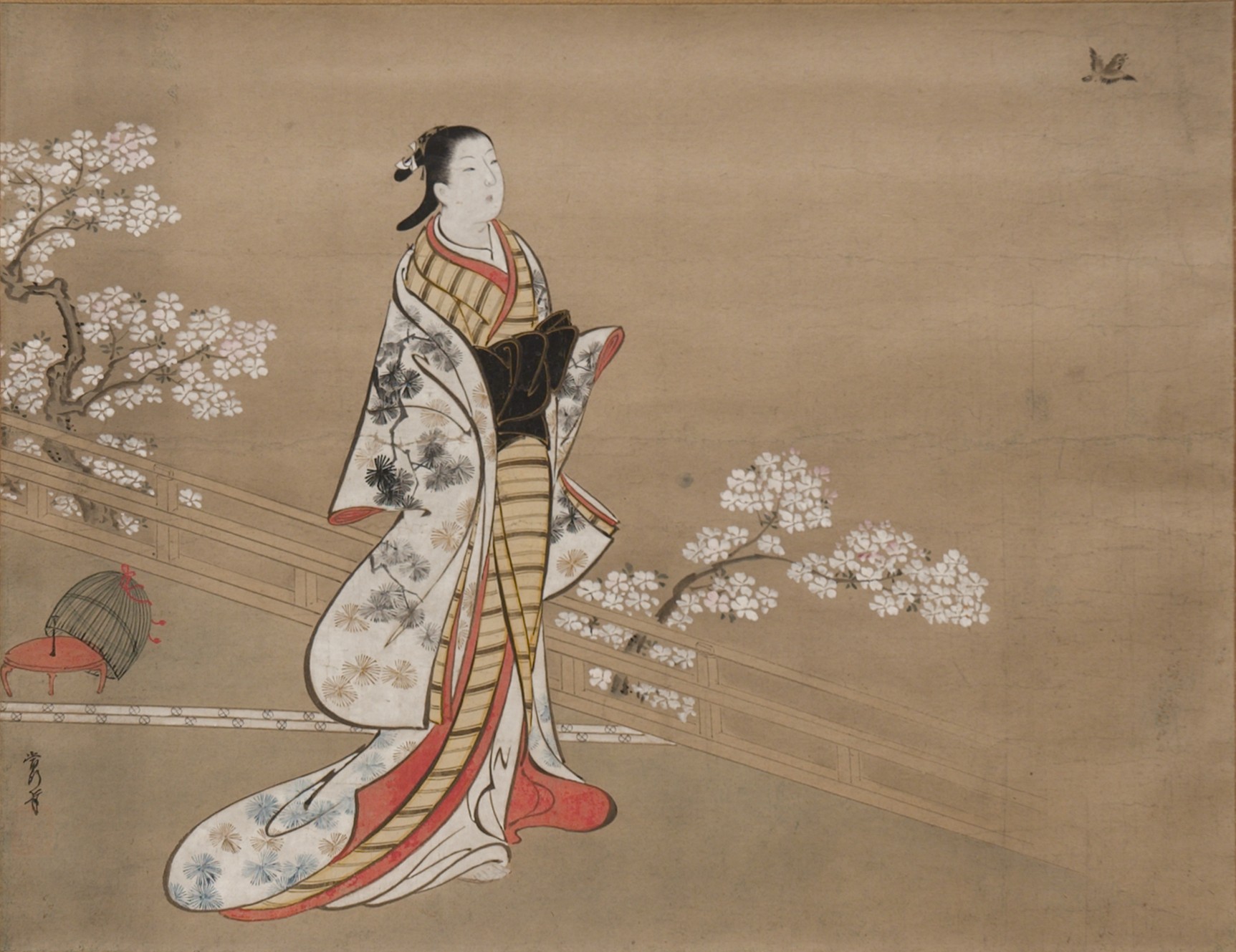
Parody of Murasaki, from "Lavender" (Wakamurasaki), Chapter 5 of The Tale of Genji
- Date:
- 18th century
- Medium:
- Hanging scroll; ink and color on paper
- Source:
- Metropolitan Museum of Art
Description
Held in the Metropolitan Museum of Art (accession 36.100.90) and dated to the eighteenth century, this hanging scroll in ink and color on paper, Parody of Murasaki, from "Lavender" (Wakamurasaki), Chapter 5 of The Tale of Genji, is among the strongest surviving examples of Kawamata Tsuneyuki's mature painted-bijinga style and a fine document of the early-eighteenth-century mitate-e (parody picture) tradition in which painted ukiyo-e engaged the classical literary canon. The Wakamurasaki or "Lavender" chapter of Murasaki Shikibu's eleventh-century Tale of Genji recounts Prince Genji's discovery of the young girl Murasaki, his future wife, in a Kyoto mountain village — a scene that the classical Genji-e tradition had codified with a specific iconography of cherry blossoms, mountain settings, and the youthful figure of Murasaki herself. Tsuneyuki's mitate transposes this celebrated literary moment onto a contemporary Edo register by depicting a confident, fashionably dressed woman of the early eighteenth century in the role of Murasaki, posed in a relaxed assurance and flanked by cherry blossoms that key the composition to the Wakamurasaki iconography. The painting's sharply outlined figure, the floridly patterned outer kimono with its assertive color palette, and the disciplined deployment of pictorial space exemplify the stylistic vocabulary that Tsuneyuki established and that distinguishes the Kawamata line within the broader painted-bijinga tradition. As one of the finest Tsuneyuki paintings in a Western museum collection, the work helps anchor his recognized oeuvre and demonstrates the wit and visual sophistication with which the painted-ukiyo-e tradition engaged the classical literary canon.
More Prints by Kawamata Tsuneyuki


Frequently Asked Questions
Parody of Murasaki, from "Lavender" (Wakamurasaki), Chapter 5 of The Tale of Genji was created by Kawamata Tsuneyuki (川又常行) in 18th century.