
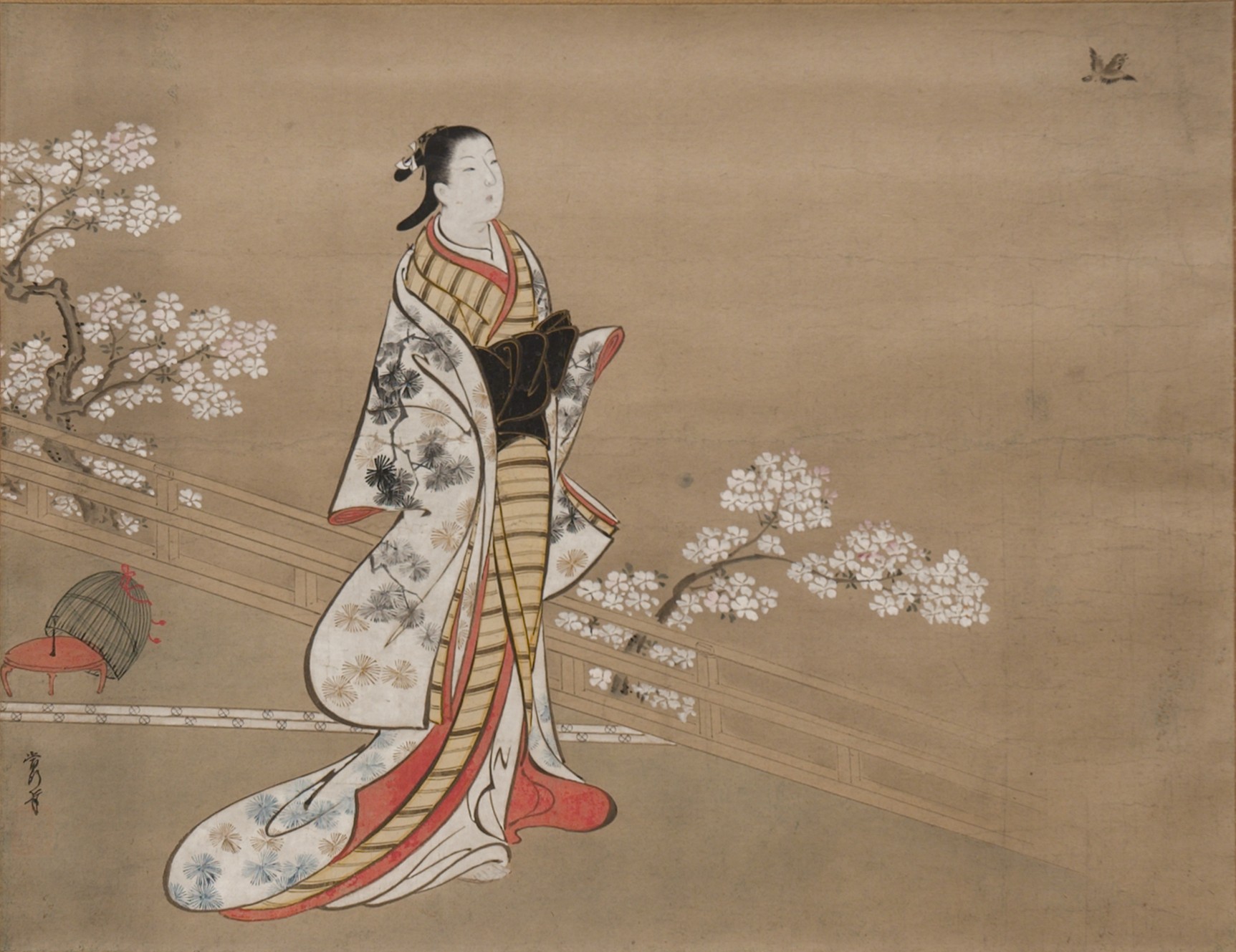
Reclining Beauty with Shamisen
- Date:
- first half of the 18th century
- Medium:
- Hanging scroll; ink and color on paper
Description
Dated to the first half of the eighteenth century and rendered in ink and color on paper, Reclining Beauty with Shamisen is a hanging scroll in the painted-bijinga manner that captures one of Kawamata Tsuneyuki's most lyrical and intimate genre subjects — a young woman reclining at her ease with a shamisen (the three-stringed plucked lute that was the defining instrument of Edo popular music), depicted in a moment of private leisure removed from the formal courtesan-procession iconography of the Yoshiwara. The painting belongs to the genre of intimate painted-bijinga interior scenes that Tsuneyuki and his contemporary Miyagawa Chōshun jointly developed in the Kyōhō and Genbun decades, moving the painted-ukiyo-e tradition beyond its earlier emphasis on the public processional figure toward a more atmospheric, domestic-private register. The reclining pose, with the figure's body extended along a horizontal axis and the shamisen held at her side, departs from the standing or seated upright postures that the painted-bijinga tradition typically favored and demonstrates Tsuneyuki's willingness to experiment with the figural conventions of the genre. The work's compact dimensions — approximately 33 by 48 centimeters — and its informal subject suggest a small private commission rather than the more ambitious courtesan-portrait format that Tsuneyuki's larger surviving paintings represent, and the work provides important evidence of the range of painted-bijinga subjects that his Kawamata atelier produced for the early-eighteenth-century private collector market. The painting survives in the public domain through Wikimedia Commons and is recorded as having passed through the Richard Kruml ukiyo-e collection in London.
More Prints by Kawamata Tsuneyuki

Frequently Asked Questions
Reclining Beauty with Shamisen was created by Kawamata Tsuneyuki (川又常行) in first half of the 18th century.