Daruma
- Date:
- 1801
- Medium:
- Ink on paper
- Image courtesy of
- Artsy
Description
Daruma is a print associated with Kawanabe Kyosai bearing the date 1801, a date that predates the artist's birth in 1831 and almost certainly reflects a transcription convention or a misattribution in the source record; the design is in any case part of the wider Daruma iconography that Kyosai treated repeatedly throughout his career. Kyosai trained briefly with the Utagawa master Kuniyoshi and then in the Kano school, and across his long working life he returned often to the figure of Daruma, the Indian patriarch traditionally credited with founding Chan, or Zen, Buddhism and renowned in East Asian art for the long meditation that left him without legs. Daruma's wide-eyed gaze, beetling brows, and red robe made him a favorite subject in popular Japanese painting and printmaking, where his image carried associations of perseverance and ironic humor in equal measure. Kyosai's Daruma compositions typically combine sympathetic Buddhist iconography with the caricatural energy for which the artist was celebrated, treating the patriarch sometimes as a venerated devotional figure, sometimes as a comic protagonist surrounded by courtesans, fellow drinkers, or shamisen players in a clear inversion of monastic decorum. The brushwork brings to bear the speed and economy that made Kyosai a star of the public shoga-kai performances of his day. The impression discussed here is documented through the Artsy listing for the print on the secondary market (https://www.artsy.net/artwork/kawanabe-kyosai-daruma), which preserves a record of the design under the artist's name. The published 1801 date should be treated with caution and is reproduced here as supplied in the working record.
More Prints by Kawanabe Kyosai
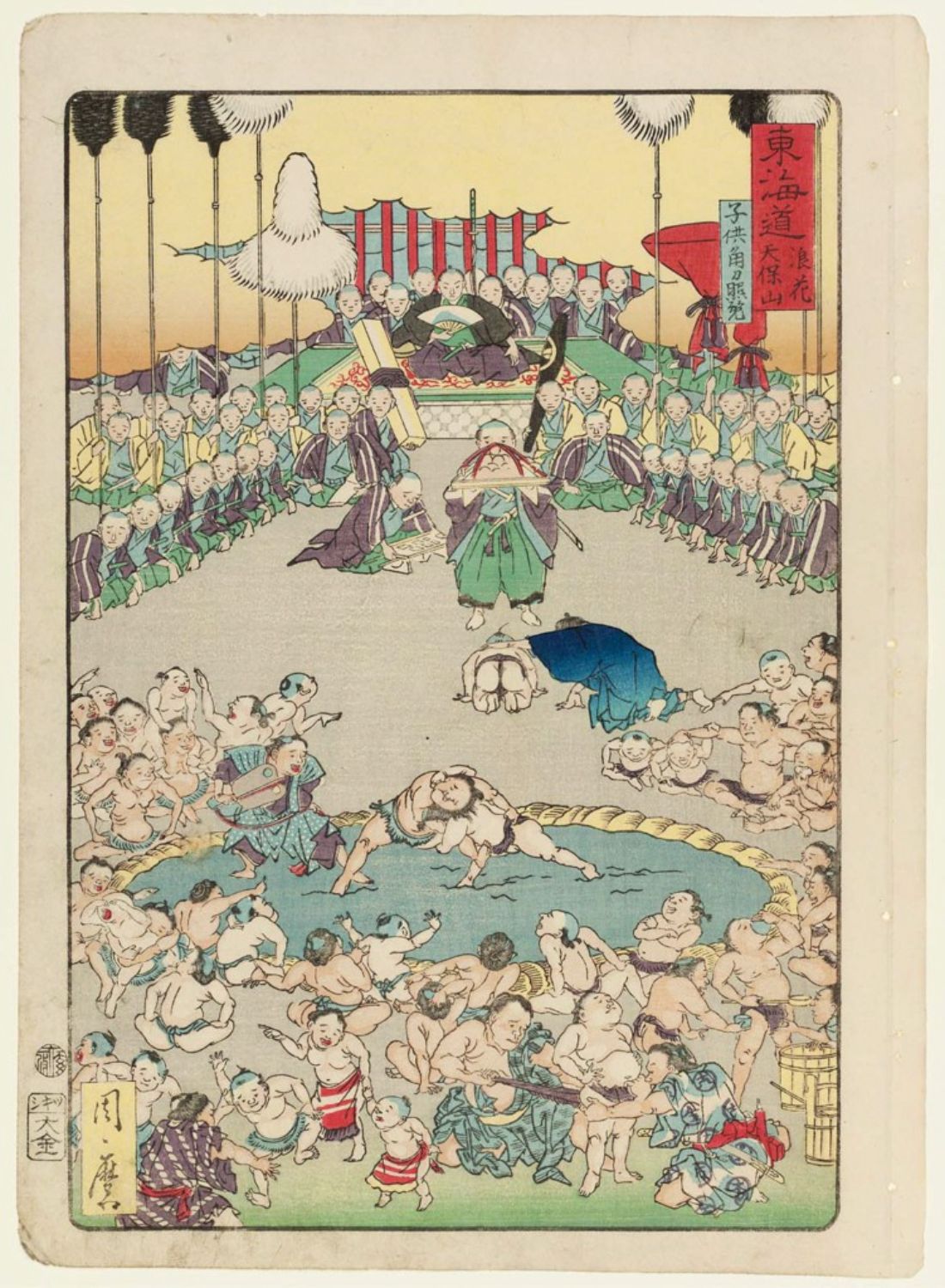
Tenpôzan in Osaka: Viewing Children's Sumo (Naniwa Tenpôzan kodomo sumô shôran), from the series Scenes of Famous Places along the Tôkaidô Road (Tôkaidô meisho fûkei), also known as the Processional Tôkaidô (Gyôretsu Tôkaidô), here called Tôkaidô
1863
Woodblock print
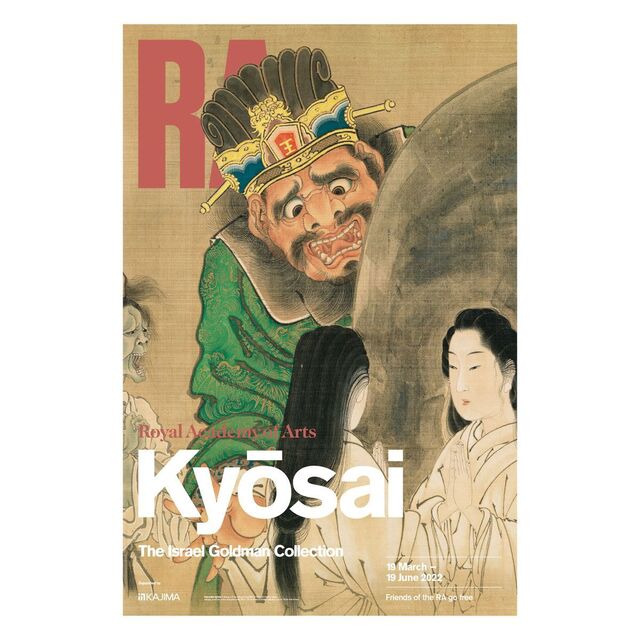
Kyosai, Royal Academy, London, FREE DOMESTIC SHIPPING
2022
Original Museum Lithographic Exhibition Poster
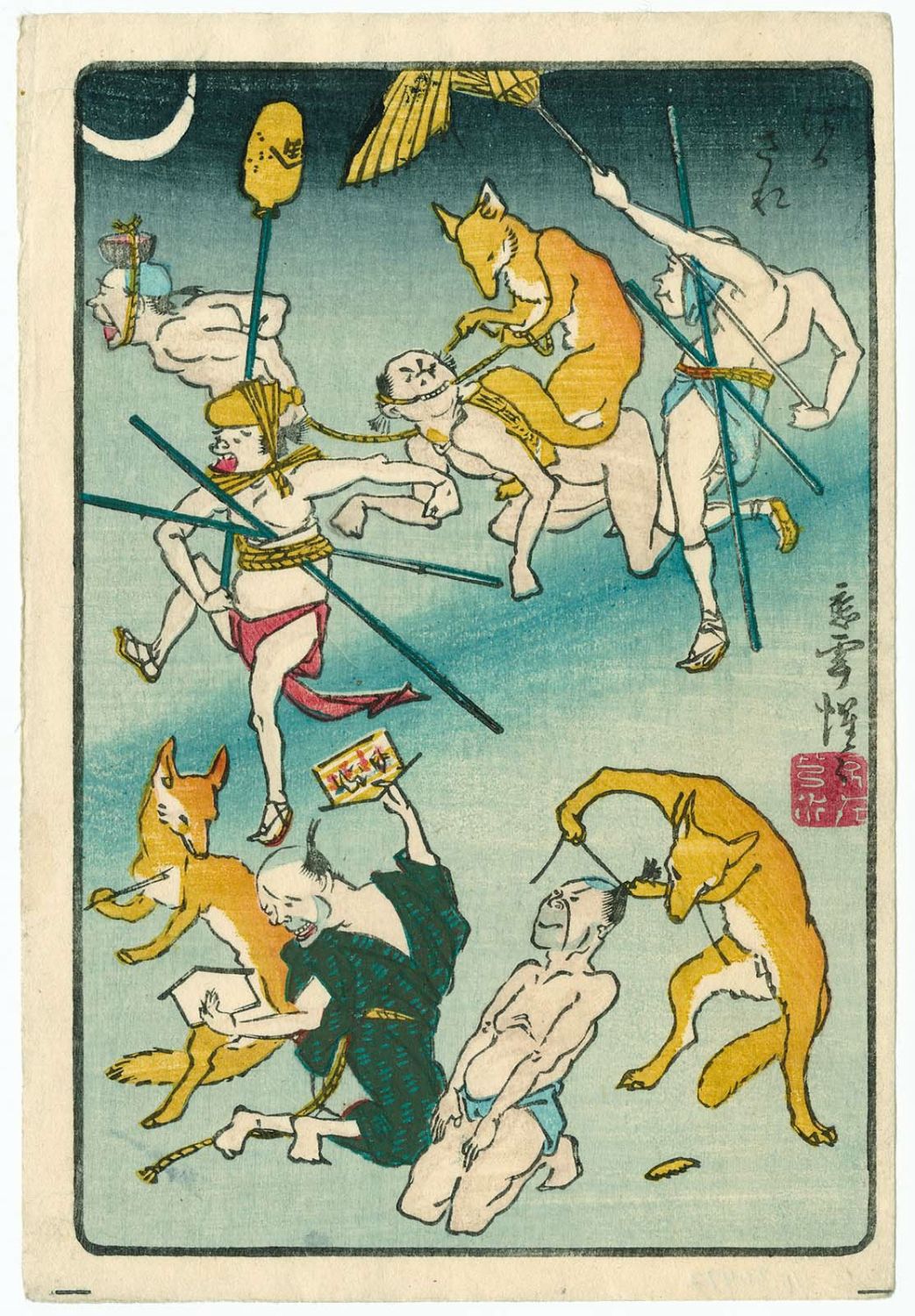
from the series One Hundred Pictures by Kyôsai (Kyôsai hyakuzu)
Woodblock print
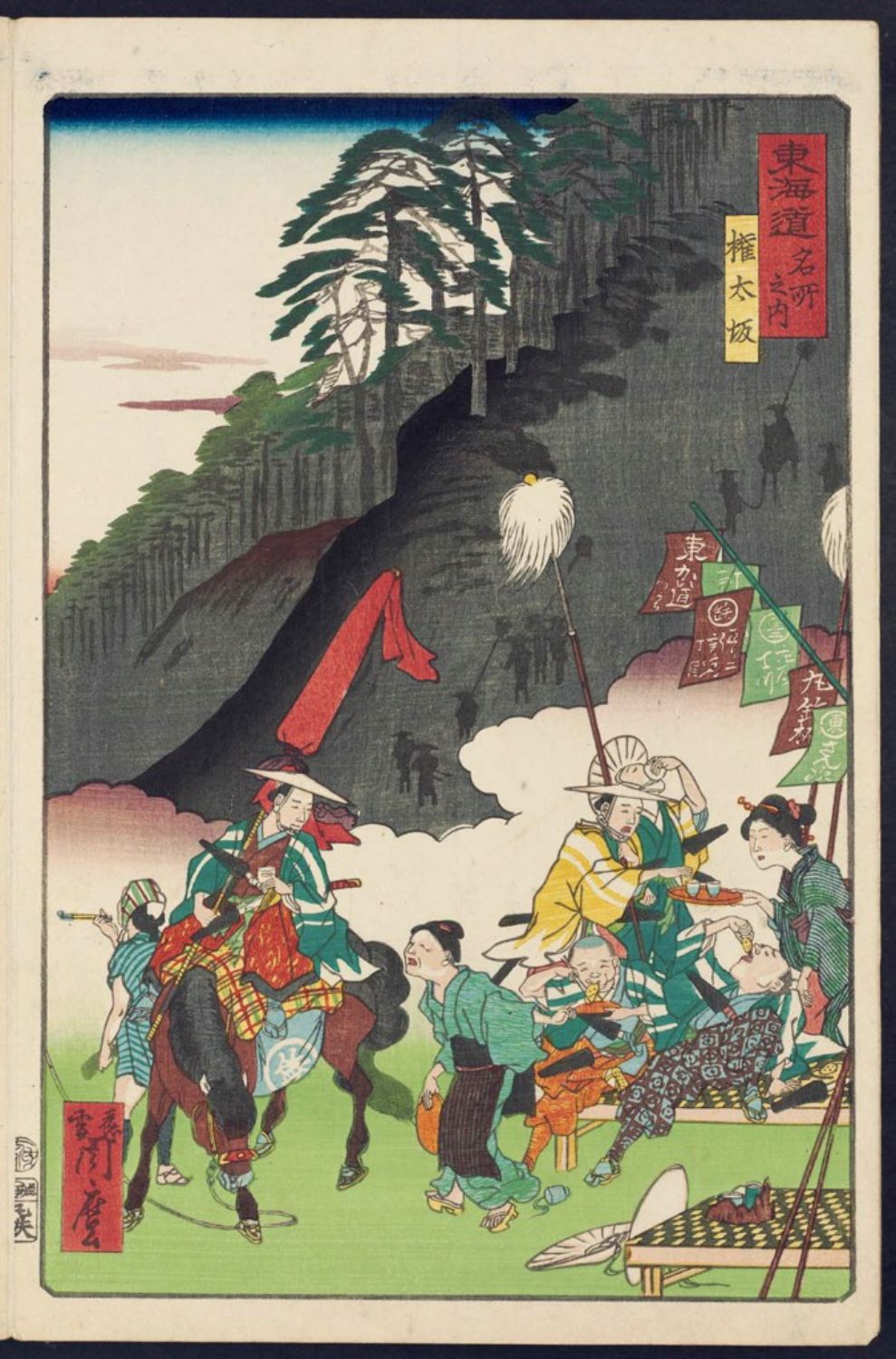
Gontazaka, from the series Scenes of Famous Places along the Tôkaidô Road (Tôkaidô meisho fûkei), also known as the Processional Tôkaidô (Gyôretsu Tôkaidô), here called Tôkaidô meisho no uchi
Woodblock print
More Religious Prints

The Great Buddha, Kamakura (Kamakura Daibutsu)
Kamakura Daibutsu
1930
Color woodblock print

Hall of the Great Buddha (Nara Daibutsuden)
1950
Color woodblock print
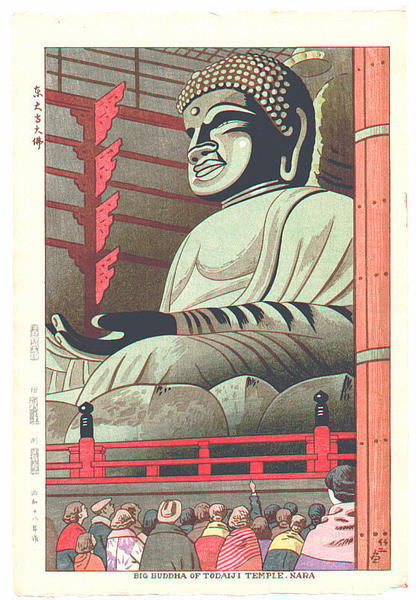
Great Buddha
大仏
Woodblock print

Clearing after a Snowfall at the Kannon Temple in Asakusa (Asakusa Kannon no yukibare), from the series "Twenty Views of Tokyo (Tokyo nijukkei)"
1926
Color woodblock print; oban
Frequently Asked Questions
Daruma was created by Kawanabe Kyosai (河鍋暁斎) in 1801.
Daruma depicts religious.