
Momofuku-zu (A Hundred Symbols of Fortune)
百福図
- Date:
- 1890
- Medium:
- Ink and color on paper
Description
Momofuku-zu (百福図, A Hundred [Symbols of] Fortune) is a 1890 painting by Kawanabe Kyōsui made in the year following her father Kawanabe Kyōsai's death, when she was twenty-two years old and assuming a larger share of the family studio's output. The work is reproduced in the standard reference Nihon no josei gaka — kanshū / Bijutsu Nenkansha (Japanese Women Painters: A Complete Picture, 2003), the principal modern survey of female Japanese painters from the seventeenth through twentieth centuries, where it appears as a representative example of Kyōsui's early independent style. The composition gathers a dense ensemble of auspicious symbols (the "hundred fortunes" of the title) — Daikokuten and other Shichifukujin figures, treasure objects (takaramono), cranes and tortoises, pines, plum and bamboo (the shōchikubai "three friends of winter"), and other emblems of long life, prosperity, and seasonal renewal that traditionally accompany New Year and other celebratory contexts. The picture demonstrates Kyōsui's command of the figure-and-emblem genre painting tradition that her father had inherited from late-Edo Kanō and Utagawa practice, while the precise drawing of the figures and the carefully built-up color show her training in the kind of refined nihonga technique that she would later teach at the Joshi Bijutsu Gakkō. The work survives in private hands and is documented through the Wikimedia Commons upload of the reference reproduction.
More Prints by Kawanabe Kyōsui
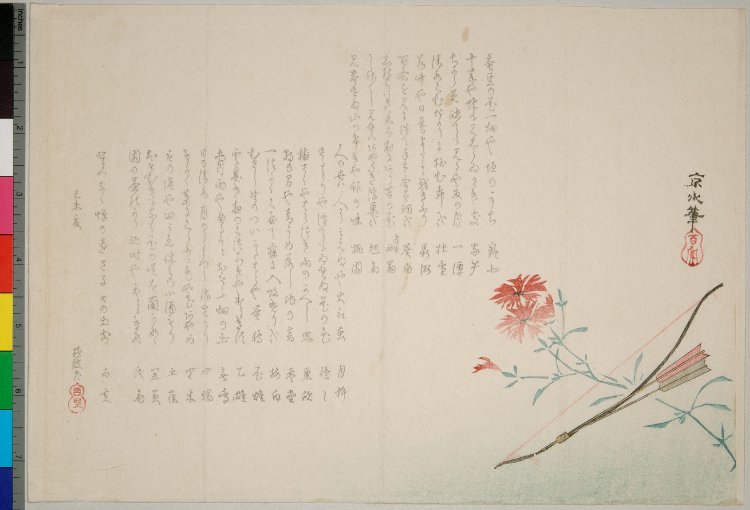
Surimono with Pinks and Bow and Arrow
摺物 撫子に弓矢
1895
Color woodblock print (surimono); ink and color on paper
.jpg)
Seven Lucky Gods, Year of the Dragon — Center Panel
七福神辰年図 中
Meiji period
Color woodblock print; ink and color on paper
.jpg)
Seven Lucky Gods, Year of the Dragon — Right Panel
七福神辰年図 右
Meiji period
Color woodblock print; ink and color on paper

Poetry Contest — Ladies in the Formal Poetry-Composing Event
歌合
c. 1894
Color woodblock print triptych (nishiki-e); ink and color on paper
Frequently Asked Questions
Momofuku-zu (A Hundred Symbols of Fortune) (百福図) was created by Kawanabe Kyōsui (河鍋暁翠) in 1890.