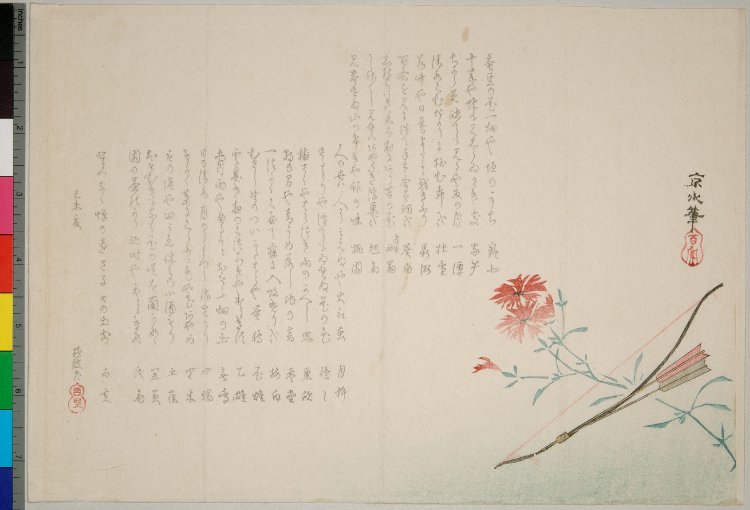
Surimono with Pinks and Bow and Arrow
摺物 撫子に弓矢
- Date:
- 1895
- Medium:
- Color woodblock print (surimono); ink and color on paper
- Source:
- British Museum
Description
Surimono with Pinks and Bow and Arrow is a small color woodblock print by Kawanabe Kyōsui dated 1895, now in the British Museum (1980,1022,0.152). Surimono are a category of privately commissioned, lavishly printed Japanese woodblock prints, typically produced in limited editions for clubs of poets, samurai gift-giving occasions, or specific New Year and seasonal observances, distinguished from commercial nishiki-e by their use of expensive pigments, blind embossing (karazuri), metallic dust applications (kirazuri), and integrated kyōka or haikai verse. Kyōsui's print combines two emblems: nadeshiko (pinks or fringed dianthus, one of the seven autumn flowers and a classical metaphor for refined female beauty in waka literature) and a bow and arrow (yumi-ya), the latter likely referring to the hamayumi and hamaya, decorative weapons used in shōgatsu (New Year) protective rituals and presented at shrines such as the Tsurugaoka Hachimangū. The combination places the print squarely within the surimono tradition of layered classical and seasonal reference. As one of the few signed Kyōsui surimono in Western public collections, the print is also a useful document of the small-scale, privately commissioned end of her 1890s production, alongside the public sensō-e and ikebana book of the same decade.
More Prints by Kawanabe Kyōsui
.jpg)
Seven Lucky Gods, Year of the Dragon — Center Panel
七福神辰年図 中
Meiji period
Color woodblock print; ink and color on paper
.jpg)
Seven Lucky Gods, Year of the Dragon — Right Panel
七福神辰年図 右
Meiji period
Color woodblock print; ink and color on paper

Poetry Contest — Ladies in the Formal Poetry-Composing Event
歌合
c. 1894
Color woodblock print triptych (nishiki-e); ink and color on paper

The Battle of Pungdo in Korea
朝鮮豊島沖海戦之図
1894
Color woodblock print triptych; ink and color on paper
Frequently Asked Questions
Surimono with Pinks and Bow and Arrow (摺物 撫子に弓矢) was created by Kawanabe Kyōsui (河鍋暁翠) in 1895.