
Kikyo Gate (Kikyomon), from the series "Twenty Views of Tokyo (Tokyo nijukkei)"
Kikyomon
by Kawase Hasui
- Series:
- Twenty Views of Tokyo (print 3 of 20)
- Date:
- 1929
- Medium:
- Color woodblock print; oban
- Format:
- Oban
- Dimensions:
- 26 × 38.9 cm
- Publisher:
- Watanabe Shozaburo
- Edition:
- Published by Watanabe Shozaburo
- Source:
- Art Institute of Chicago
Description
Kikyo Gate is a refined architectural study from Kawase Hasui's celebrated "Twenty Views of Tokyo" series, created in 1929 and published by Watanabe Shozaburo. The print depicts the Kikyomon gate, one of the historic entrance gates to the Imperial Palace grounds in central Tokyo, formerly part of Edo Castle's extensive fortification system. The composition frames the traditional gate structure with its characteristic stone walls, wooden framework, and tiled roof, presenting a scene of quiet dignity amid the modern city that had grown up around the palace grounds.
The Kikyo Gate takes its name from the kikyo flower — the Chinese bellflower or balloon flower — and serves as one of the access points to the Imperial Palace's inner gardens. The gate and its surrounding stone walls and moats represent some of the finest surviving examples of Edo-period castle architecture in Tokyo, much of the original Edo Castle having been lost to fire, earthquake, and war over the centuries. By including this subject in his "Twenty Views of Tokyo" series, Hasui drew attention to the historical architectural heritage that persisted within the rapidly modernizing capital.
The "Twenty Views of Tokyo" series represents one of Hasui's most ambitious and commercially successful undertakings, systematically documenting the city's most characteristic and atmospheric locations. The series consciously echoes the great Edo-period tradition of topographical print series, particularly Hiroshige's "One Hundred Famous Views of Edo," while bringing a modern sensibility shaped by Western-influenced concepts of light, atmosphere, and perspective. Kikyo Gate exemplifies the architectural strand within the series, complementing the temple scenes, waterfront views, and park landscapes that make up the full collection. The printing achieves a harmonious balance between the geometric precision of the stonework and gate structure and the organic softness of surrounding vegetation, creating a scene that feels both historically grounded and aesthetically timeless.
More Prints by Kawase Hasui

More Landscapes Prints

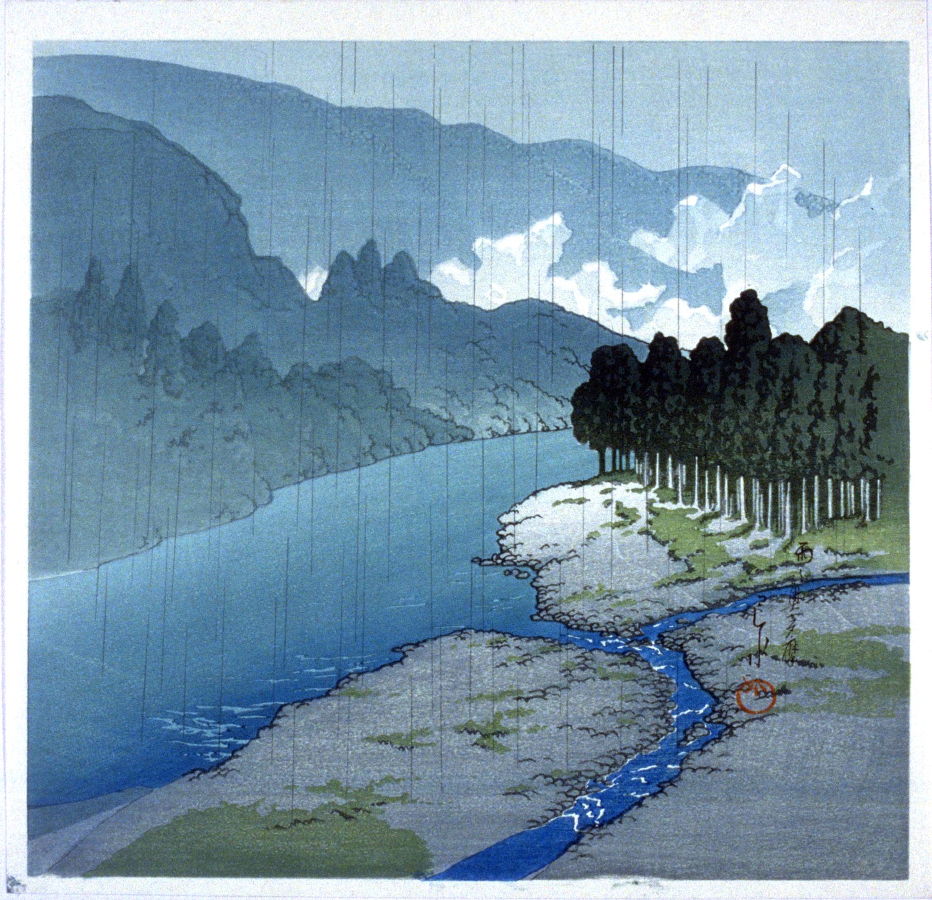
Lake Kugushi in Wakasa Province (Wakasa Kugushiko), from the series Souvenirs of Travel I (Tabi miyage dai isshu)"
Wakasa Kugushiko
1920
Color woodblock print; oban
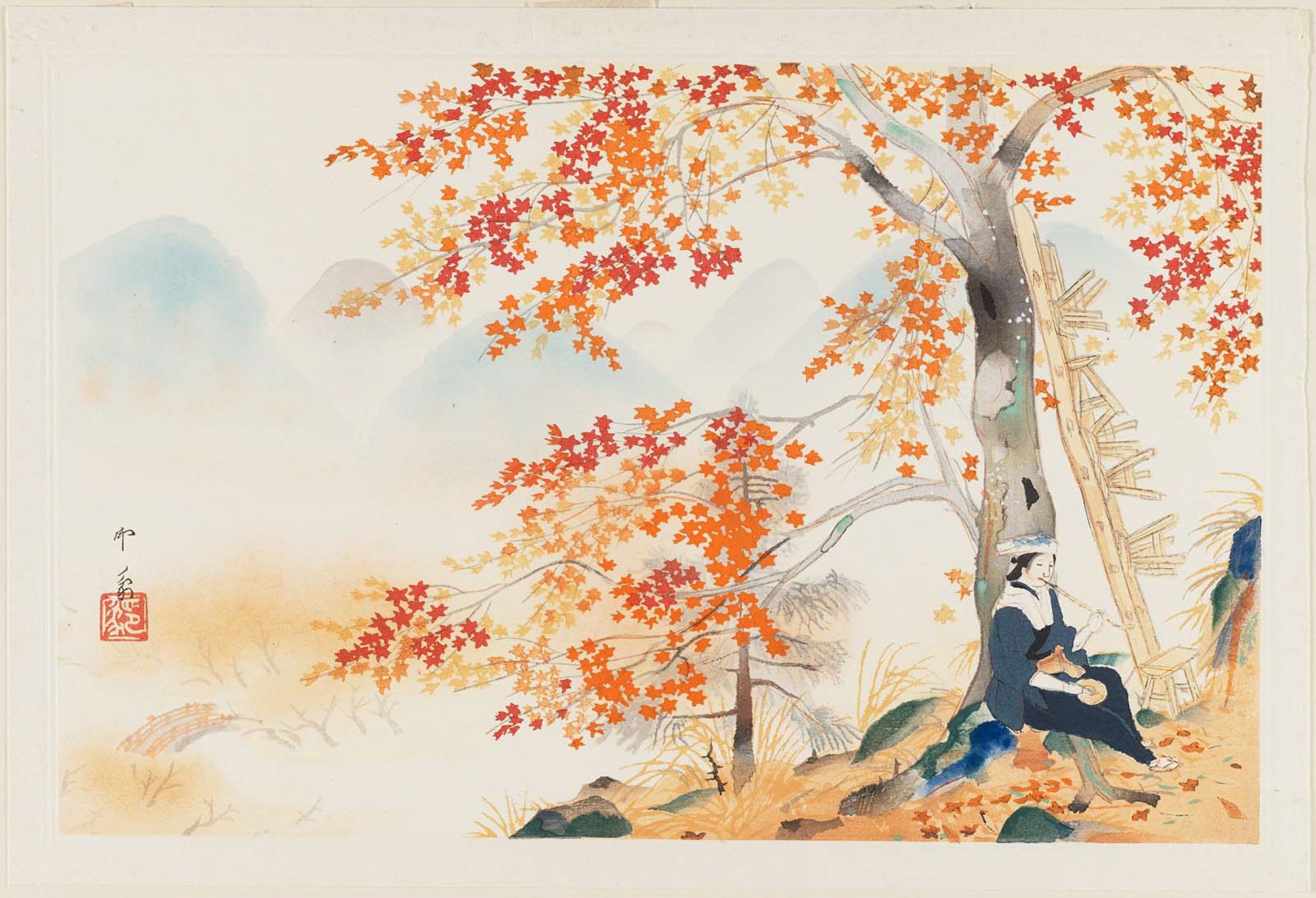
Autumn Maple Leaves at Takao, from the album Eight Views of Kyoto (Kyôto hakkei)
Woodblock print

The Beach at Kaiganji in Sanuki Province (Sanuki Kaiganji no hama), from the series "Collection of Views of Japan II, Kansai Edition (Nihon fukei shu II Kansai hen)"
1934
Color woodblock print; oban

Tea Kettle, section of a sheet from the series "Mirror of Stone Rubbings of Views of the Provinces" (Kohon meihitsu ishizuri kagami)
n.d.
Woodblock print; ishizuri-e, section of harimaze sheet
Featured in Collections
Curated cross-cuts that include this print.
Frequently Asked Questions
Kikyo Gate (Kikyomon), from the series "Twenty Views of Tokyo (Tokyo nijukkei)" (Kikyomon) was created by Kawase Hasui (川瀬巴水) in 1929.
Yes — Kikyo Gate (Kikyomon), from the series "Twenty Views of Tokyo (Tokyo nijukkei)" is part of the Twenty Views of Tokyo series (print 3 of 20) by Kawase Hasui.
Kikyo Gate (Kikyomon), from the series "Twenty Views of Tokyo (Tokyo nijukkei)" uses Moku-hanga, Nishiki-e, and Bokashi, on color woodblock print; oban.
Kikyo Gate (Kikyomon), from the series "Twenty Views of Tokyo (Tokyo nijukkei)" was published by Watanabe Shozaburo (1929).
Kikyo Gate (Kikyomon), from the series "Twenty Views of Tokyo (Tokyo nijukkei)" depicts landscapes, edo & tokyo, and architecture, set at Tokyo.
Kikyo Gate (Kikyomon), from the series "Twenty Views of Tokyo (Tokyo nijukkei)" measures 26 × 38.9 cm (Oban format).