
Chuzenji, Utagahama (Chuzenji Utagahama)
Chuzenji Utagahama
by Kawase Hasui
- Date:
- 1931
- Medium:
- Color woodblock print; oban
- Format:
- Oban
- Dimensions:
- 25.5 × 38.9 cm
- Publisher:
- Watanabe Shozaburo
- Edition:
- Published by Watanabe Shozaburo
- Source:
- Art Institute of Chicago
Description
Chuzenji Utagahama, published in 1931, depicts the beach at Utagahama — the sandy shore along the northern edge of Lake Chuzenji in the Nikko highlands — where the clear, ice-cold mountain lake meets a graveled foreshore backed by forested peaks. Lake Chuzenji at over 1,000 meters elevation was a popular summer resort destination for foreign diplomats and Japanese intellectuals escaping Tokyo's heat, and its European-style villas along the shores gave the scene a slightly cosmopolitan quality unusual in Hasui's catalog. The oban format gives the composition room to develop the lake's wide horizontal expanse against the surrounding mountain backdrop.
Current Listings
$3,800
More Prints by Kawase Hasui

More Landscapes Prints

Lake Kugushi in Wakasa Province (Wakasa Kugushiko), from the series Souvenirs of Travel I (Tabi miyage dai isshu)"
Wakasa Kugushiko
1920
Color woodblock print; oban
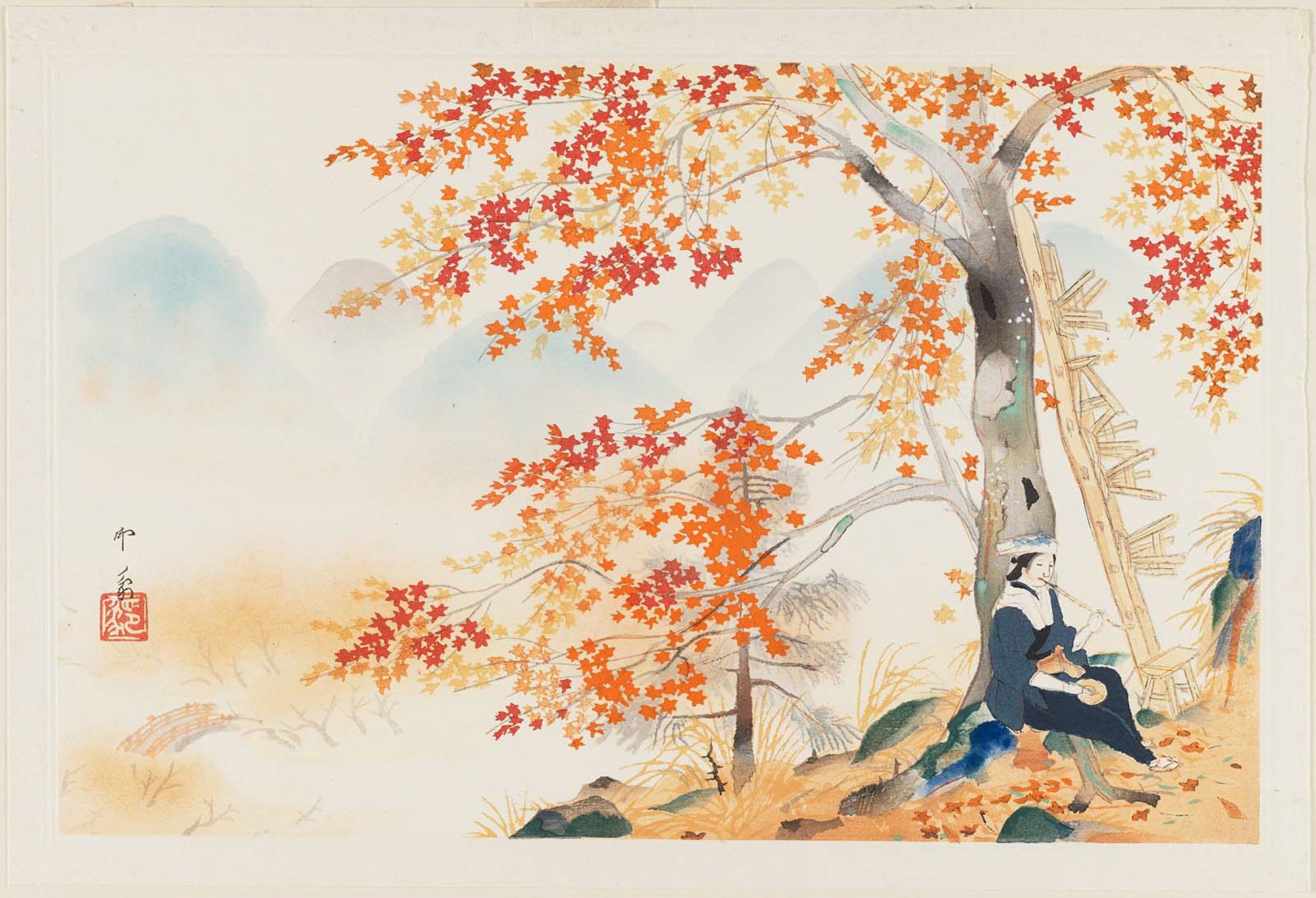
Autumn Maple Leaves at Takao, from the album Eight Views of Kyoto (Kyôto hakkei)
Woodblock print

The Beach at Kaiganji in Sanuki Province (Sanuki Kaiganji no hama), from the series "Collection of Views of Japan II, Kansai Edition (Nihon fukei shu II Kansai hen)"
1934
Color woodblock print; oban

Tea Kettle, section of a sheet from the series "Mirror of Stone Rubbings of Views of the Provinces" (Kohon meihitsu ishizuri kagami)
n.d.
Woodblock print; ishizuri-e, section of harimaze sheet
Featured in Collections
Curated cross-cuts that include this print.
Frequently Asked Questions
Chuzenji, Utagahama (Chuzenji Utagahama) (Chuzenji Utagahama) was created by Kawase Hasui (川瀬巴水) in 1931.
Chuzenji, Utagahama (Chuzenji Utagahama) uses Moku-hanga, Nishiki-e, and Bokashi, on color woodblock print; oban.
Chuzenji, Utagahama (Chuzenji Utagahama) was published by Watanabe Shozaburo (1931).
Chuzenji, Utagahama (Chuzenji Utagahama) depicts landscapes, rivers & lakes, and mountains, set at Lake Chuzenji.
Chuzenji, Utagahama (Chuzenji Utagahama) measures 25.5 × 38.9 cm (Oban format).