
Nihonbashi district
by Oda Kazuma
- Medium:
- Mokuhanga (Japanese woodblock)
- Image courtesy of
- Saru Gallery
Description
Nihonbashi is the historic commercial center of Tokyo, the kilometer-zero point from which Edo-period road distances were measured and the site of the bridge over the Nihonbashi River. By Kazuma's working life, the district had been substantially rebuilt in stone and concrete following the 1923 Kanto earthquake. The print likely depicts this new urban fabric — granite bridges, Western-style commercial buildings, electric lines — rather than the timber storehouses of earlier prints. The subject sits within the Tokyo Junikei tradition that several sosaku hanga artists revisited in the 1920s and 1930s, integrating modern infrastructure into the meisho-e lineage without nostalgic retreat. Kazuma's mokuhanga handles the geometric architecture through clean keyblock cuts and layered color flats, a treatment indebted to his lithographic background. The result reads as an artist-printmaker's record of the interwar metropolis rather than a commercial souvenir of an unchanged Edo.
More Prints by Oda Kazuma

More Urban Scenes Prints
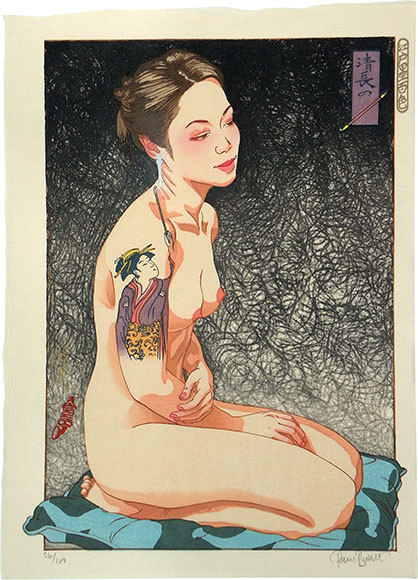
A Hundred Shades of Ink of Edo: Kiyonaga's Pipe (Edo zumi hyaku shoku: Kiyonaga no kiseru)
Woodblock print

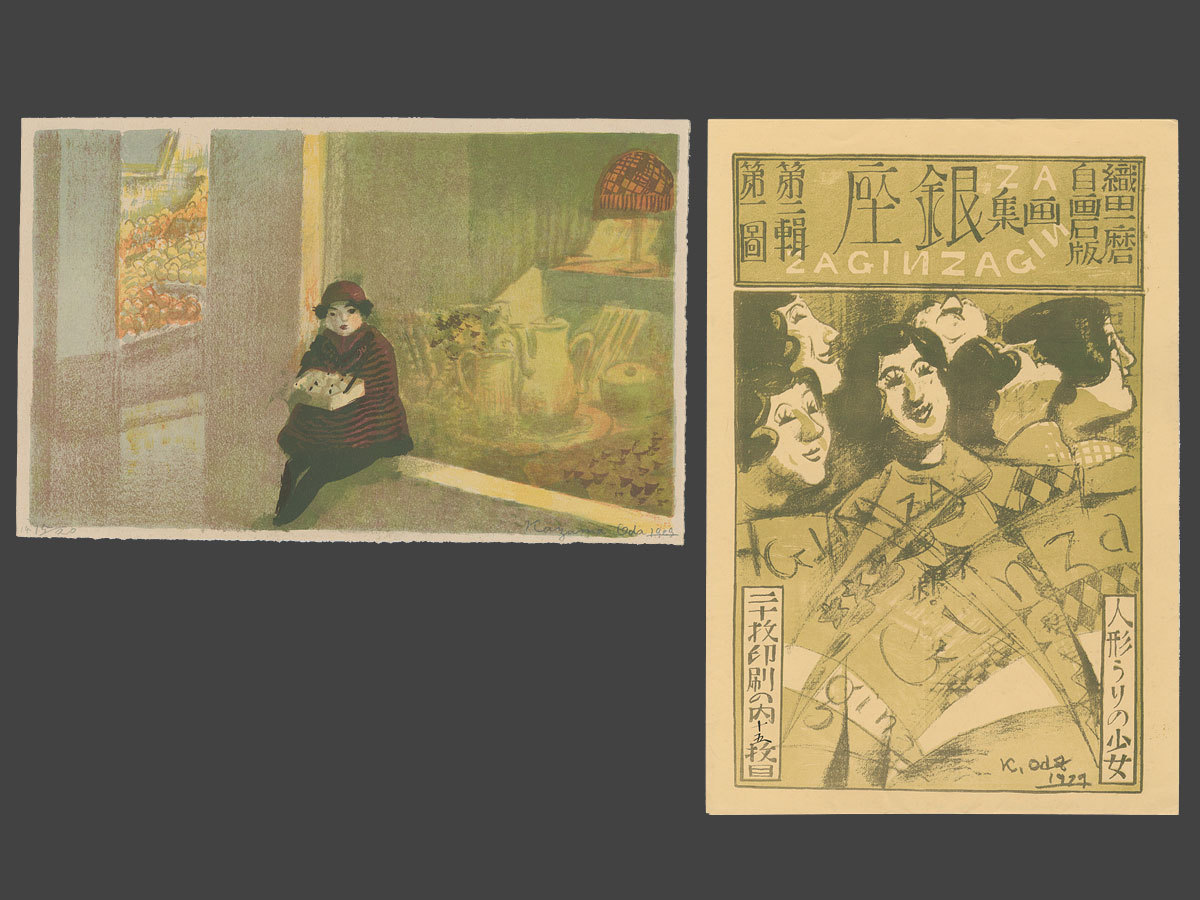
View of Kabuki Theater from Matsuya (Ginza Matsuya yori Kabukiza), no. 3 from the series "Pictures of Ginza, First Series (Gashu Ginza dai isshu)"
1928
Color lithograph

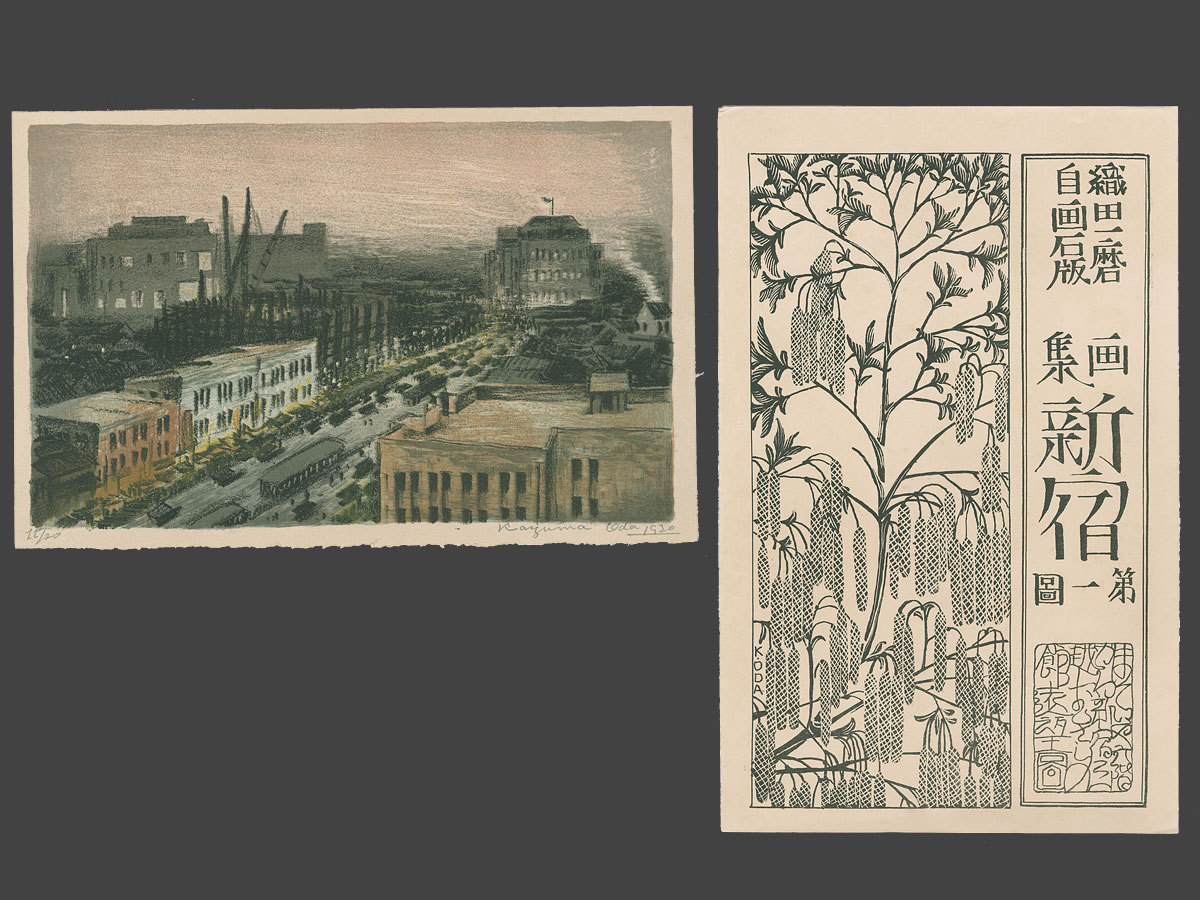
Distant View of Mitsukoshi Movie Theater in Shinjuku from the Sixth Floor of Hoteiya (Hoteiya rokkai kara Shinjuku Mitsukoshi Musashi no kan enbo zu), no. 1 from the series "Scenery of Shinjuku (Gashu Shinjuku fukei)"
1930
Color lithograph
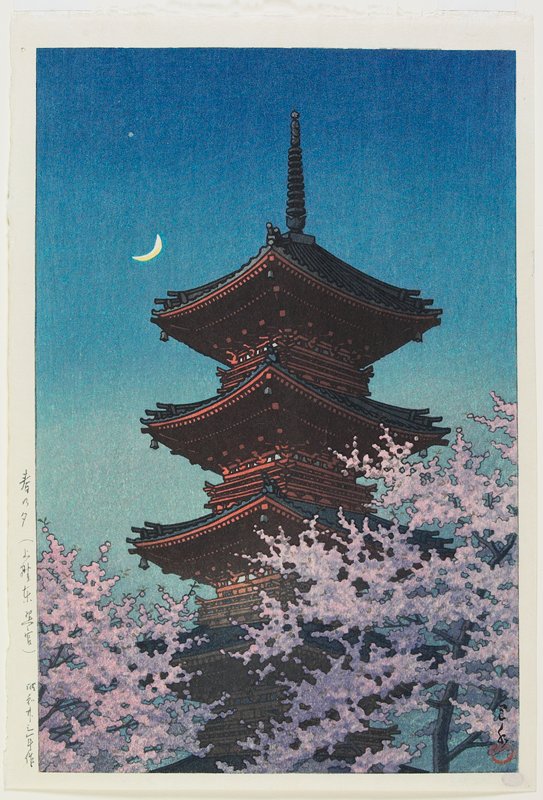
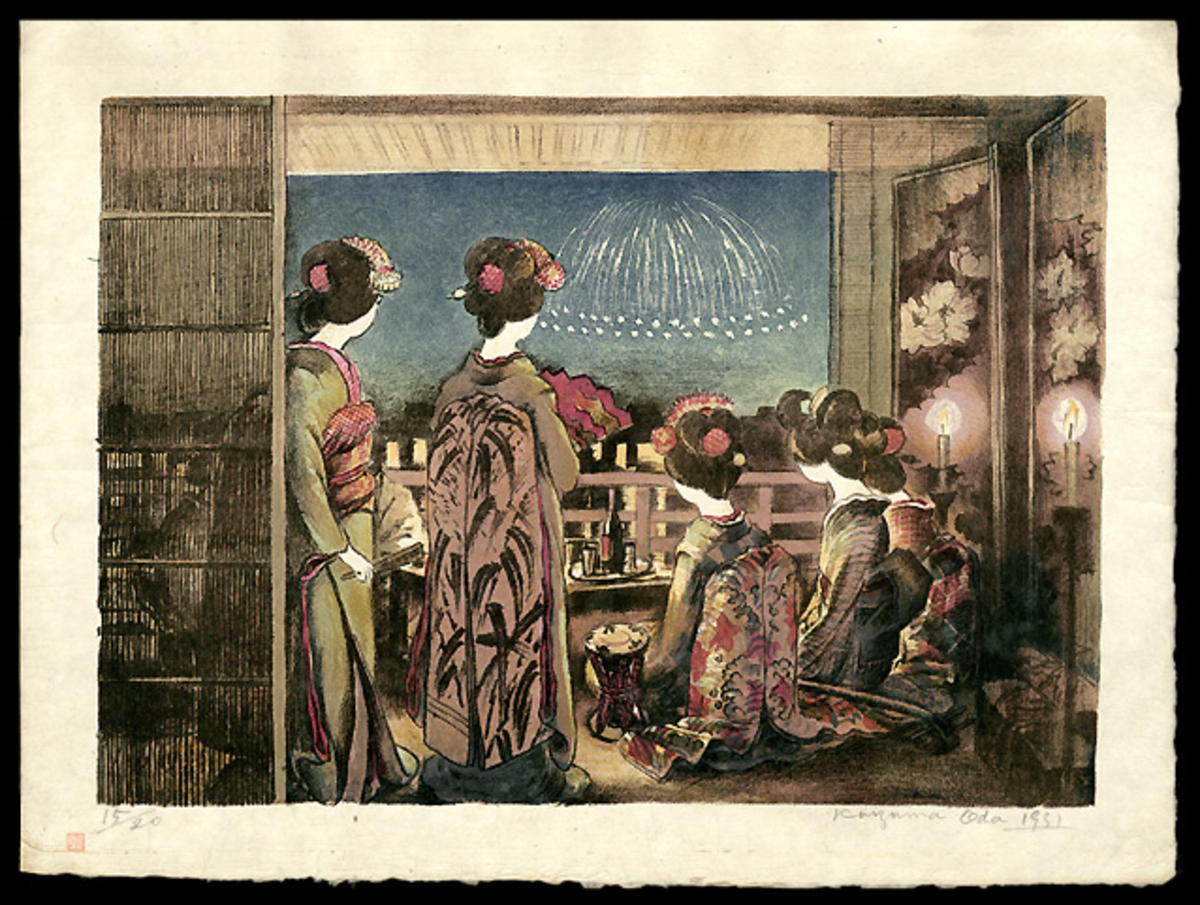
Spring Dusk at the Tōshō Shrine in Ueno
1948
Woodblock print, ink and color on paper
Featured in Collections
Curated cross-cuts that include this print.
Frequently Asked Questions
Nihonbashi district was created by Oda Kazuma (織田一磨).
Nihonbashi district depicts urban scenes.