
Hydrangeas in Kamakura-(Tokeiji Temple)
- Medium:
- Mokuhanga (Japanese woodblock)
- Image courtesy of
- Hanga Ten
Description
This print depicts the hydrangeas (ajisai) for which Tokeiji, a Rinzai Zen temple in Kamakura founded in 1285, is widely associated during the early-summer rainy season. Ohtsu sets the flowering shrubs against the temple's grounds, likely incorporating stone steps, moss, or a thatched gate to anchor the composition in a specific place — a meisho-e treatment fused with kacho-e subject matter. The clustered florets of hydrangea reward the bokashi gradation technique, and the print likely uses overlapping impressions of blue, violet, and pale rose to build the rounded blossoms, with sumi key blocks defining leaves and architectural edges. Tokeiji, historically known as the kakekomi-dera or refuge temple for women, carries quiet cultural resonance that suits Ohtsu's contemplative register. Within his wider body of work, which dwells on rural lanes, paddies, and farmhouses, this Kamakura subject extends his interest in the seasonal calendar of Japanese place — rendering a temple precinct in the same hushed, intimate key he brings to village landscapes.
More Prints by Kazuyuki Ohtsu


More Temples & Shrines Prints
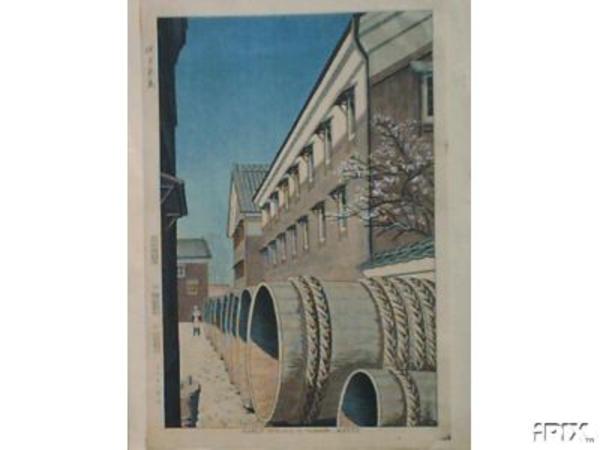
Fushimi Inari Temple
伏見稲荷
Woodblock print

The Compound of the Tenman Shrine at Kameido in the Snow (Kameido Tenmangu keidai no yuki), from the series "Famous Places in the Eastern Capital (Toto meisho)"
c. 1832/38
Color woodblock print; oban
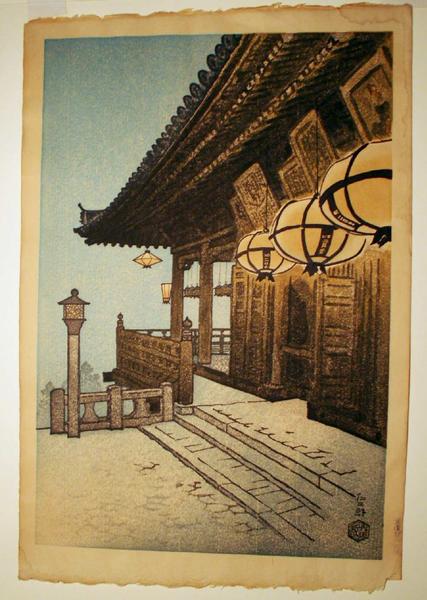
Temple with lanterns
Woodblock print

A Section of the Byodo Temple at Uji (Uji Byodoin no ichibu), from the series "Souvenirs of Travel, Second Series (Tabi miyage dai nishu)"
Uji Byodoin no ichibu
1921
Color woodblock print; oban
Featured in Collections
Curated cross-cuts that include this print.
Frequently Asked Questions
Hydrangeas in Kamakura-(Tokeiji Temple) was created by Kazuyuki Ohtsu (大津一幸).
Hydrangeas in Kamakura-(Tokeiji Temple) depicts temples & shrines.