
The Compound of the Tenman Shrine at Kameido in the Snow (Kameido Tenmangu keidai no yuki), from the series "Famous Places in the Eastern Capital (Toto meisho)"
- Date:
- c. 1832/38
- Medium:
- Color woodblock print; oban
- Source:
- Art Institute of Chicago
Description
Utagawa Hiroshige's "The Compound of the Tenman Shrine at Kameido in the Snow (Kameido Tenmangu keidai no yuki)," from the series "Famous Places in the Eastern Capital (Toto meisho)," dated 1827 in the Art Institute of Chicago's records, is a serene snow landscape print from the heart of his early Edo ukiyo-e practice. Kameido Tenjin was one of Edo's most popular shrines, dedicated to the scholar-deity Sugawara no Michizane and famous for its plum blossoms, drum bridge, and wisteria, drawing pilgrims and pleasure-seekers across the seasons. Hiroshige reframes this familiar site as a quiet winter view, blanketing rooftops, lanterns, and pine boughs in fresh snow and inviting the viewer to see the shrine compound stripped to its compositional essentials. The hushed palette and soft tonal grading reveal his early mastery of mood, anticipating the snow scenes that would become signatures of his career. For visitors to Edo, prints like this functioned as both souvenirs and aspirational images, encouraging seasonal pilgrimages and helping cement the meisho-e canon of the Eastern Capital. The shrine's role in literary and scholarly culture gives the design an additional layer: a place associated with learning and poetry is here viewed through the contemplative lens of snow, a season often paired in classical Japanese aesthetics with reflection and stillness. The Toto meisho series helped consolidate Hiroshige's reputation as a landscape print designer before he became famous for the Tokaido road, and this Kameido sheet is a key part of that early body of work. Now held at the Art Institute of Chicago, this Utagawa Hiroshige Kameido Tenjin snow landscape print preserves a vivid record of Edo religious topography and seasonal experience for modern viewers of Japanese woodblock prints.
More Prints by Utagawa Hiroshige


More Landscapes Prints

Lake Kugushi in Wakasa Province (Wakasa Kugushiko), from the series Souvenirs of Travel I (Tabi miyage dai isshu)"
Wakasa Kugushiko
1920
Color woodblock print; oban
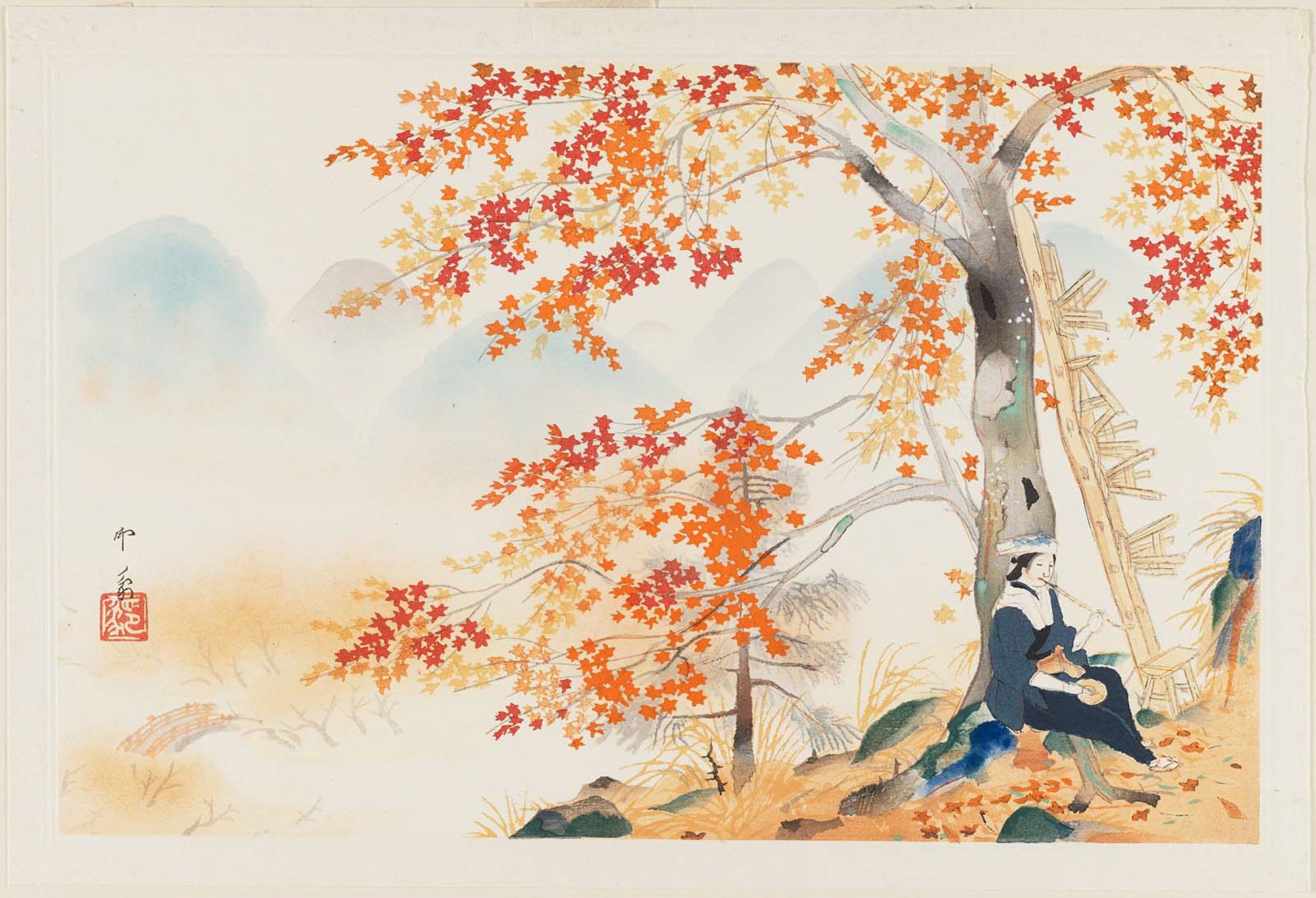
Autumn Maple Leaves at Takao, from the album Eight Views of Kyoto (Kyôto hakkei)
Woodblock print

The Beach at Kaiganji in Sanuki Province (Sanuki Kaiganji no hama), from the series "Collection of Views of Japan II, Kansai Edition (Nihon fukei shu II Kansai hen)"
1934
Color woodblock print; oban

Tea Kettle, section of a sheet from the series "Mirror of Stone Rubbings of Views of the Provinces" (Kohon meihitsu ishizuri kagami)
n.d.
Woodblock print; ishizuri-e, section of harimaze sheet
Featured in Collections
Curated cross-cuts that include this print.
Frequently Asked Questions
The Compound of the Tenman Shrine at Kameido in the Snow (Kameido Tenmangu keidai no yuki), from the series "Famous Places in the Eastern Capital (Toto meisho)" was created by Utagawa Hiroshige (歌川広重) in c. 1832/38.
Yes — The Compound of the Tenman Shrine at Kameido in the Snow (Kameido Tenmangu keidai no yuki), from the series "Famous Places in the Eastern Capital (Toto meisho)" is part of the Famous Places in the Eastern Capital series by Utagawa Hiroshige.
The Compound of the Tenman Shrine at Kameido in the Snow (Kameido Tenmangu keidai no yuki), from the series "Famous Places in the Eastern Capital (Toto meisho)" depicts landscapes, edo & tokyo, and snow scenes.