
Lake side in Snow (Mt.Bandai)
- Medium:
- Mokuhanga (Japanese woodblock)
- Image courtesy of
- Hanga Ten
Description
Mt. Bandai rises over the lakes of central Fukushima, with Lake Inawashiro to its south and the smaller Goshiki-numa ponds spread across its northern flank, all transformed under deep winter snow. Ohtsu's composition likely places the mountain's distinctive silhouette in the upper register, with a foreground of snow-laden trees or a frozen lakeshore receding toward open water. The print continues his interest in the seasonal landscapes of northern Honshu, where heavy snow defines daily life for several months of the year. Snow scenes in mokuhanga are technically demanding: the unprinted washi itself stands in for snow, while the carver leaves narrow ridges that read as fence-posts, branches, or thatch breaking the white expanse. Bokashi gradations soften the transition between overcast sky and the mountain's volume, and a low-key palette of indigos, grays, and umber carries the cold air. Among Ohtsu's lakeside winter prints, the Bandai subjects share the contemplative quietness of his Tohoku village views, with the lake providing a reflective horizontal that anchors the mountain above.
More Prints by Kazuyuki Ohtsu


More Snow Scenes Prints
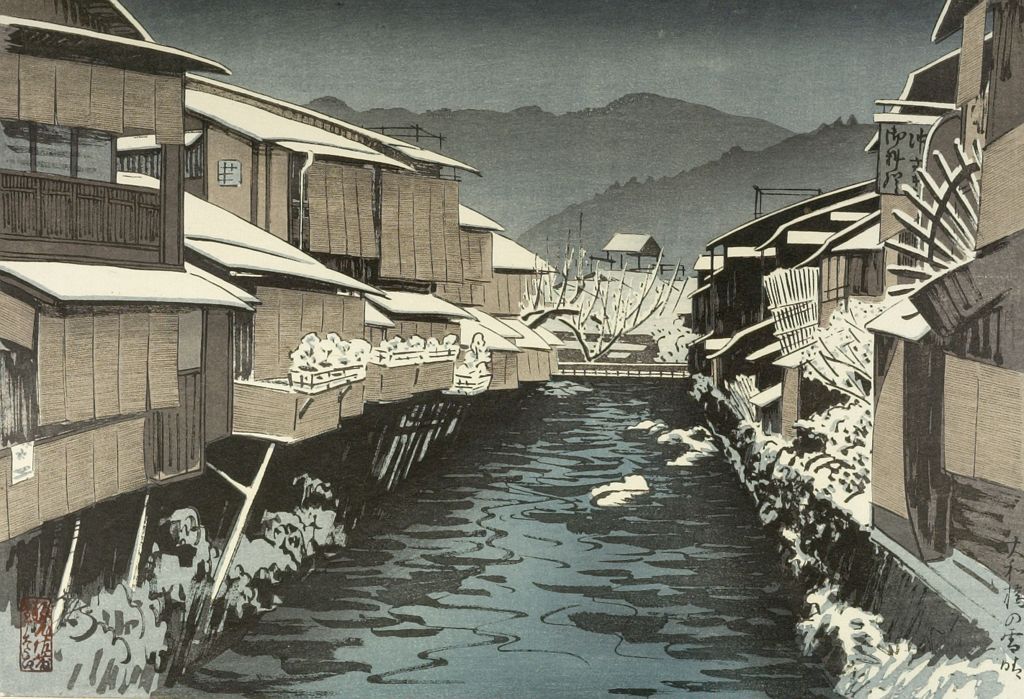
Fair Weather After Snow at Yamato Bridge, Kyoto (Yamato bashi no yukibare), Taishô period, dated 1924
Woodblock print

The Compound of the Tenman Shrine at Kameido in the Snow (Kameido Tenmangu keidai no yuki), from the series "Famous Places in the Eastern Capital (Toto meisho)"
c. 1832/38
Color woodblock print; oban

Miyajima in Snow (Yuki no Miyajima)
Yuki no Miyajima
1929
Color woodblock print; oban
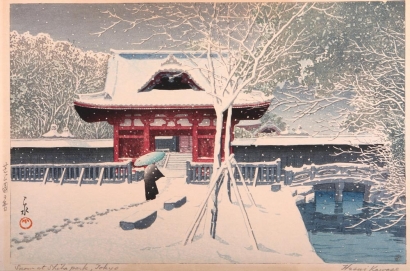
Evening Snow at Shiha Park, Tokyo
1932
Woodblock print
Frequently Asked Questions
Lake side in Snow (Mt.Bandai) was created by Kazuyuki Ohtsu (大津一幸).
Lake side in Snow (Mt.Bandai) depicts snow scenes, rivers & lakes, and mountains.