
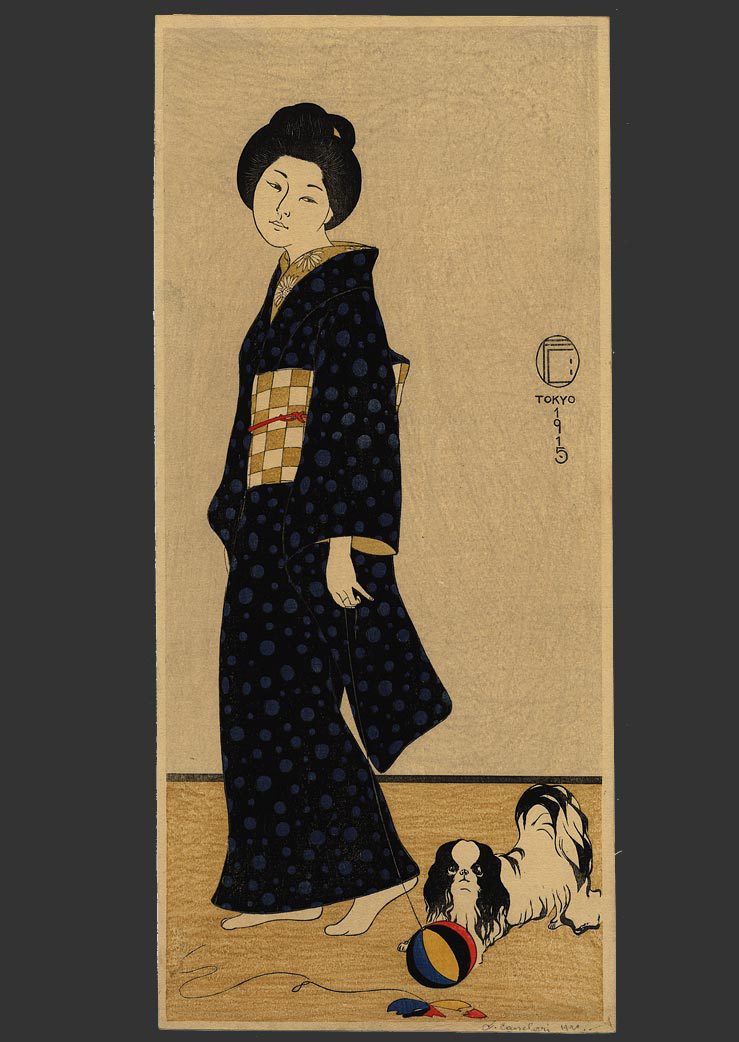
Woman In a kimono
- Medium:
- Mokuhanga (Japanese woodblock)
- Image courtesy of
- Saru Gallery
Description
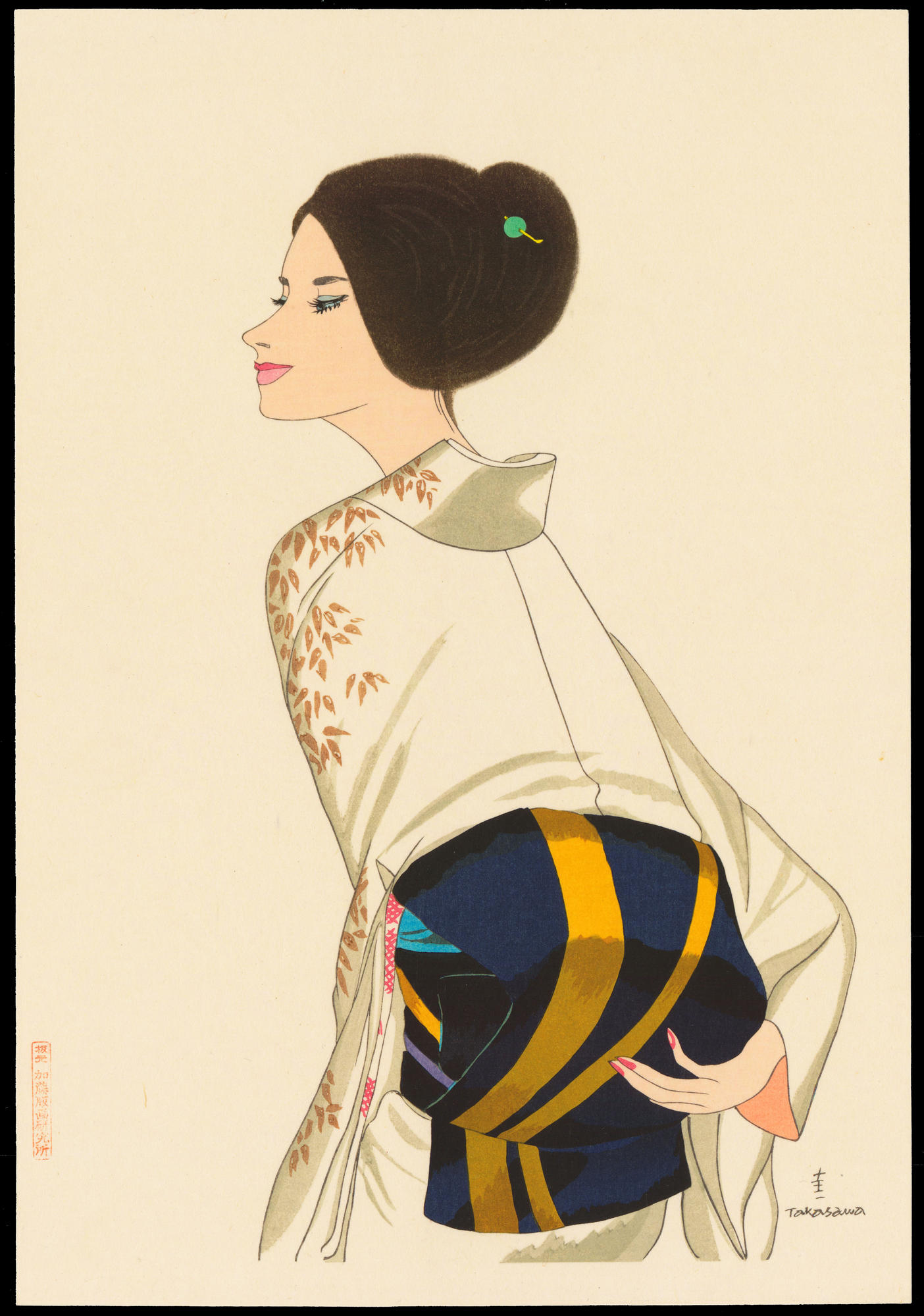
Tagged as bijin-ga, this print depicts a woman dressed in a kimono, placing it within the longest-running subject category in Japanese woodblock printmaking. From the genre's emergence in the seventeenth century through the shin-hanga revival of the early twentieth, bijin-ga artists treated the kimono as both garment and design surface, using its pattern, drape, and color to organize the composition. In mokuhanga, the textile is built up from successive impressions of separately carved blocks, each transferred through baren pressure onto washi paper. Pattern blocks may incorporate karazuri (blind embossing) for raised motifs, while areas of saturated color provide compositional anchors and contrast against the lighter ground. Within Takasawa Keiichi's broader output, multiple prints depict women in kimono, indicating a sustained engagement with this subject. The prevalence of women among his recorded works suggests bijin-ga formed a primary thematic strand, complemented by abstract or geometric studies that explore pattern independently of figuration.
More Prints by Takasawa Keiichi
More Bijin-ga Prints

Featured in Collections
Curated cross-cuts that include this print.
Frequently Asked Questions
Woman In a kimono was created by Takasawa Keiichi (高沢圭一).
Woman In a kimono depicts bijin-ga.