
Maiko — 舞妓の図
by Insho Domoto
- Medium:
- Woodblock print
- Format:
- Oban
- Source:
- Japanese Art Open Database
Description
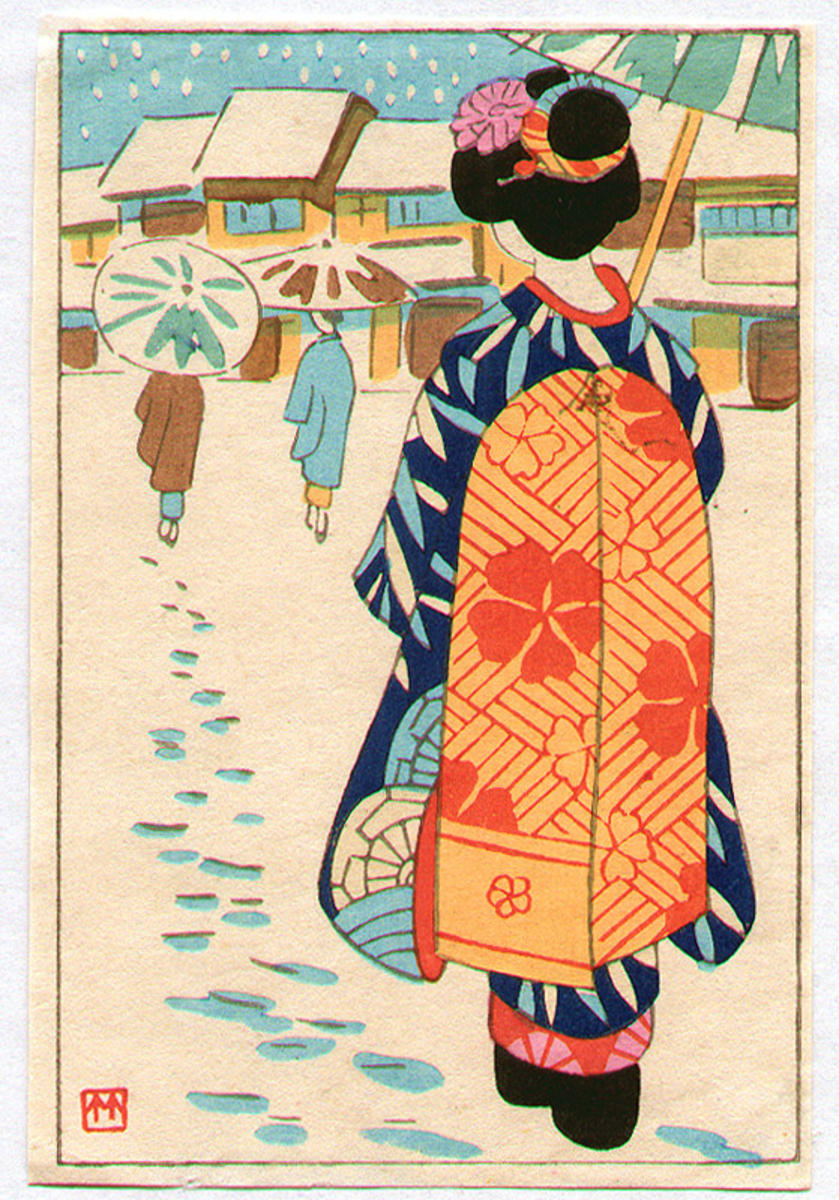
This oban woodblock print depicts a maiko, an apprentice geisha of Kyoto's traditional entertainment districts. The Japanese title, Maiko no Zu (Picture of a Maiko), frames the image as a formal study of the young woman in her elaborate costume. Maiko are distinguished by their trailing obi sashes, ornate seasonal hair ornaments (kanzashi), and the white-painted faces and necks that create the mask-like beauty central to geisha aesthetics. Domoto, working in Kyoto where the maiko tradition has its deepest roots, renders his subject with an awareness that extends beyond surface appearance to the cultural system the maiko embodies. The print belongs to the bijin-ga lineage while reflecting Domoto's Nihonga training in its attention to the material textures of silk, lacquer, and cosmetic white.
More Prints by Insho Domoto
More Bijin-ga Prints
Featured in Collections
Curated cross-cuts that include this print.
Frequently Asked Questions
Maiko — 舞妓の図 was created by Insho Domoto (堂本印象).
Maiko — 舞妓の図 depicts bijin-ga.