
Mt Fuji
- Medium:
- Mokuhanga (Japanese woodblock)
- Image courtesy of
- Saru Gallery
Description
The third in Sasajima's recurring Fuji studies, this print continues his serial reworking of the mountain through changes in carving register, ink choice, or composition. Sasajima typically resolved Fuji into two or three flat tonal areas: the dark, broadly carved mass of the peak; a lighter foreground band suggesting plain or lake; and an unprinted or lightly inked sky where the plank's grain reads through. He worked in oban-scale and larger formats on absorbent washi, pressing the block by hand with a baren in the sosaku-hanga manner he absorbed under Onchi Koshiro. The lineage matters: where ukiyo-e Fuji was a collaborative product of designer, carver, and printer, Sasajima's Fuji is the work of one pair of hands from drawing through final impression. Returning to the subject a third time was characteristic — like his repeated visits to the Nara temples, he treated motifs as problems to be re-solved rather than pictures to be reproduced.
More Prints by Kihei Sasajima

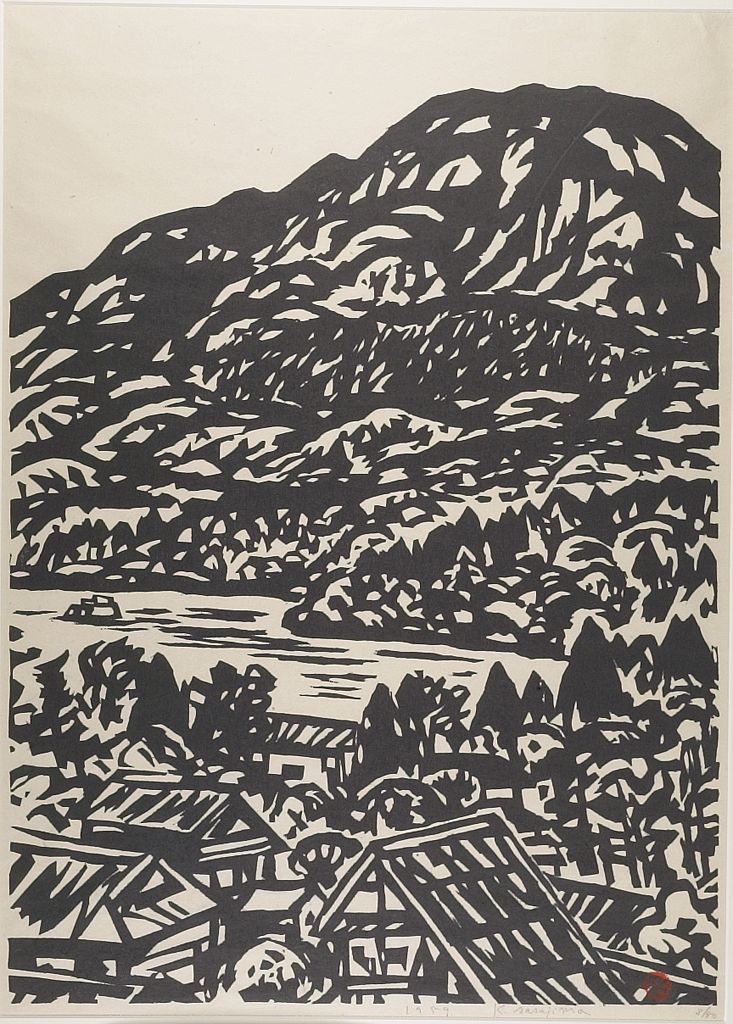
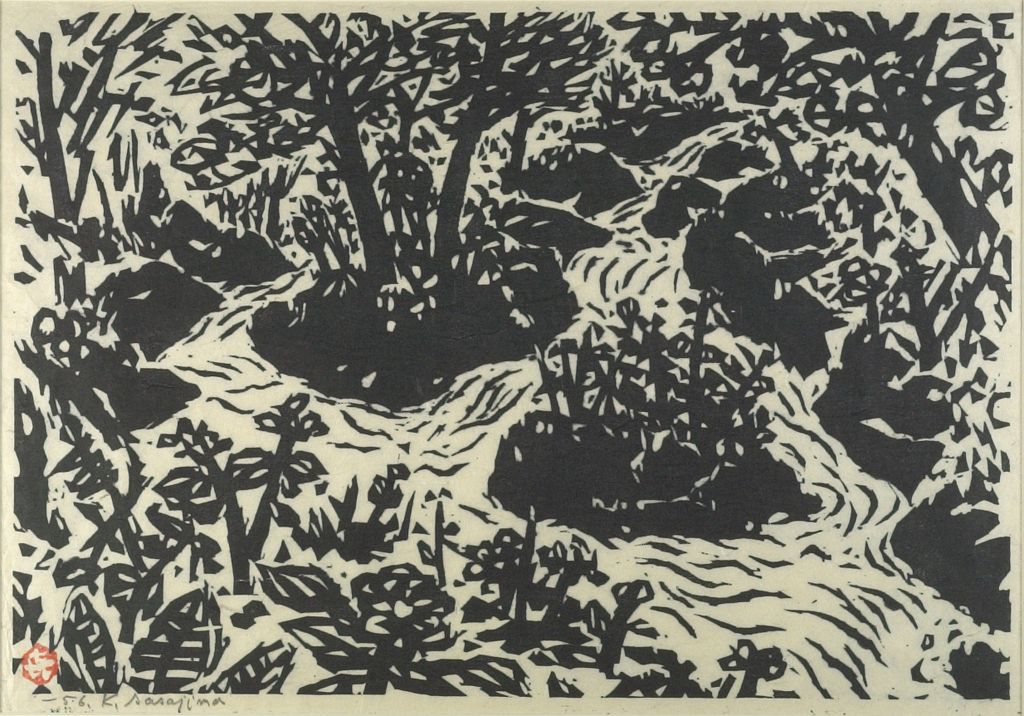

More Mount Fuji Prints
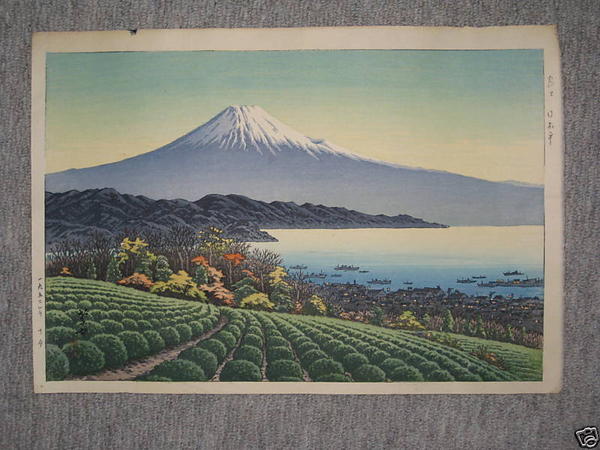
Fuji from tea farm
Woodblock print

Akasaka, Fujikawa, Okazaki, Chiryu, and Narumi, from the series "Famous Places on the Fifty-three Stations of the Tokaido, Five Stations (Tokaido gojusan eki goshuku meisho)"
c. 1830/35
Color woodblock print; oban
![Mount Fuji on a Moonlit Night, Kawai Bridge (Tsukiyo no Fuji [Kawaibashi]), from the series "Selection of Views of the Tokaido (Tokaido fukei senshu)" by Kawase Hasui](https://www.artic.edu/iiif/2/d0960668-1e73-339a-b182-fb995a54bff0/full/843,/0/default.jpg)
Mount Fuji on a Moonlit Night, Kawai Bridge (Tsukiyo no Fuji [Kawaibashi]), from the series "Selection of Views of the Tokaido (Tokaido fukei senshu)"
1947
Color woodblock print; oban

Mt. Fuji in Rain (Ame no Fuji)
n.d.
Color woodblock print
Featured in Collections
Curated cross-cuts that include this print.
Frequently Asked Questions
Mt Fuji was created by Kihei Sasajima (笹島喜平).
Mt Fuji depicts mount fuji.