
The Buddhist goddess Laksmi
- Medium:
- Mokuhanga (Japanese woodblock)
- Image courtesy of
- Saru Gallery
Description
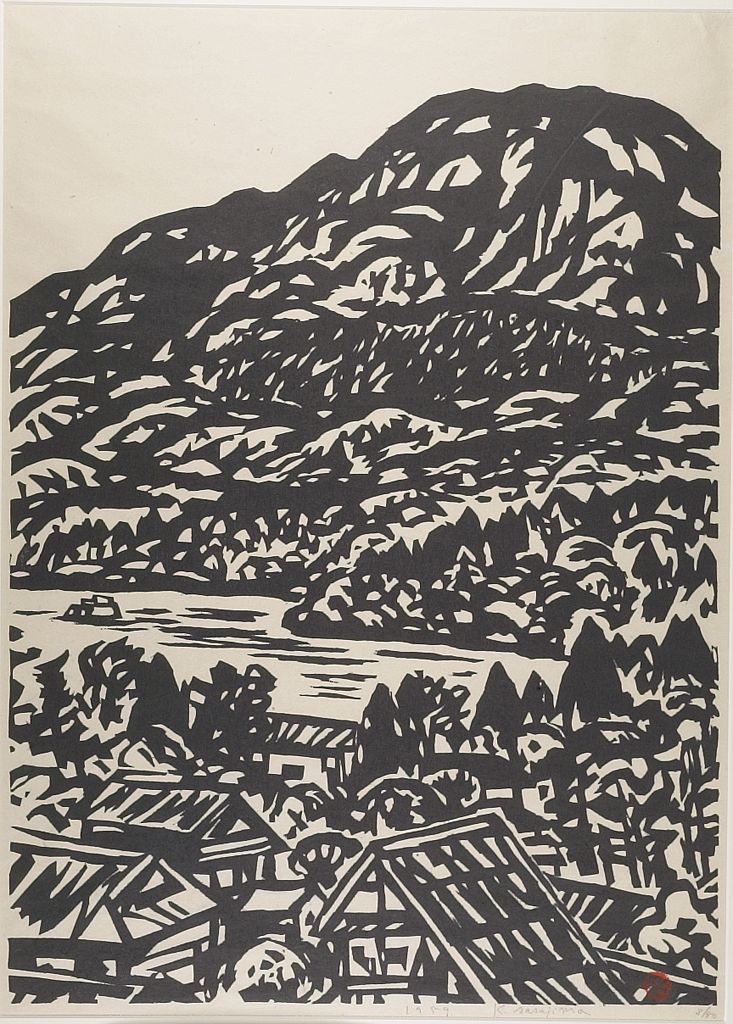
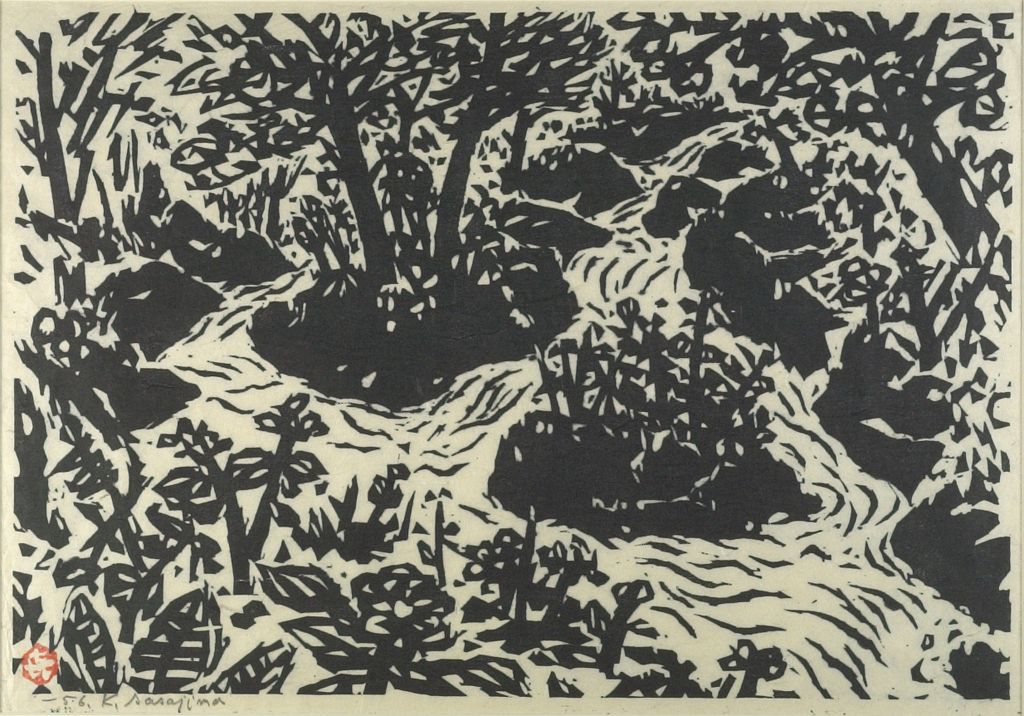
This second print of Kichijoten represents either a state variant or a recut version of the subject, a practice common in sosaku-hanga where the artist working alone could revisit a composition with adjusted color, key block, or paper. Where commercial Edo-period publishers issued tightly controlled editions, sosaku-hanga prints often exist in small, subtly differentiated runs reflecting the artist's continuing engagement with the image. Sasajima would have re-inscribed the deity's posture and attributes — typically the cintamani jewel and continental-style robes derived from Nara-period Buddhist iconography — through fresh carving rather than preserved blocks. The subject extends his interest in Buddhist devotional culture, the same scholarly attention that produced his repeated returns to the temple complexes of Nara and Kyoto. Heavy karazuri embossing and pronounced gouge marks, hallmarks of his hand-printed practice under Onchi Koshiro's influence, would carry the same tactile weight he brought to depictions of stone foundations and timber gates.
More Prints by Kihei Sasajima


More Religious Prints

The Great Buddha, Kamakura (Kamakura Daibutsu)
Kamakura Daibutsu
1930
Color woodblock print

Hall of the Great Buddha (Nara Daibutsuden)
1950
Color woodblock print
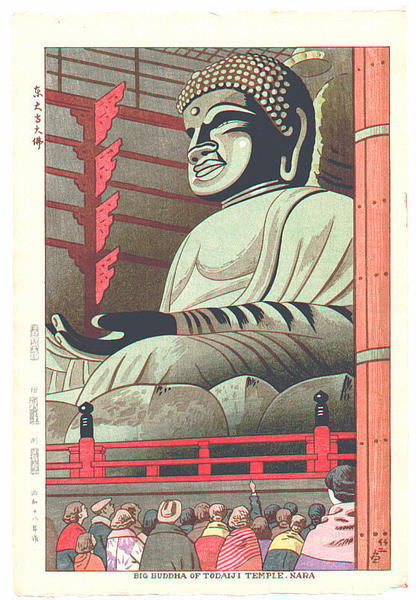
Great Buddha
大仏
Woodblock print

Clearing after a Snowfall at the Kannon Temple in Asakusa (Asakusa Kannon no yukibare), from the series "Twenty Views of Tokyo (Tokyo nijukkei)"
1926
Color woodblock print; oban
Featured in Collections
Curated cross-cuts that include this print.
Frequently Asked Questions
The Buddhist goddess Laksmi was created by Kihei Sasajima (笹島喜平).
The Buddhist goddess Laksmi depicts religious.