
Fūryū Mu Tamagawa (Elegant Six Tama Rivers)
風流六玉川
- Date:
- early 1800s
- Medium:
- Color woodblock print
- Source:
- Museum of Fine Arts, Boston
Description
Fūryū Mu Tamagawa (風流六玉川, 'Elegant Six Tama Rivers') is a color woodblock print by Kitagawa Hidemaro of the early nineteenth century, held by the Museum of Fine Arts Boston (object number 217099). The series title belongs to the long Edo tradition of Mu Tamagawa ('Six Tama Rivers') mitate prints, in which each of the six classical Tama Rivers of Japanese poetry — Tamagawa of Mount Kōya, of Chōfu, of Tetsukuri-no-sato, of Noda, of Noji, and of Ide — is illustrated by a contemporary bijin scene. Chōbunsai Eishi had produced the most celebrated treatment of the theme in the late 1780s under the same title; Hidemaro's series of the early 1800s continues the mitate template into the Bunka decade. Each print pairs one of the six rivers (each associated with a specific poetic theme — fulling cloth, kerria flowers, wild geese, frogs, plovers, and yamabuki) with a Yoshiwara beauty whose attributes or surroundings evoke the classical reference. The figural style follows Hidemaro's characteristic Kitagawa-school vocabulary — elongated neck, narrow oval face, patterned kimono falling in long vertical folds — and the series places him within the same literary-mitate tradition that had defined his teacher's mature work.
More Prints by Kitagawa Hidemaro
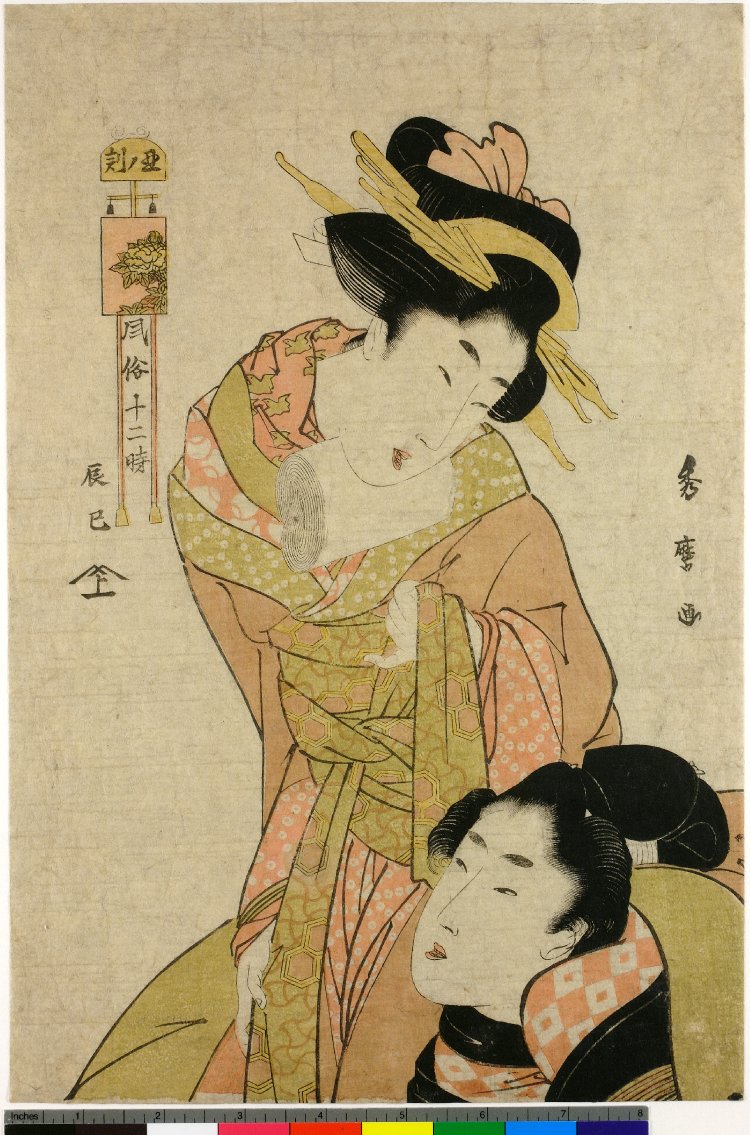
Ushi no Koku (The Hour of the Ox), from the series Customs at the Twelve Hours of the Day (Fūzoku Jūni-Ji)
風俗十二時 丑刻
early 1800s
Color woodblock print
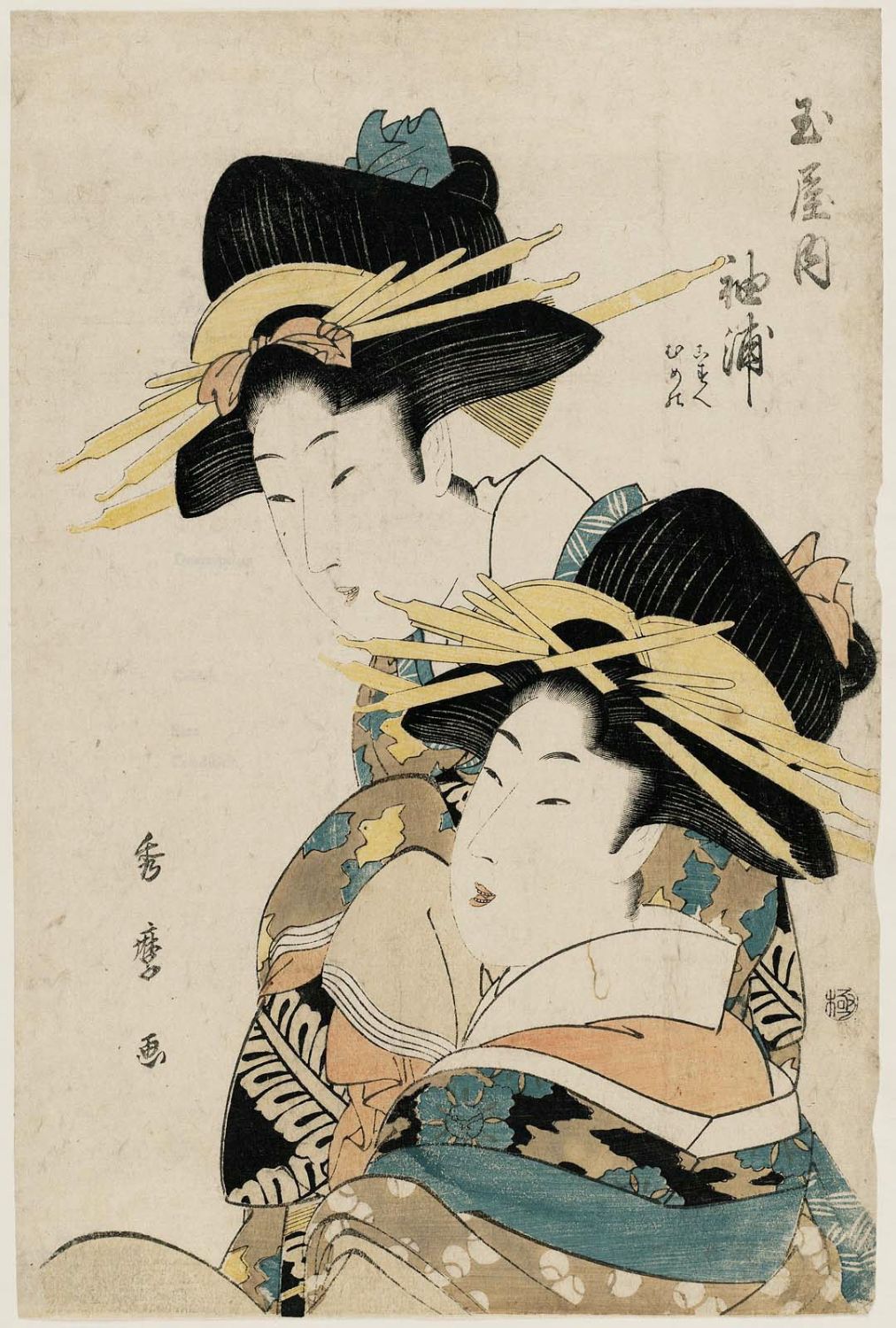
Sodeura of the Tamaya, with Her Kamuro Kozue and Mumeno
early 1800s
Color woodblock print
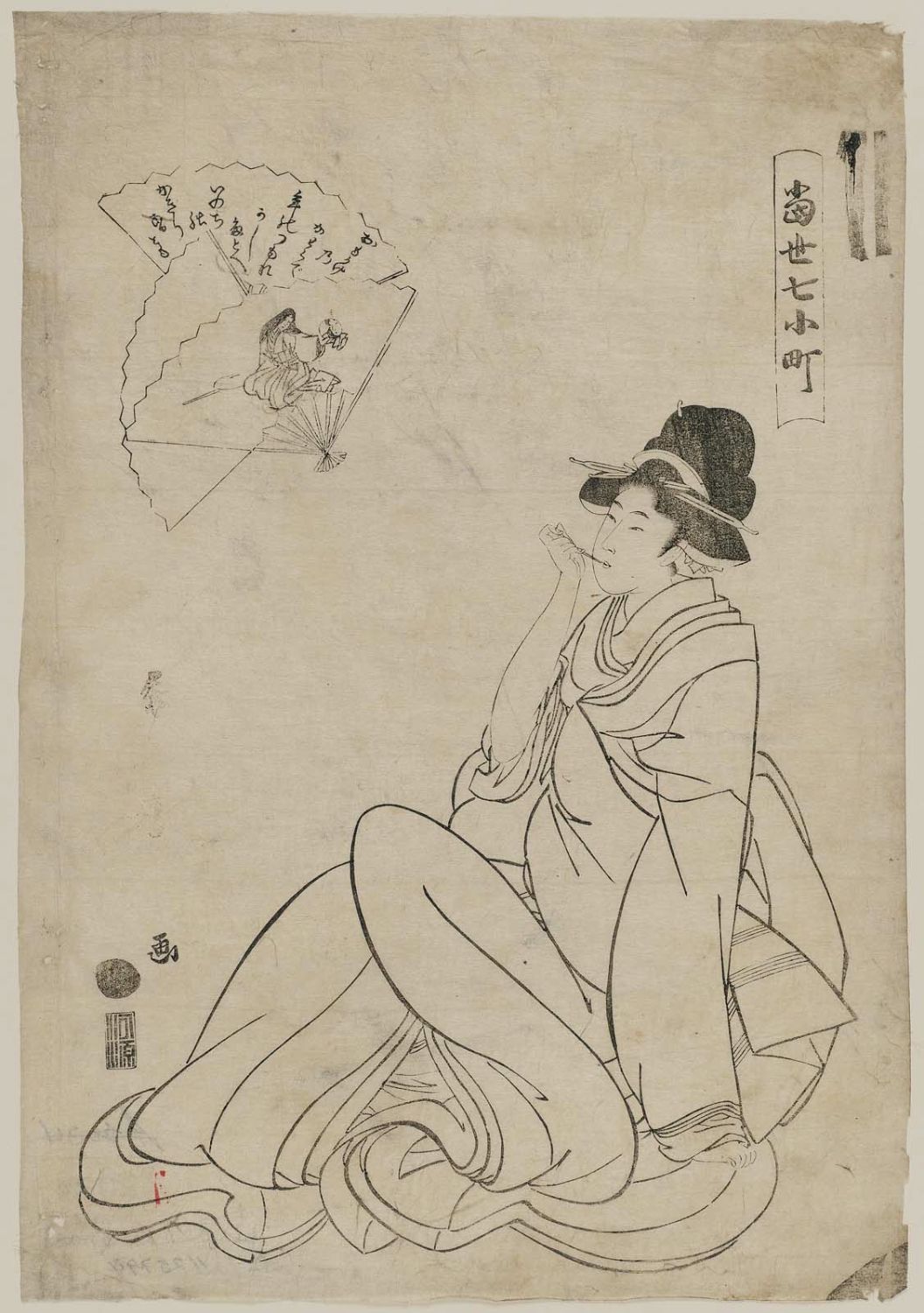
Tōsei Nana Komachi (Seven Komachi of the Day)
当世七小町
early 1800s
Color woodblock print

Triptych Print of a Winter Houseboat Scene
early 1800s
Color woodblock print; oban triptych
Frequently Asked Questions
Fūryū Mu Tamagawa (Elegant Six Tama Rivers) (風流六玉川) was created by Kitagawa Hidemaro (喜多川秀麿) in early 1800s.