
Biography
Kitagawa Hidemaro (喜多川秀麿, active c. 1800–1818) was a pupil and follower of Kitagawa Utamaro (1753–1806), the most celebrated bijin-ga designer of late-eighteenth-century Edo, and one of a small cohort of Utamaro's studio successors who carried the master's distinctive vision of female beauty into the early years of the nineteenth century. His exact birth and death dates are unknown, as are the circumstances of his entry into Utamaro's atelier; his recorded activity falls almost entirely in the years around and after the great master's death, when the Kitagawa school name carried considerable commercial value and several pupils competed to inherit it. Hidemaro's surviving work is concentrated in the Bunka era (1804–1818), and he signed his prints simply 'Hidemaro' (秀麿), working in the immediate orbit of his teacher rather than as an independent stylist.
The Kitagawa school after Utamaro's death in 1806 fractured along several lines. One pupil took the name Kitagawa Utamaro II and inherited the master's signature and chief publishing relationships, producing bijin-ga in a manner that visibly imitated the late Utamaro style. A second cohort of pupils — including Tsukimaro, Hidemaro, Takemaro, and Fujimaro — worked under the Kitagawa name without claiming the master's title, designing courtesan portraits, mitate prints, and triptych genre scenes for the circle of Edo publishers that Utamaro had served. Hidemaro's prints place him squarely within this group of immediate followers. His characteristic large-head courtesan portraits (ōkubi-e) of named Yoshiwara beauties — among them Hanaōgi of the Ōgiya — pick up the half-length format that Utamaro had perfected in the 1790s and continue it into the Bunka decade, with proportions slightly softer and figures slightly more conventionalized than in Utamaro's most celebrated work.
Hidemaro's output documents a transitional moment in late-Edo bijin-ga. By 1800, the Yoshiwara portrait genre that had reached its apogee under Utamaro, Chōbunsai Eishi, and Chōkōsai Eishō was beginning to give way to the new pictorial fashions of the early nineteenth century — the heavier, more sculptural female figure that Kikukawa Eizan and Keisai Eisen would establish in the 1810s and 1820s. Hidemaro's prints sit at the cusp of this shift. The Yoshiwara beauties he portrays are still recognizably Utamaro's: their elongated necks, sloping shoulders, and characteristic head ornament derive directly from his teacher's vocabulary, even as certain quirks of figure-drawing point toward the changes that would soon dominate the bijin-ga market under the Utagawa and Kikukawa schools.
Across the Bunka decade Hidemaro produced a steady output of bijin-ga in the standard print formats of the period: ōkubi-e portraits of named courtesans, full-length figure studies, mitate (parody) prints reworking classical themes through contemporary Yoshiwara settings, and triptychs of seasonal genre subjects. He designed contributions to series that followed the established commercial templates of the Utamaro school, including 'Fūryū Mu Tamagawa' (Elegant Six Tama Rivers) and 'Fūzoku Jūni-Ji' (Customs at the Twelve Hours of the Day), a parody of the classical horary cycle in which each of the twelve animal hours is illustrated by a Yoshiwara scene. His 'Tōsei Nana Komachi' (Seven Komachi of the Day) recasts the well-known Heian poet Ono no Komachi and the classical episodes of her legend as contemporary Yoshiwara beauties, a mitate strategy already standard in late-Utamaro and Eishi production.
Hidemaro worked for the Edo publishers who had built the Yoshiwara print boom of the 1790s, and his prints belong to the last commercial wave of the high-Utamaro Yoshiwara genre before the pleasure-quarter aesthetic was overtaken by the more theatrically oriented production of the Utagawa school. His name appears alongside those of the other Utamaro pupils in the print production of the Bunka decade. By the end of that period his activity fades from the record, and the circumstances and date of his death are not documented.
Kitagawa Hidemaro's surviving prints are held by a number of public collections, including the Museum of Fine Arts, Boston, the British Museum, the Library of Congress, the Harvard Art Museums, and the Chazen Museum of Art at the University of Wisconsin–Madison. Scholarship on Hidemaro is sparse, in part because the documentary record for the artist is so thin and in part because the late-Utamaro pupils have collectively received less attention than the master himself. His work nevertheless provides one of the clearest views of how the Utamaro studio manner persisted into the early nineteenth century, and his ōkubi-e of named Yoshiwara courtesans constitute an important supplement to the late-Utamaro corpus.
Key Facts
- Nationality
- 🇯🇵Japan
- Movement
- Ukiyo-e
- Subjects
- Birds & Flowers
- Works Indexed
- 9
Frequently Asked Questions
Kitagawa Hidemaro (喜多川秀麿, active c. 1800–1818) was a pupil and follower of Kitagawa Utamaro (1753–1806), the most celebrated bijin-ga designer of late-eighteenth-century Edo, and one of a small cohort of Utamaro's studio successors who carried the master's distinctive vision of female beauty into the early years of the nineteenth century. His exact birth and death dates are unknown, as are the circumstances of his entry into Utamaro's atelier; his recorded activity falls almost entirely in the years around and after the great master's death, when the Kitagawa school name carried considerable commercial value and several pupils competed to inherit it. Hidemaro's surviving work is concentrated in the Bunka era (1804–1818), and he signed his prints simply 'Hidemaro' (秀麿), working in the immediate orbit of his teacher rather than as an independent stylist.
Kitagawa Hidemaro's work was shaped by the Ukiyo-e tradition in Japanese woodblock printmaking. Ukiyo-e: ## What is ukiyo-e? Ukiyo-e ([浮世絵](/glossary/ukiyo-e)) — literally "pictures of the floating world" — is the Edo-period Japanese print and painting tradition that flourished from roughly 1660 to 1868, depicting the pleasures of urban life in Edo (modern Tokyo): courtesans, kabuki actors, sumo wrestlers, famous landscapes, and seasonal beauties.
Kitagawa Hidemaro's prints frequently feature birds & flowers.
Original prints by Kitagawa Hidemaro can be found in collections including British Museum, Museum of Fine Arts, Boston, Cleveland Museum of Art, Library of Congress.
Woodblock Prints by Kitagawa Hidemaro (9)
Fuyu no Yanebune (Enjoying a River Cruise in Winter)
冬の屋根舟
between 1801 and 1804
Color woodblock print
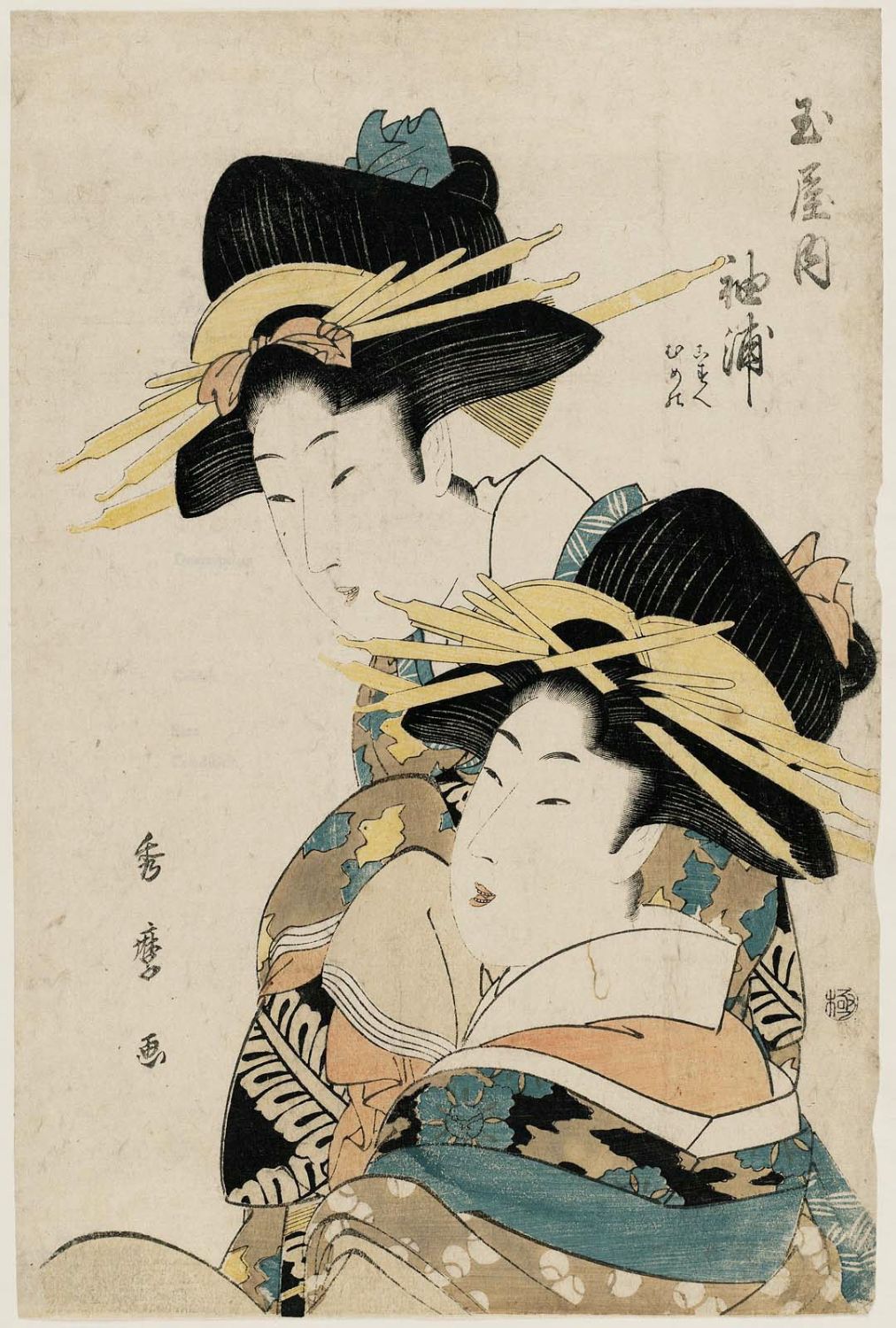
Sodeura of the Tamaya, with Her Kamuro Kozue and Mumeno
early 1800s
Color woodblock print
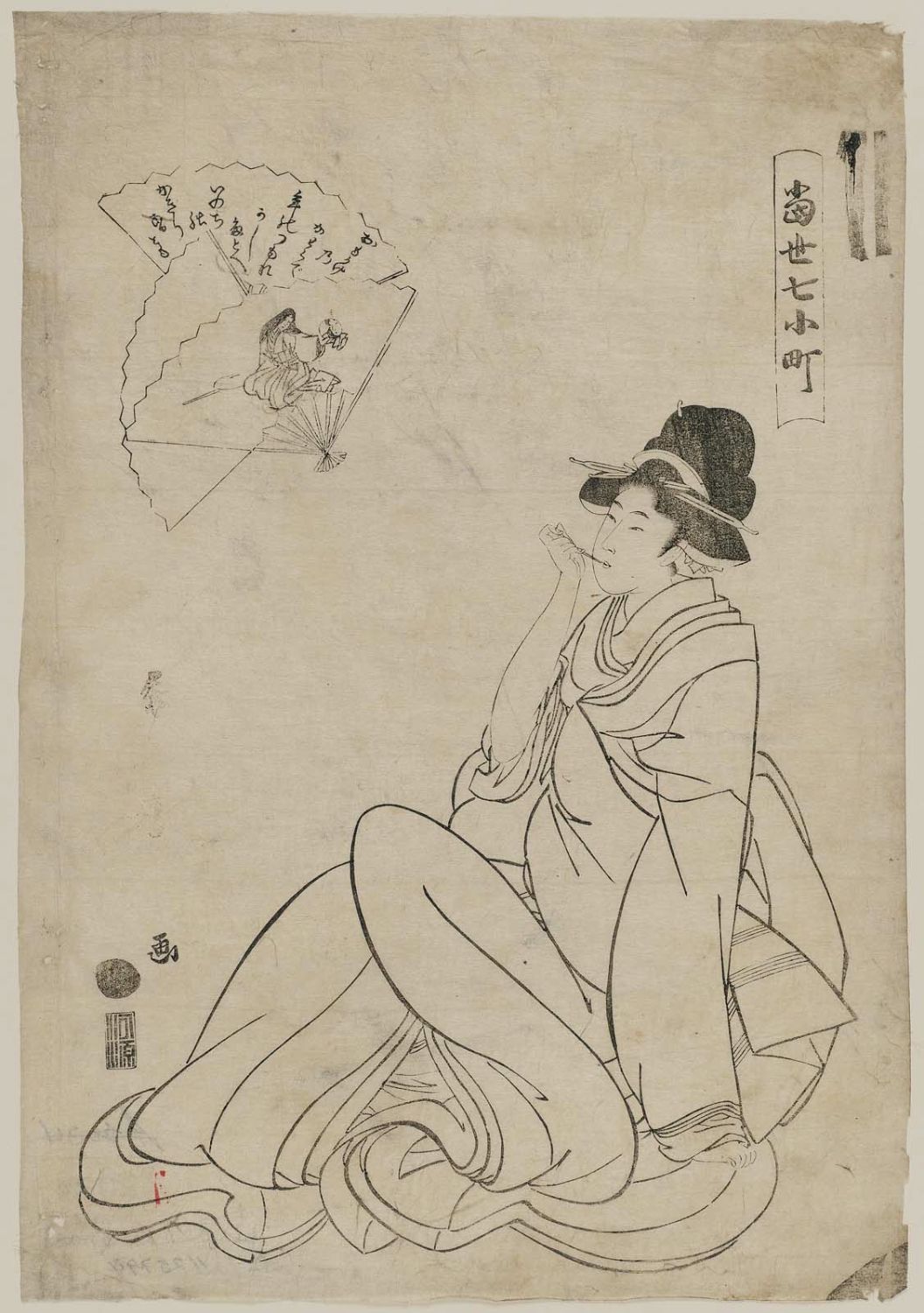
Tōsei Nana Komachi (Seven Komachi of the Day)
当世七小町
early 1800s
Color woodblock print

Triptych Print of a Winter Houseboat Scene
early 1800s
Color woodblock print; oban triptych
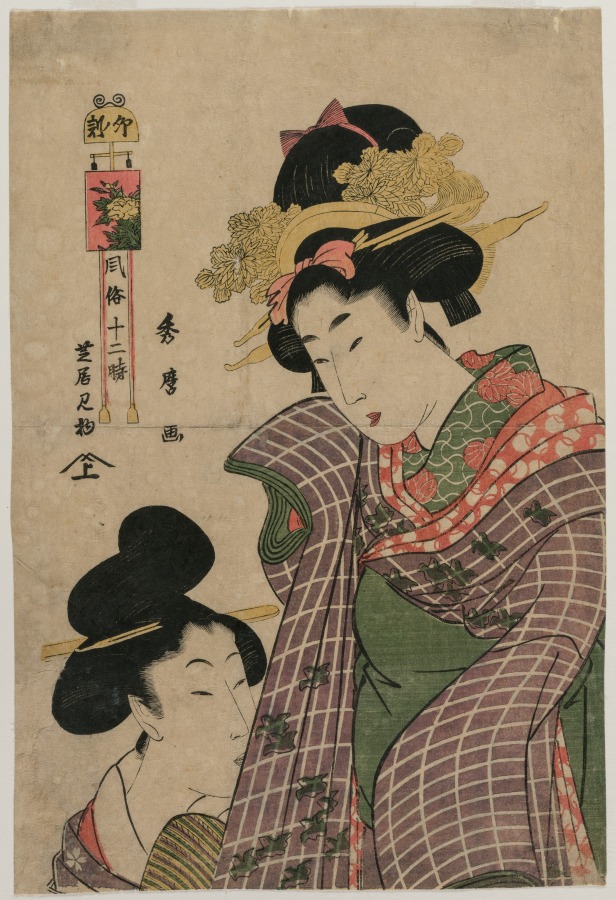
Going to the Kabuki Theater in the Hour of the Hare, from the series Customs at the Twelve Hours of the Day (Fūzoku Jūni-Ji)
風俗十二時 卯刻 歌舞伎見物
early 1800s
Color woodblock print

Fūryū Mu Tamagawa (Elegant Six Tama Rivers)
風流六玉川
early 1800s
Color woodblock print
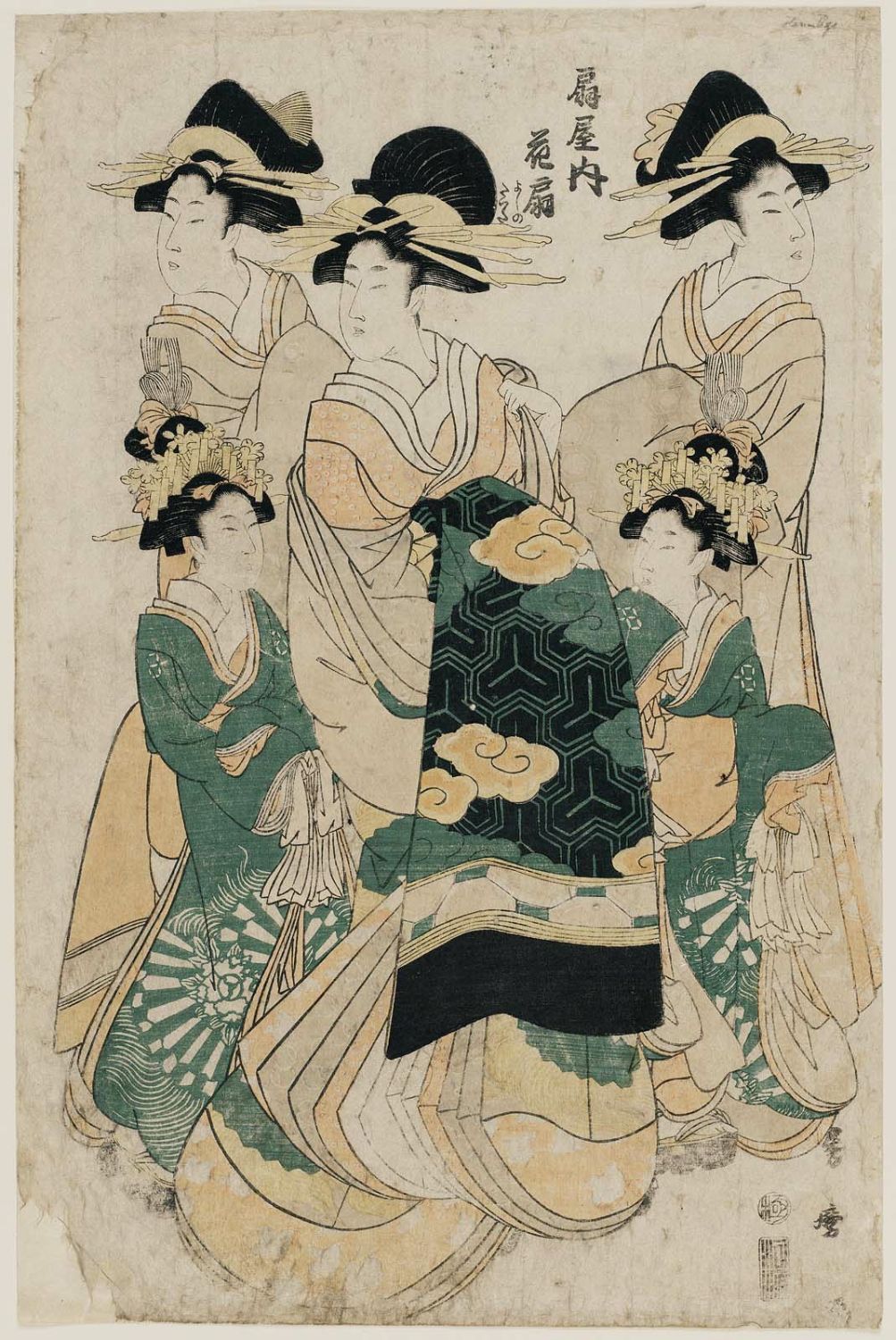
Hanaōgi of the Ōgiya, with Her Kamuro Yoshino and Tatsuta
early 1800s
Color woodblock print
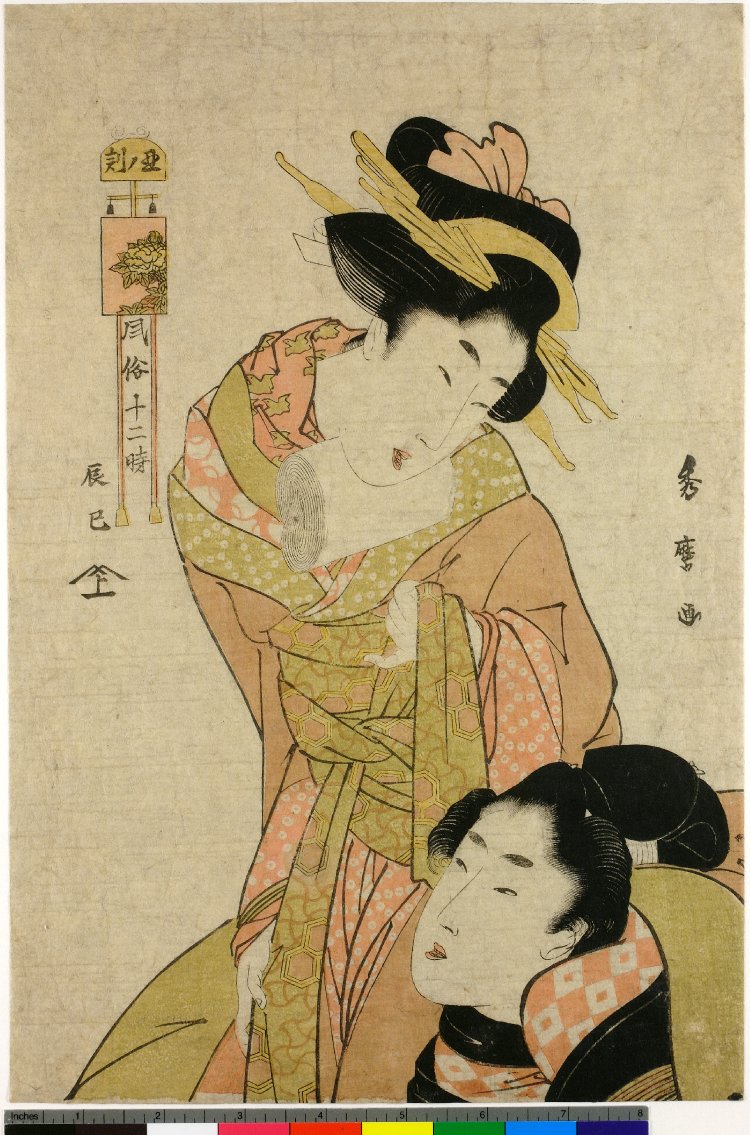
Ushi no Koku (The Hour of the Ox), from the series Customs at the Twelve Hours of the Day (Fūzoku Jūni-Ji)
風俗十二時 丑刻
early 1800s
Color woodblock print
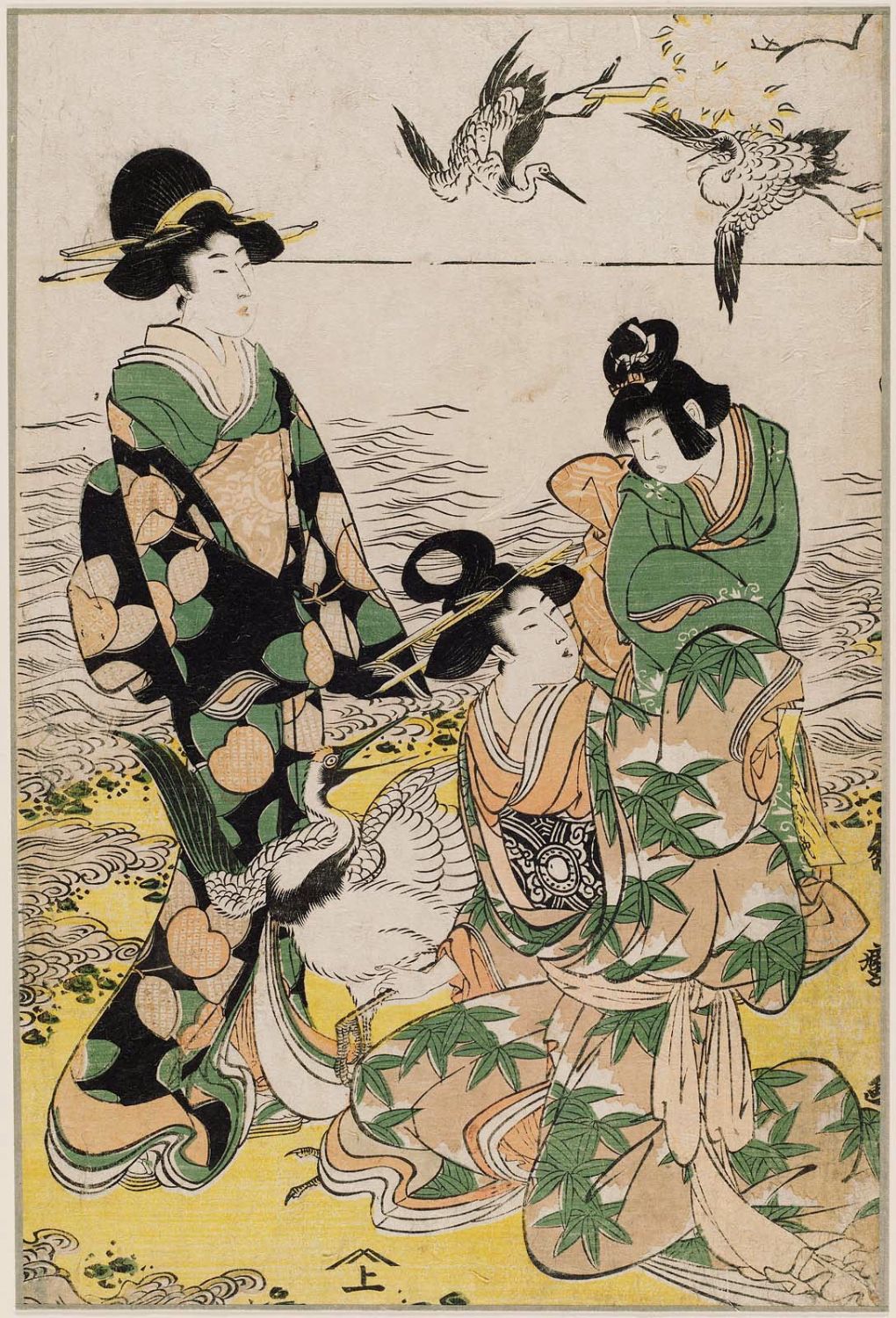
Parody of the Story of Yoritomo Releasing Cranes at Yuigahama
1806
Color woodblock print