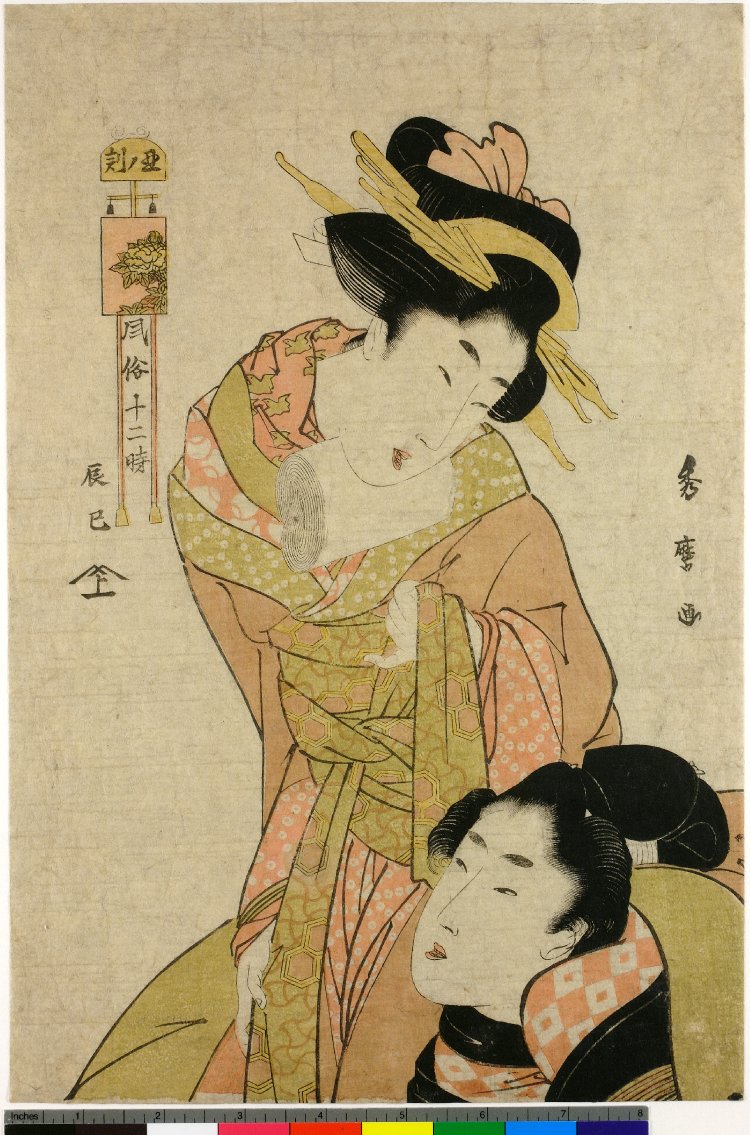
Ushi no Koku (The Hour of the Ox), from the series Customs at the Twelve Hours of the Day (Fūzoku Jūni-Ji)
風俗十二時 丑刻
- Date:
- early 1800s
- Medium:
- Color woodblock print
- Source:
- British Museum
Description
Ushi no Koku (丑の刻, 'The Hour of the Ox'), from the series 'Customs at the Twelve Hours of the Day' (Fūzoku Jūni-Ji), is a color woodblock print by Kitagawa Hidemaro of the early nineteenth century, held by the British Museum (registration number 1906,1220,0.367). The Hour of the Ox corresponded to roughly 1-3 a.m., the deep middle of the night, and the print accordingly stages an interior scene of late-night activity — a Yoshiwara courtesan and her attendant in the dimly lit hours when the brothel district's business shifted from public reception to private appointment. The series belongs to the standard Edo mitate format in which the twelve animal hours of the classical day are translated into contemporary genre scenes; Hidemaro's contributions extend the Utamaro school's late-1790s mitate practice into the Bunka decade. The figural style — elongated necks, narrow oval faces, characteristic late-Kitagawa head ornament — descends directly from his teacher's vocabulary, while the slightly heavier modeling of the cheeks and shoulders signals the gradual stylistic drift toward the early-Eizan manner that would dominate bijin-ga in the 1810s. The print is one of two known impressions of this series in the British Museum collection.
More Prints by Kitagawa Hidemaro
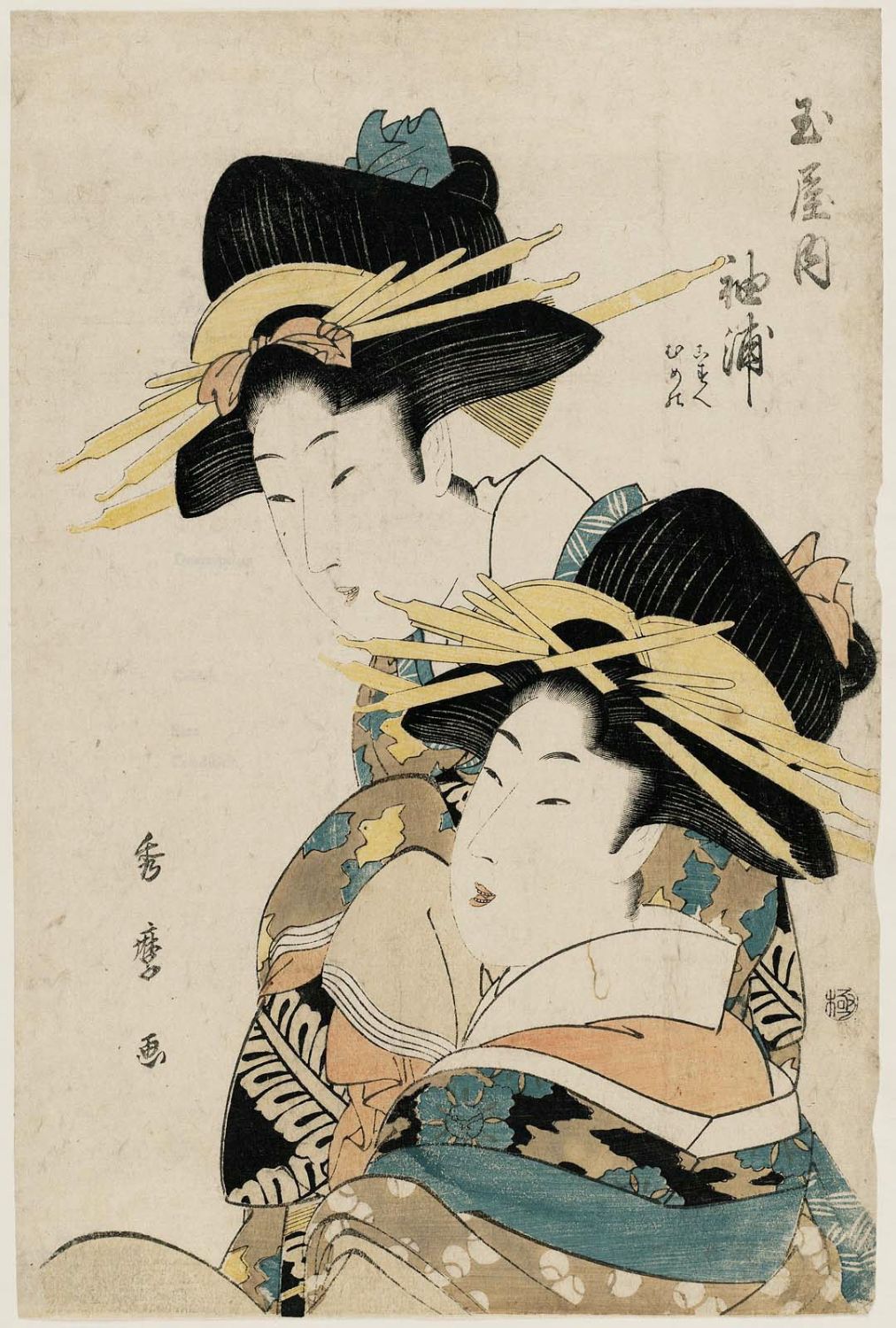
Sodeura of the Tamaya, with Her Kamuro Kozue and Mumeno
early 1800s
Color woodblock print
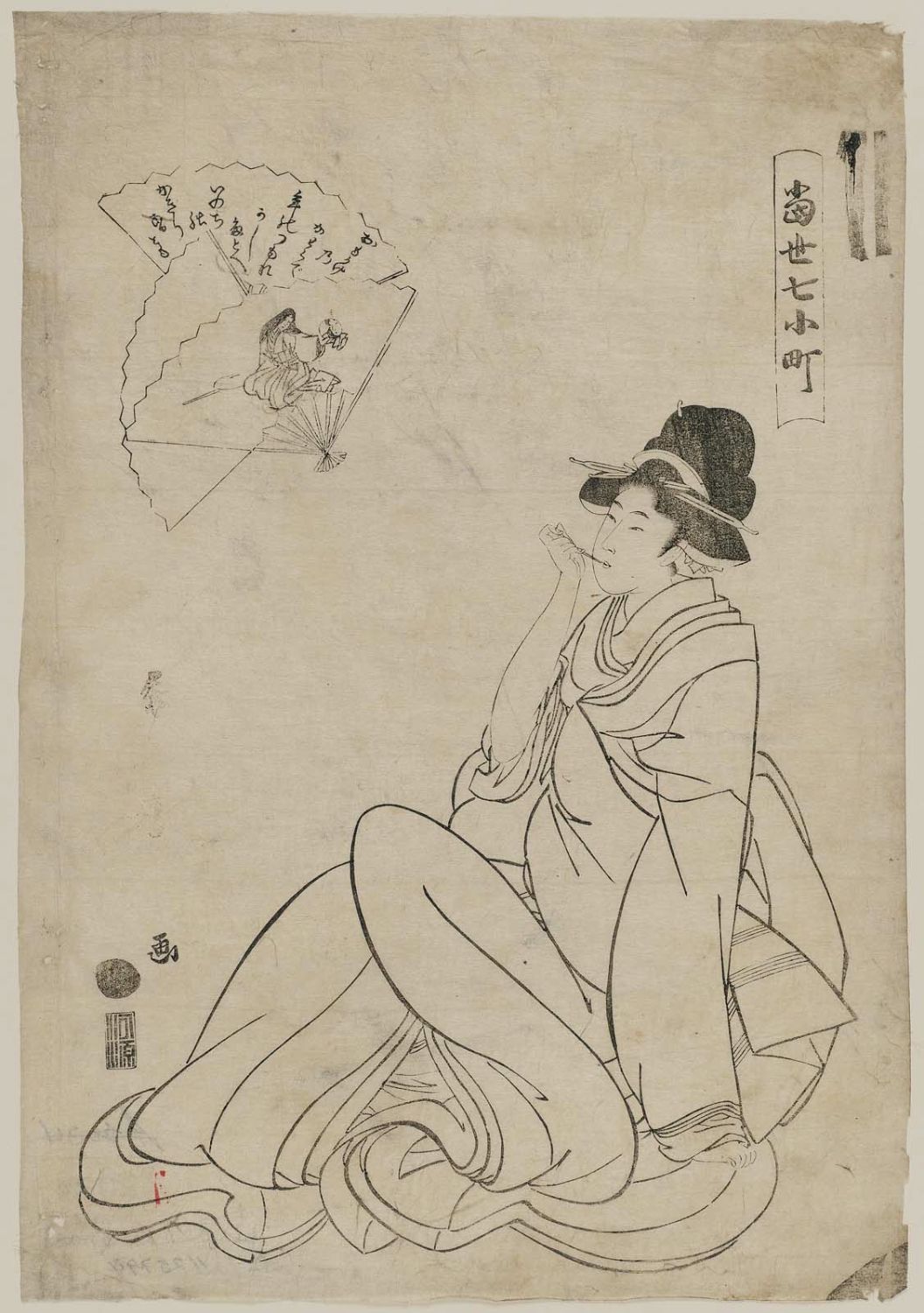
Tōsei Nana Komachi (Seven Komachi of the Day)
当世七小町
early 1800s
Color woodblock print

Triptych Print of a Winter Houseboat Scene
early 1800s
Color woodblock print; oban triptych
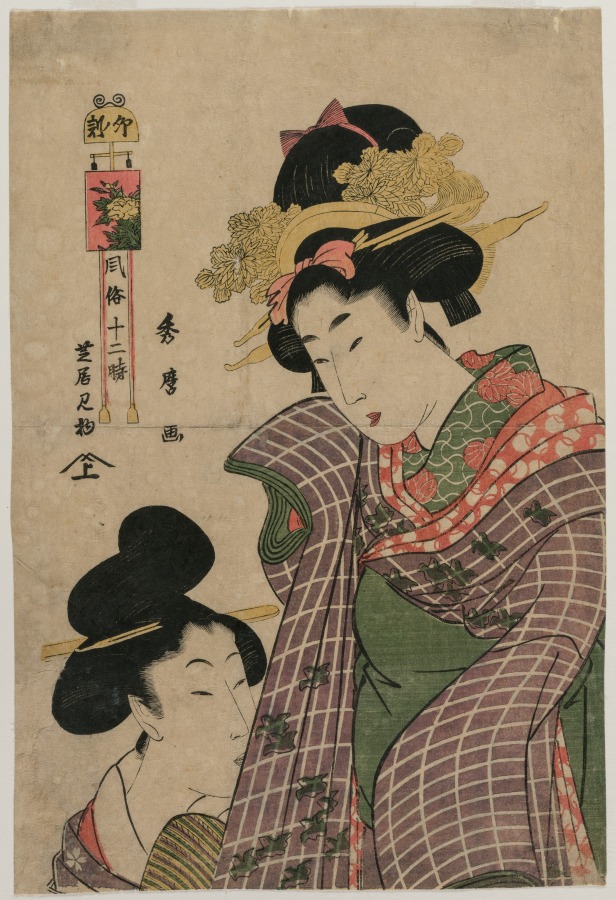
Going to the Kabuki Theater in the Hour of the Hare, from the series Customs at the Twelve Hours of the Day (Fūzoku Jūni-Ji)
風俗十二時 卯刻 歌舞伎見物
early 1800s
Color woodblock print
Frequently Asked Questions
Ushi no Koku (The Hour of the Ox), from the series Customs at the Twelve Hours of the Day (Fūzoku Jūni-Ji) (風俗十二時 丑刻) was created by Kitagawa Hidemaro (喜多川秀麿) in early 1800s.