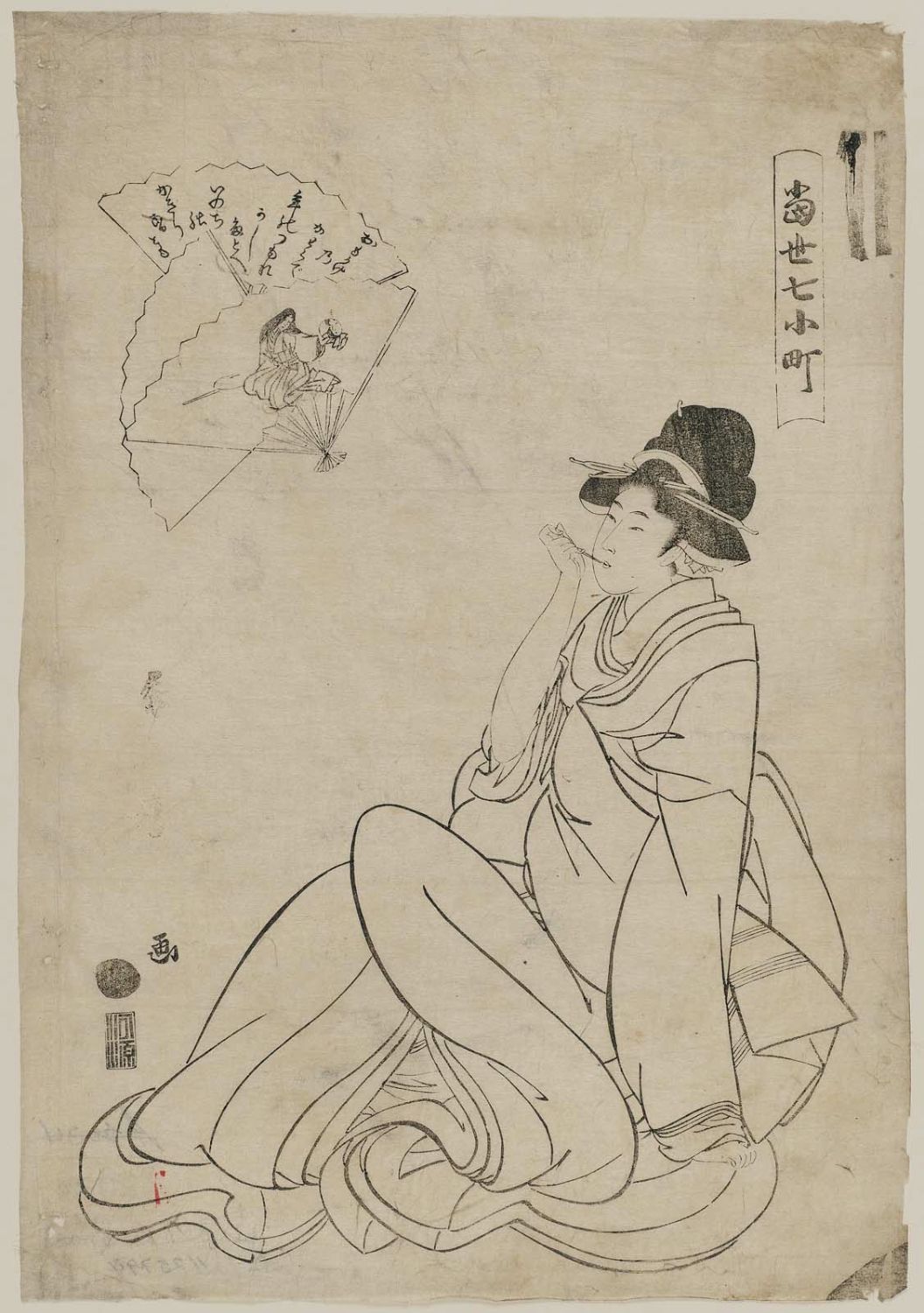
Tōsei Nana Komachi (Seven Komachi of the Day)
当世七小町
- Date:
- early 1800s
- Medium:
- Color woodblock print
- Source:
- Museum of Fine Arts, Boston
Description
Tōsei Nana Komachi (当世七小町, 'Seven Komachi of the Day') is a color woodblock print by Kitagawa Hidemaro of the early nineteenth century, held by the Museum of Fine Arts Boston (object number 217097). The print belongs to a series translating the seven canonical episodes of the Ono no Komachi legend — the Heian-period poet whose life and afterlife generated a long cycle of narrative paintings, prints, and Noh plays — into seven contemporary Yoshiwara scenes. The Komachi mitate was a standard subject of late-Edo bijin-ga, designed earlier by Suzuki Harunobu, Chōbunsai Eishi, and Kitagawa Utamaro himself; Hidemaro's contribution to the genre continues his teacher's mitate strategy into the Bunka decade. Each print in such series typically pairs one Komachi episode (Sōshi-arai Komachi, 'Komachi Washing the Book'; Sotoba Komachi, 'Komachi at the Stupa'; Kayoi Komachi, 'Komachi Visiting,' and others) with a Yoshiwara figure whose pose or attribute evokes the classical scene. The figural style follows Hidemaro's characteristic Kitagawa-school vocabulary — elongated neck, narrow oval face, patterned kimono falling in long vertical folds — and the literary conceit places the print within the same intellectualized parody tradition that Eishi had perfected in the 1790s.
More Prints by Kitagawa Hidemaro
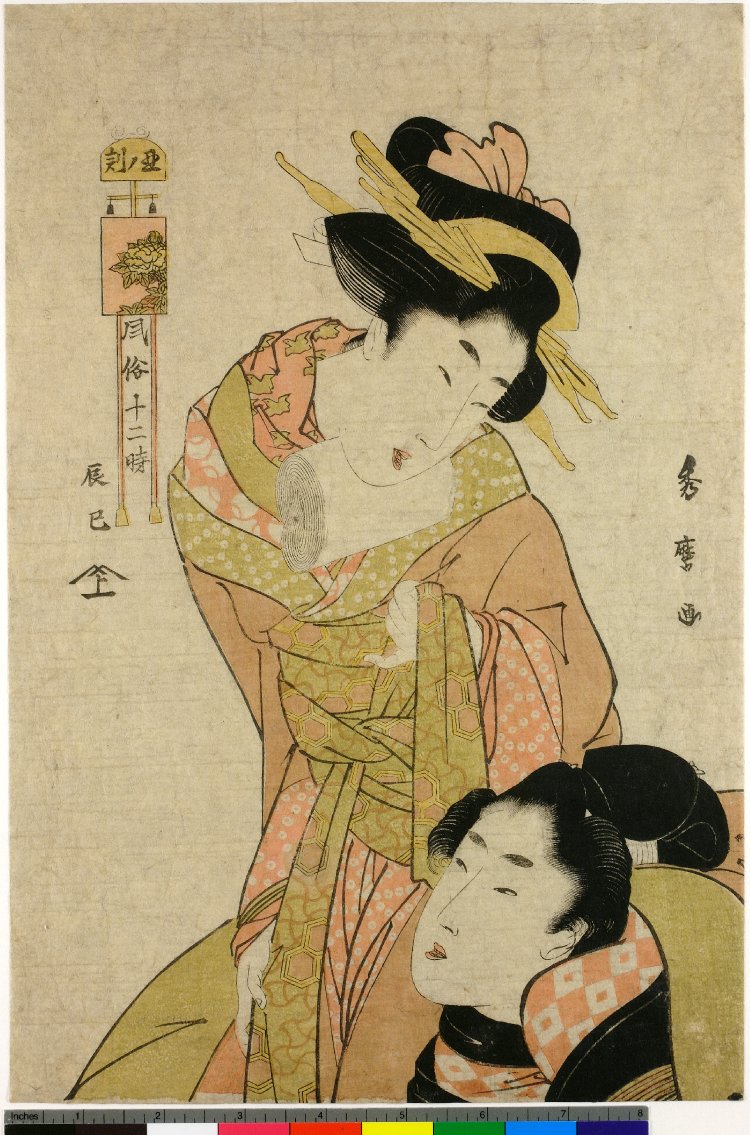
Ushi no Koku (The Hour of the Ox), from the series Customs at the Twelve Hours of the Day (Fūzoku Jūni-Ji)
風俗十二時 丑刻
early 1800s
Color woodblock print
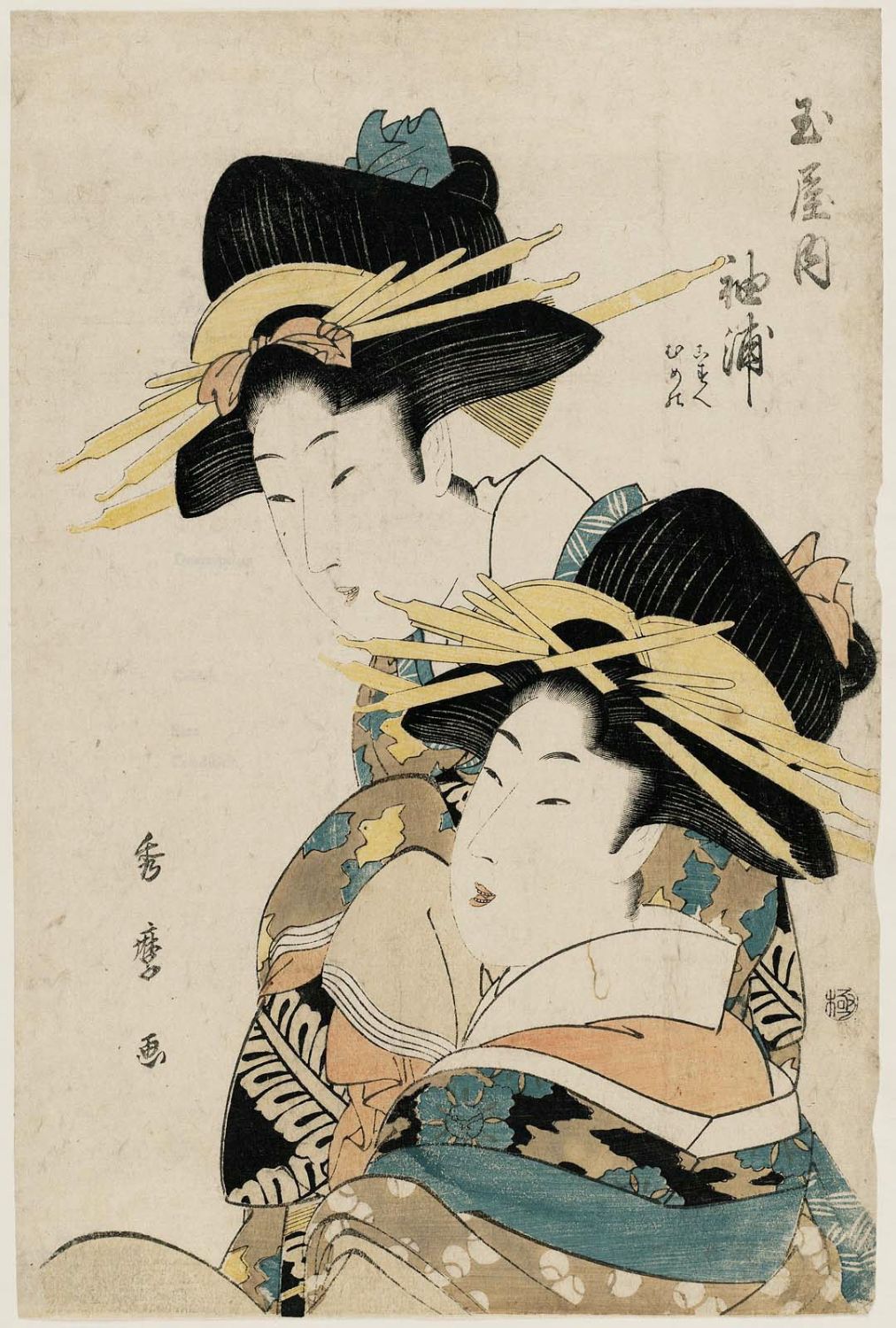
Sodeura of the Tamaya, with Her Kamuro Kozue and Mumeno
early 1800s
Color woodblock print

Triptych Print of a Winter Houseboat Scene
early 1800s
Color woodblock print; oban triptych
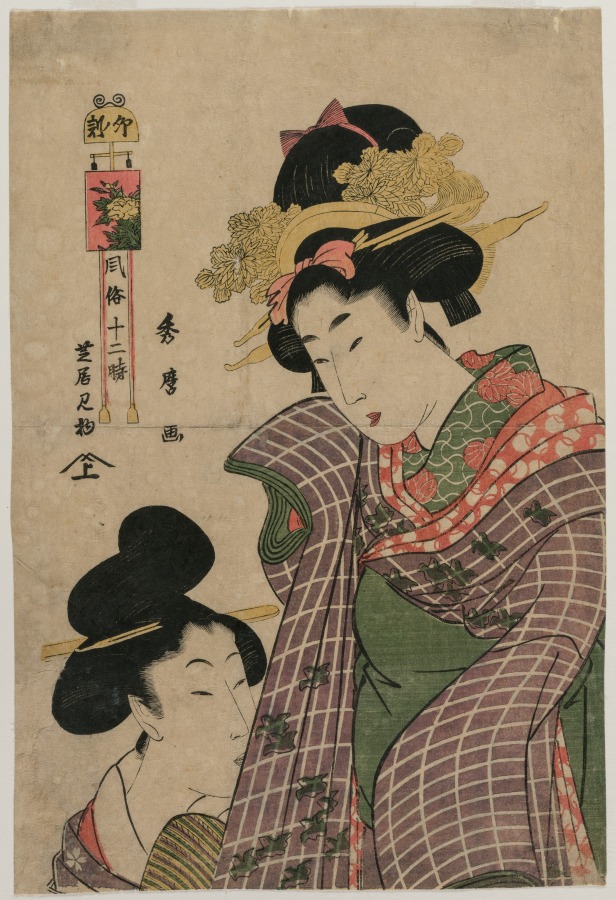
Going to the Kabuki Theater in the Hour of the Hare, from the series Customs at the Twelve Hours of the Day (Fūzoku Jūni-Ji)
風俗十二時 卯刻 歌舞伎見物
early 1800s
Color woodblock print
Frequently Asked Questions
Tōsei Nana Komachi (Seven Komachi of the Day) (当世七小町) was created by Kitagawa Hidemaro (喜多川秀麿) in early 1800s.