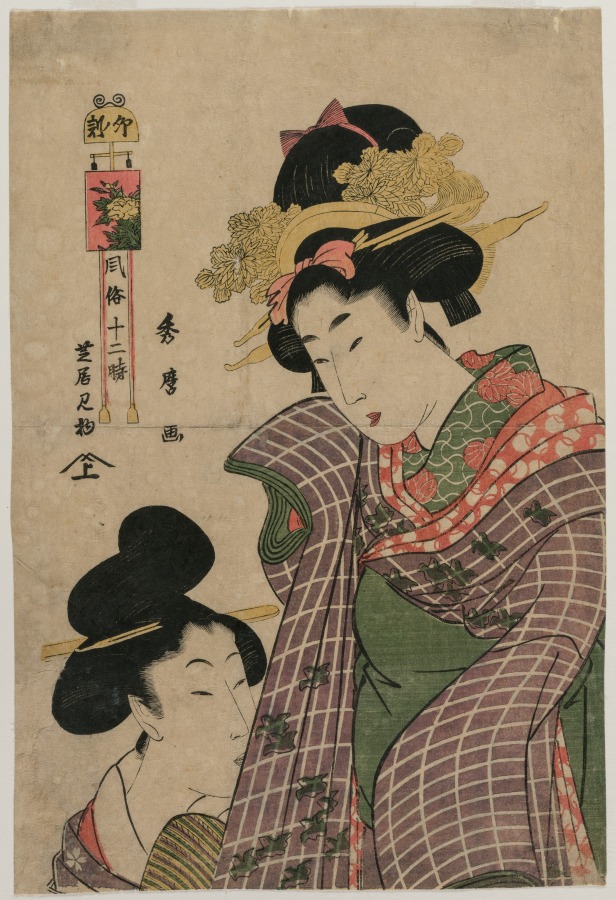
Going to the Kabuki Theater in the Hour of the Hare, from the series Customs at the Twelve Hours of the Day (Fūzoku Jūni-Ji)
風俗十二時 卯刻 歌舞伎見物
- Date:
- early 1800s
- Medium:
- Color woodblock print
- Source:
- Cleveland Museum of Art
Description
Two women shown in close, half-length view against a plain tan ground: the taller figure at right wears an elaborate coiffure with gold ornamental combs, pink ribbon, and clusters of yellow flowers, her purple plaid outer robe bordered in a pink-and-white floral wrapper over a green under-kimono patterned with pale wave-like motifs. The smaller figure at lower left, positioned slightly behind and below, has a plainer black coiffure with a single yellow hairpin and wears a striped and floral-patterned kimono in green, pink, and purple tones, her face tilted downward. A cartouche at upper left frames the series and sheet titles in Japanese script above the artist's signature; this print, 1805, is a color woodblock work by Kitagawa Hidemaro illustrating "Going to the Kabuki Theater in the Hour of the Hare" from the series *Customs at the Twelve Hours of the Day*.
More Prints by Kitagawa Hidemaro
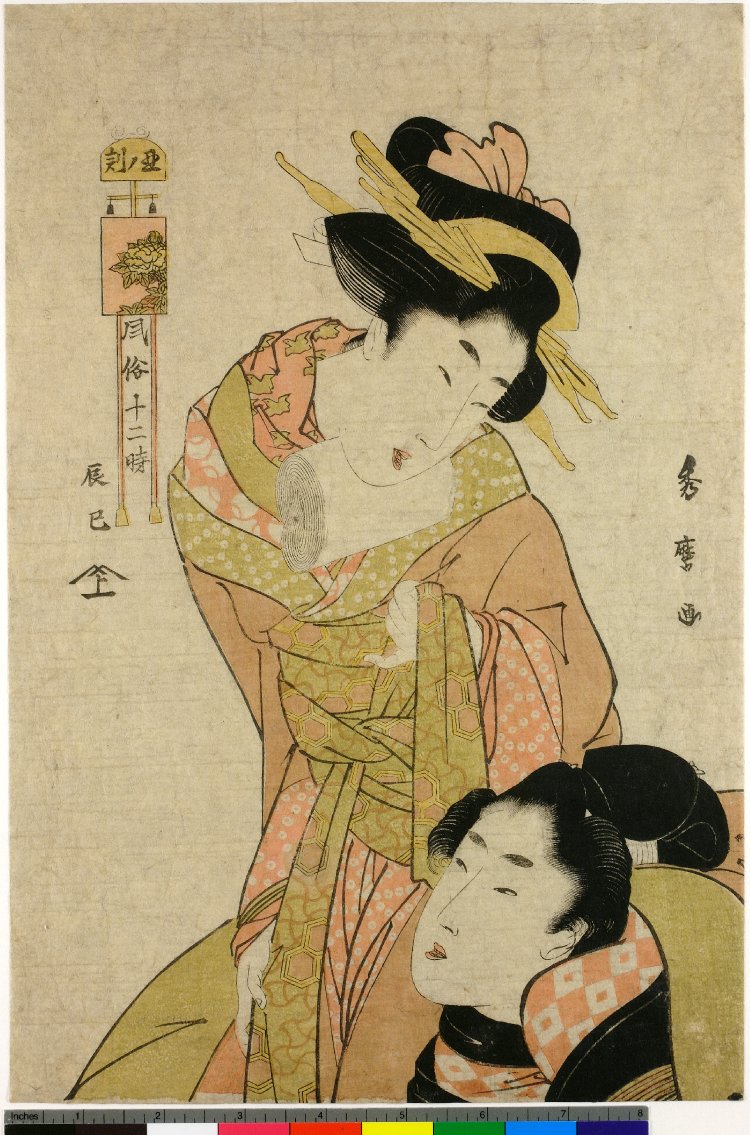
Ushi no Koku (The Hour of the Ox), from the series Customs at the Twelve Hours of the Day (Fūzoku Jūni-Ji)
風俗十二時 丑刻
early 1800s
Color woodblock print
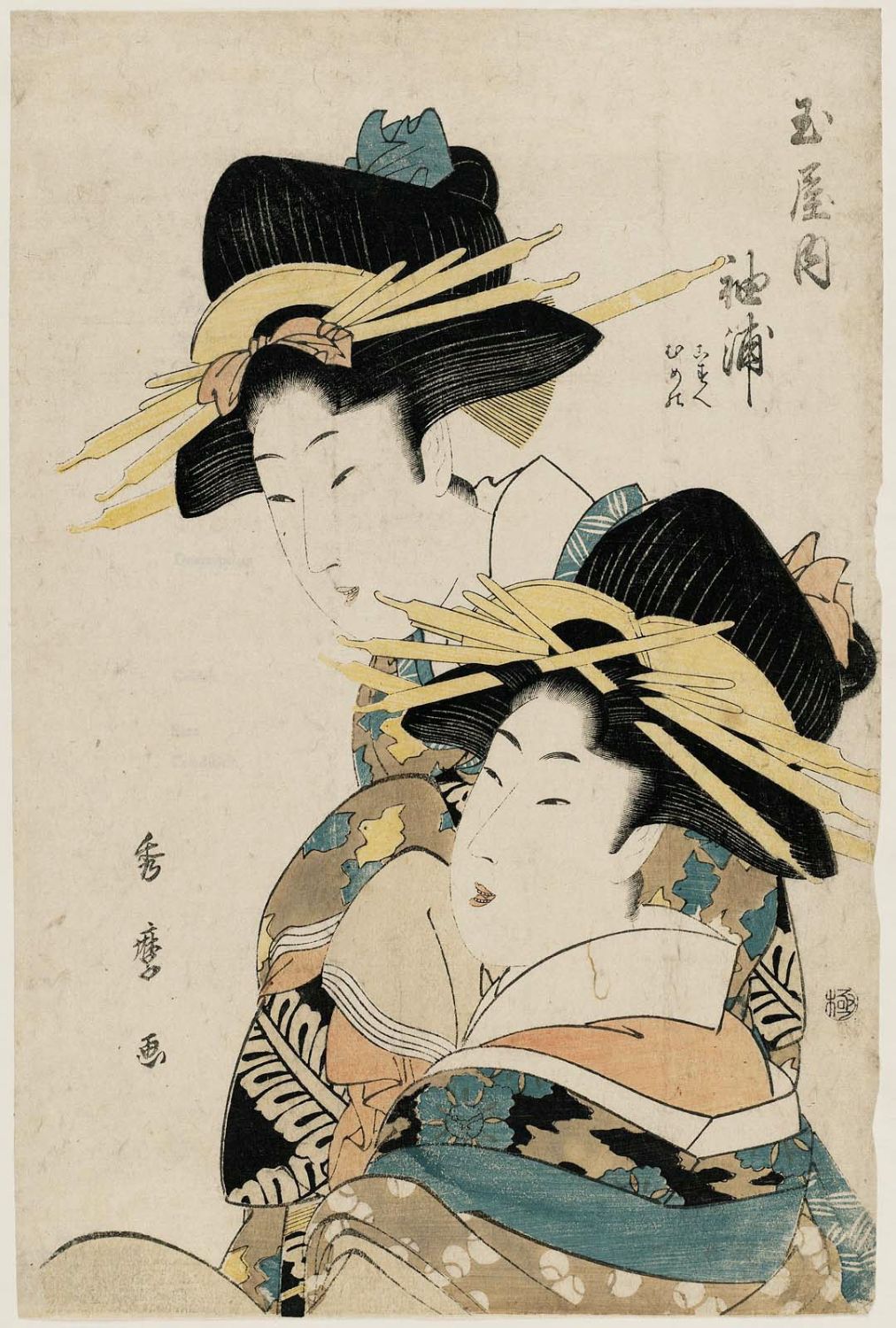
Sodeura of the Tamaya, with Her Kamuro Kozue and Mumeno
early 1800s
Color woodblock print
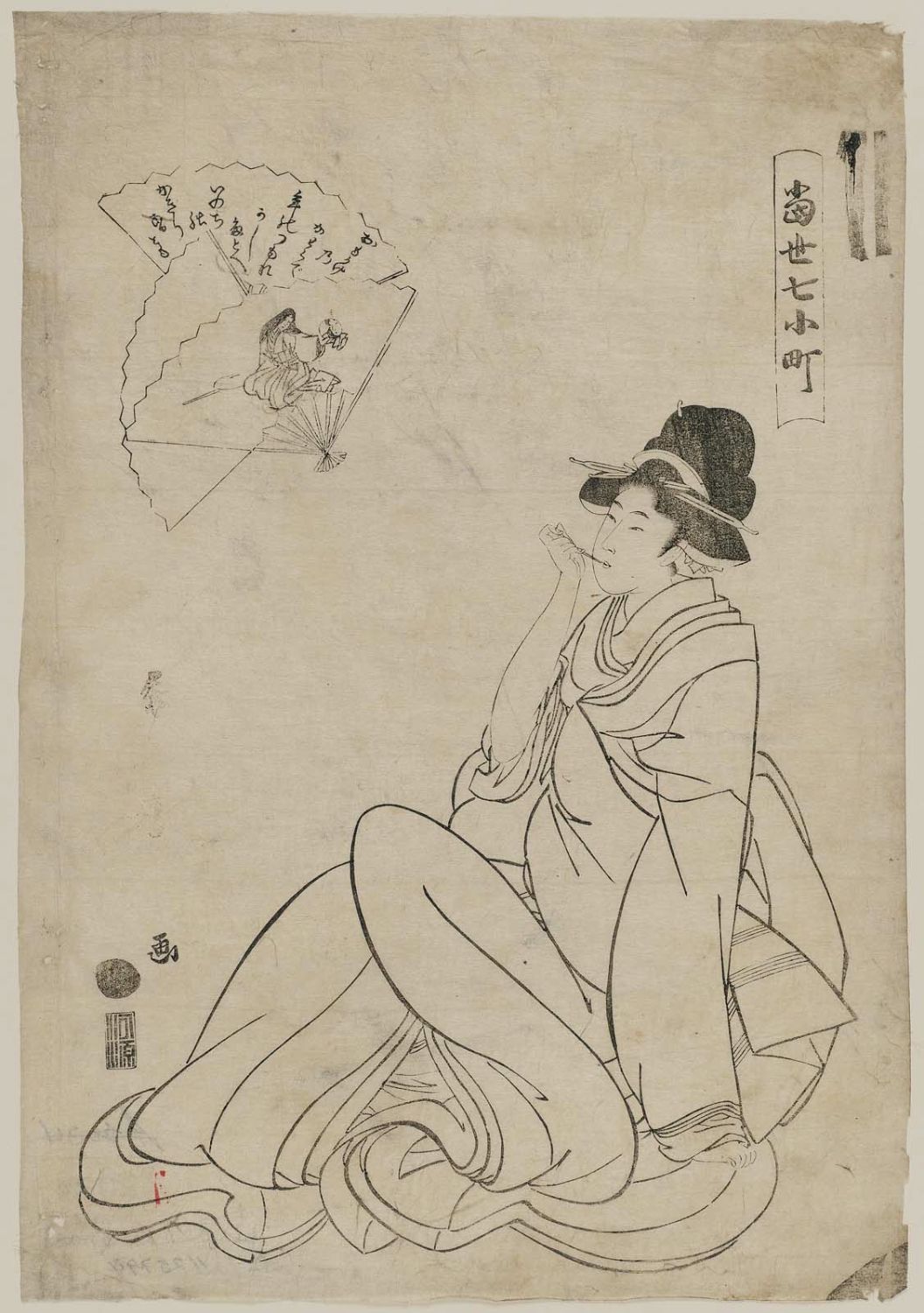
Tōsei Nana Komachi (Seven Komachi of the Day)
当世七小町
early 1800s
Color woodblock print

Triptych Print of a Winter Houseboat Scene
early 1800s
Color woodblock print; oban triptych
Frequently Asked Questions
Going to the Kabuki Theater in the Hour of the Hare, from the series Customs at the Twelve Hours of the Day (Fūzoku Jūni-Ji) (風俗十二時 卯刻 歌舞伎見物) was created by Kitagawa Hidemaro (喜多川秀麿) in early 1800s.