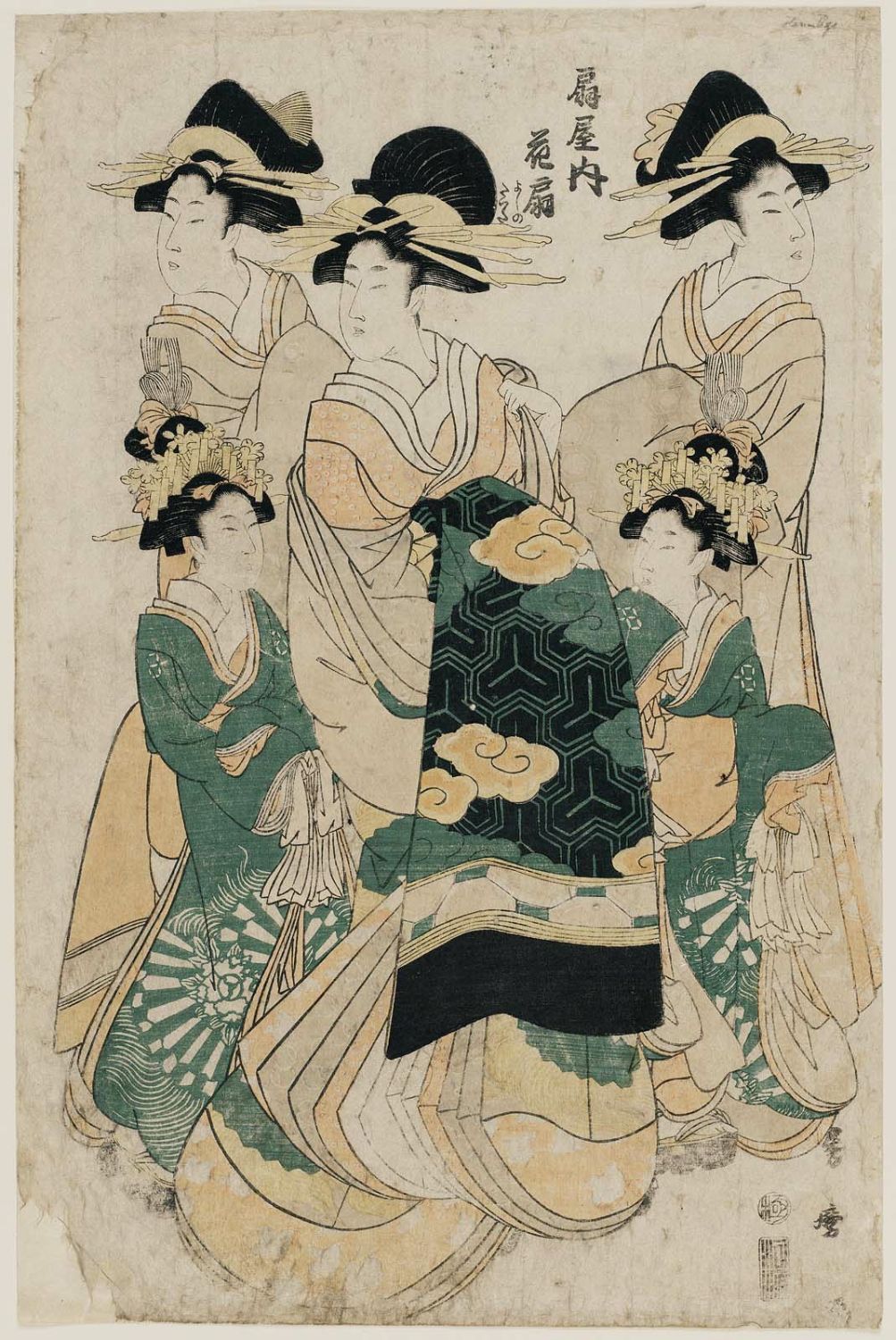
Hanaōgi of the Ōgiya, with Her Kamuro Yoshino and Tatsuta
- Date:
- early 1800s
- Medium:
- Color woodblock print
- Source:
- Museum of Fine Arts, Boston
Description
Hanaōgi of the Ōgiya, with Her Kamuro Yoshino and Tatsuta, is a color woodblock print by Kitagawa Hidemaro of the early nineteenth century, held by the Museum of Fine Arts Boston (object number 202057). The print depicts Hanaōgi, the most famous high-ranking courtesan (yobidashi chūsan) of the Ōgiya house of the Yoshiwara, accompanied by her two child attendants (kamuro), Yoshino and Tatsuta. Hanaōgi had been the central celebrity beauty of Edo for two decades by Hidemaro's time, celebrated by Utamaro in numerous ōkubi-e of the 1790s and by Chōbunsai Eishi in his 'Comparison of Beauties of the Pleasure Quarters'; Hidemaro's contribution to her iconography places him within an established tradition of named-courtesan portraiture. The composition follows the standard Yoshiwara portrait format: the seated or standing courtesan in elaborate uchikake robes occupies the center of the sheet, flanked by her two small kamuro in matching patterned kimono. The figural style — elongated neck, narrow oval face, characteristic late-Kitagawa head ornament — derives directly from Utamaro's late manner but with the slightly heavier modeling that distinguishes Hidemaro's hand. The print belongs to the largest single collection of Hidemaro's work in the United States, the Museum of Fine Arts Boston's holdings of late-Utamaro school bijin-ga.
More Prints by Kitagawa Hidemaro
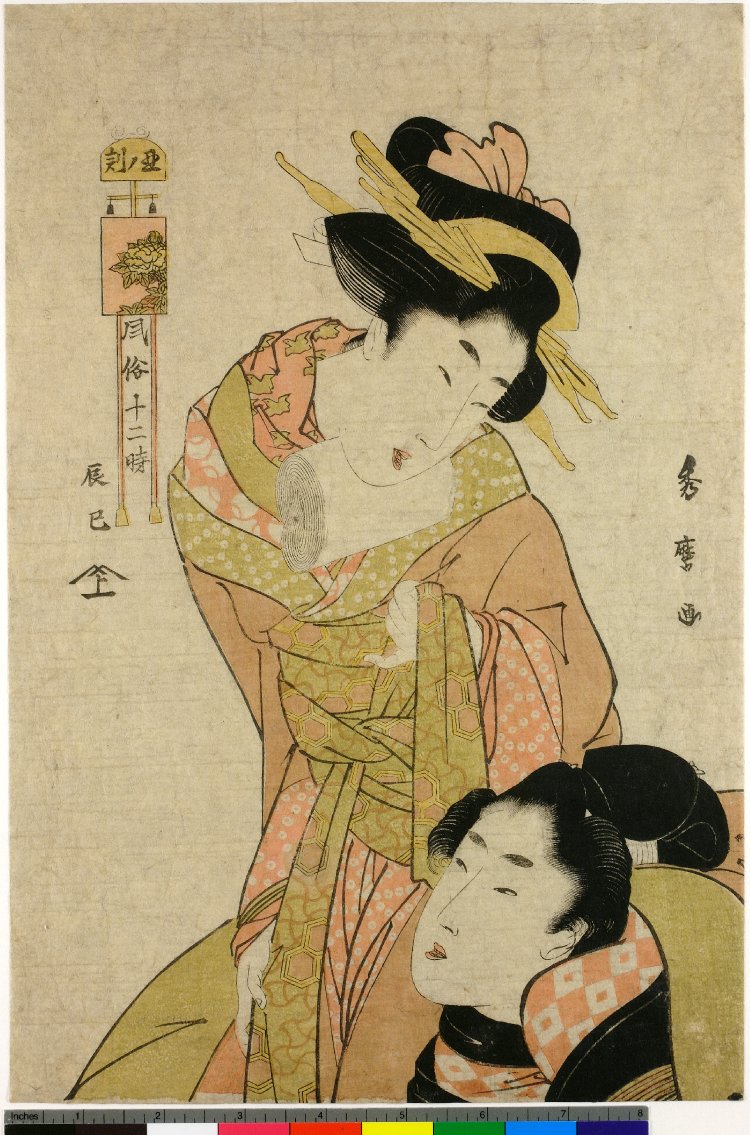
Ushi no Koku (The Hour of the Ox), from the series Customs at the Twelve Hours of the Day (Fūzoku Jūni-Ji)
風俗十二時 丑刻
early 1800s
Color woodblock print
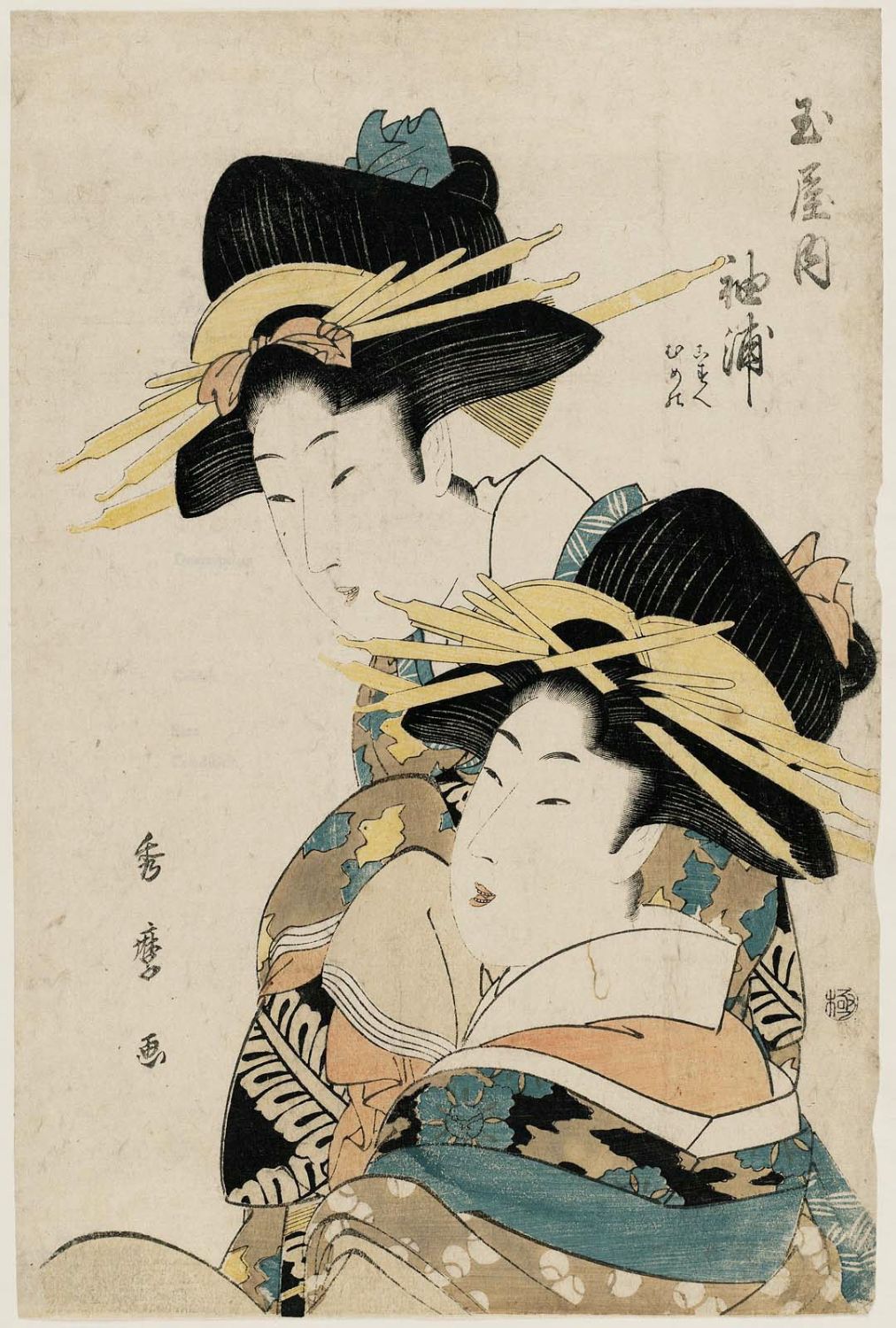
Sodeura of the Tamaya, with Her Kamuro Kozue and Mumeno
early 1800s
Color woodblock print
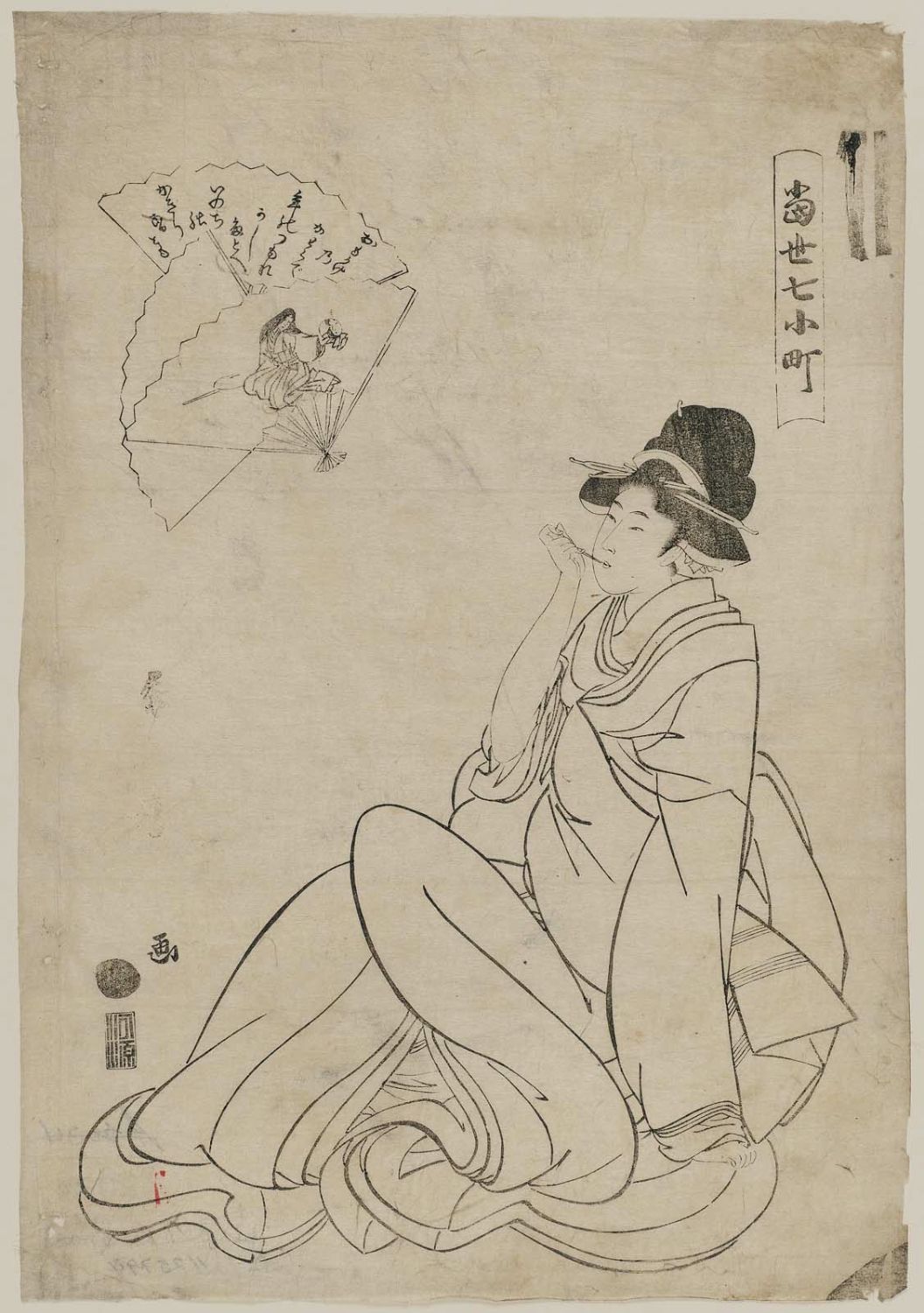
Tōsei Nana Komachi (Seven Komachi of the Day)
当世七小町
early 1800s
Color woodblock print

Triptych Print of a Winter Houseboat Scene
early 1800s
Color woodblock print; oban triptych
Frequently Asked Questions
Hanaōgi of the Ōgiya, with Her Kamuro Yoshino and Tatsuta was created by Kitagawa Hidemaro (喜多川秀麿) in early 1800s.