
The Hours of Worldly Beauties (Fûzoku bijin dokei): The Hour of the Horse (Noon) - Shrine Maiden (Uma no koku - miko)
- Source:
- ukiyo-e.org
Description
Kitagawa Utamaro designed this ukiyo-e portrait of a shrine maiden, or miko, as the Hour of the Horse from the series The Hours of Worldly Beauties (Fuzoku bijin dokei). The series translates the traditional twelve-hour clock, in which each two-hour segment is named for a zodiac animal, into a sequence of female types, pairing noon with the figure of a young woman whose ritual role at a Shinto shrine sets her apart from the courtesans for which Utamaro is most famous. The miko is depicted with the calm composure suited to her duties: clean linear hair, restrained ornament, and a white over-robe that contrasts sharply with the patterned kimono of secular beauties. By placing her at the brightest, most public hour of the day, Utamaro emphasizes the visibility and decorum of religious work, while still flattering the genre conventions of Edo bijin-ga in his treatment of face and gesture. The Hours of Worldly Beauties allowed townspeople to imagine the city as a procession of female occupations, each tied to a particular slice of the daily round. This impression is documented through ukiyo-e.org (image aic 79607_350667), where it joins a digital corpus of Utamaro prints used by scholars and collectors to compare states, palettes, and condition across institutions.
More Prints by Kitagawa Utamaro
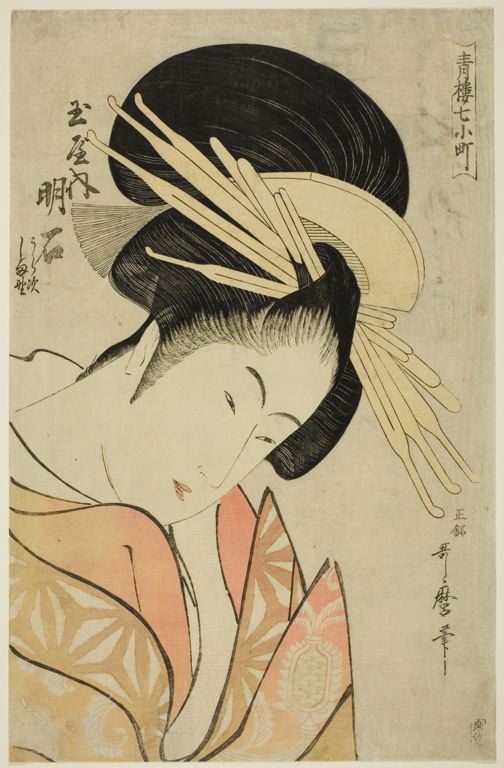
Akashi of the Tamaya, from the series Seven Komachis of Yoshiwara (Seiro nana Komachi) (Tamaya uchi Akashi, Uraji, Shimano)
Woodblock print
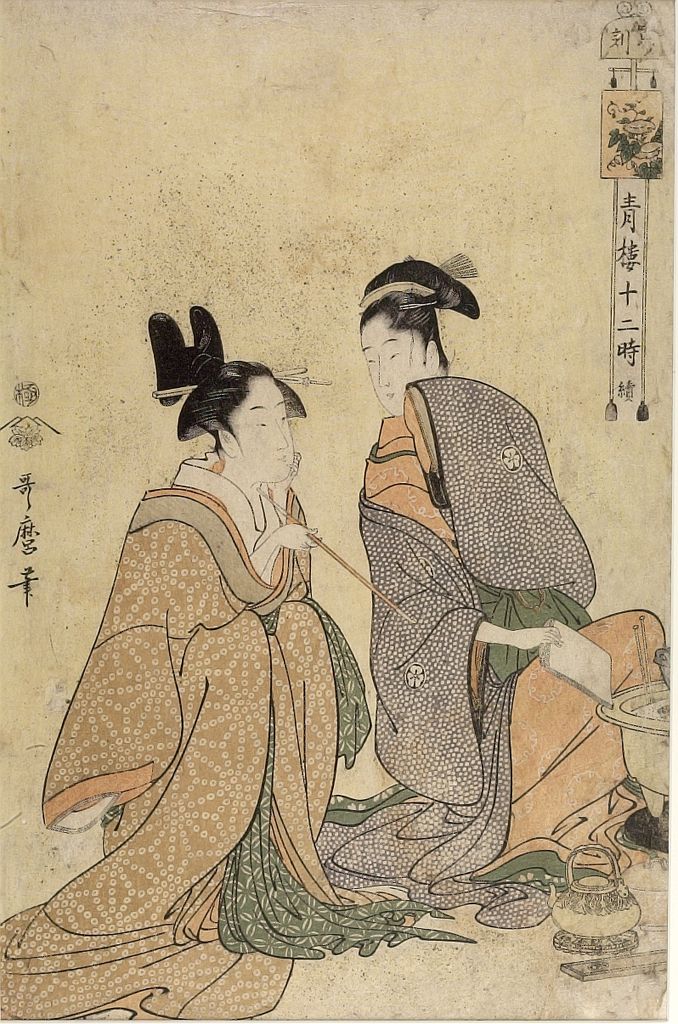
Hour of the Tiger (Tora no koku = 4 AM) from the series Twelve Hours in Yoshiwara (Seirô jûni toki tsuzuki), Late Edo period, circa 1794
Woodblock print
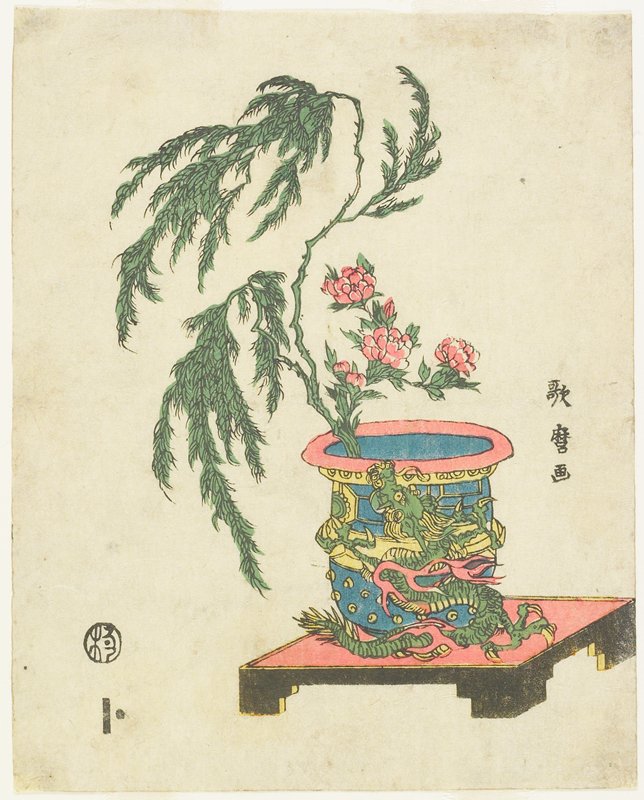
Ikebana arrangement of Peony and Willow in Dragon Pot
1781–1806
Woodblock print (nishiki-e), ink and color on paper
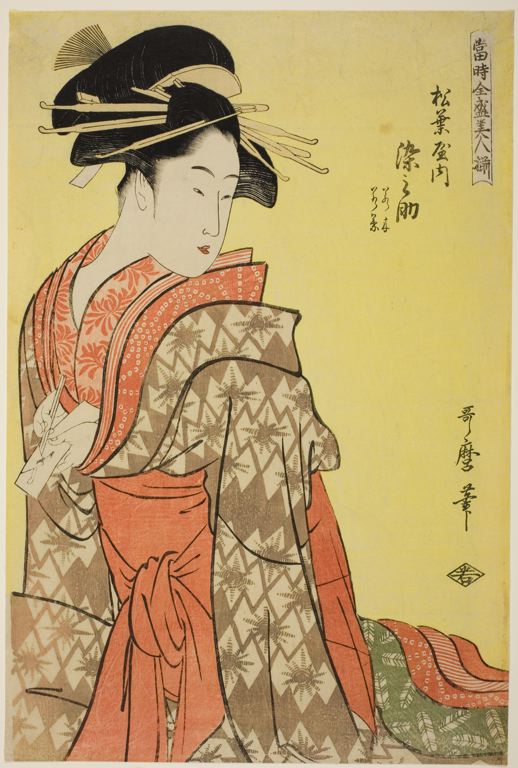
The Greatest Beauties of Our Time (Toji zensei bijin zoroe): Somenosuke of the Matsubaya with Attendants Wakagi and Wakaba
Woodblock print
More Temples & Shrines Prints
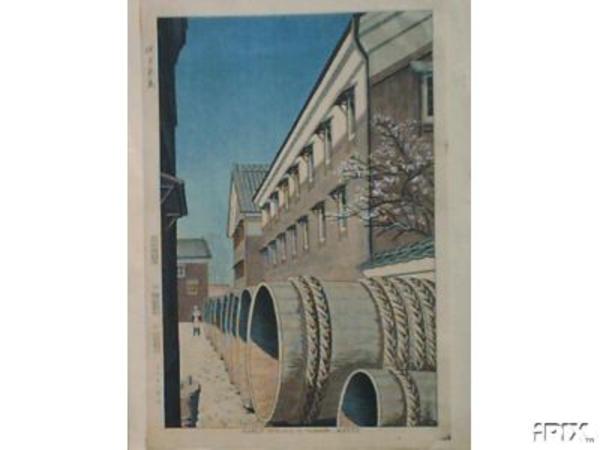
Fushimi Inari Temple
伏見稲荷
Woodblock print

The Compound of the Tenman Shrine at Kameido in the Snow (Kameido Tenmangu keidai no yuki), from the series "Famous Places in the Eastern Capital (Toto meisho)"
c. 1832/38
Color woodblock print; oban
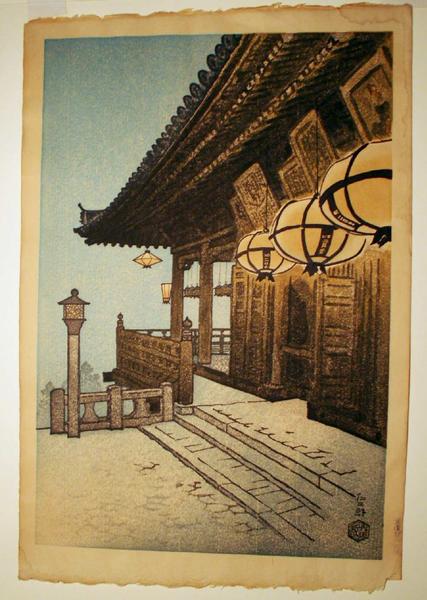
Temple with lanterns
Woodblock print

A Section of the Byodo Temple at Uji (Uji Byodoin no ichibu), from the series "Souvenirs of Travel, Second Series (Tabi miyage dai nishu)"
Uji Byodoin no ichibu
1921
Color woodblock print; oban
Featured in Collections
Curated cross-cuts that include this print.
Frequently Asked Questions
The Hours of Worldly Beauties (Fûzoku bijin dokei): The Hour of the Horse (Noon) - Shrine Maiden (Uma no koku - miko) was created by Kitagawa Utamaro (喜多川歌麿).
The Hours of Worldly Beauties (Fûzoku bijin dokei): The Hour of the Horse (Noon) - Shrine Maiden (Uma no koku - miko) depicts temples & shrines and animals.