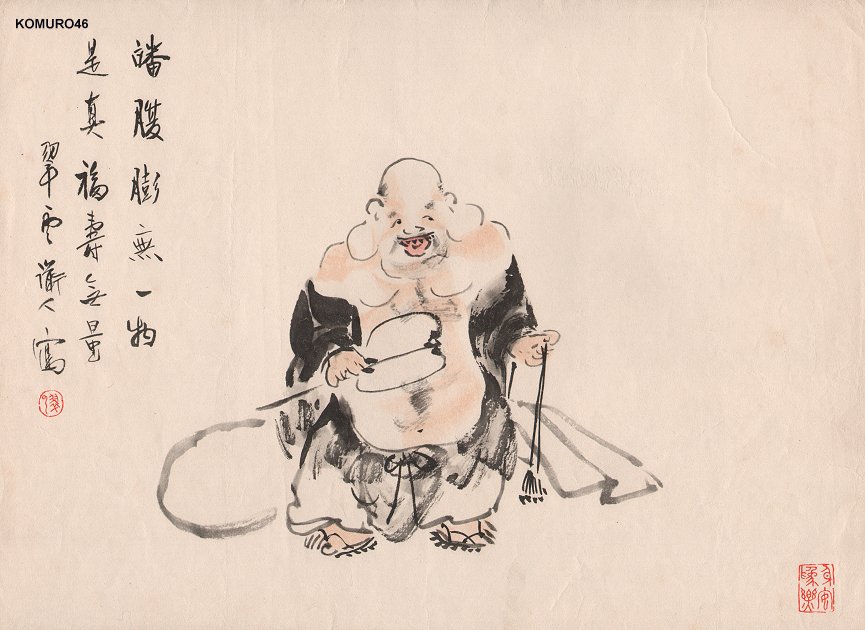
Daikoku, God of Wealth
大黒
by Komuro Suiun
- Date:
- Taishō–early Shōwa period (c. 1920s–1930s)
- Medium:
- Color woodblock print (New Year's print)
Description
Daikoku (大黒) is a color woodblock print after Komuro Suiun's design, issued as a New Year's print (saitan-ga) — a category of small auspicious prints distributed in the days around the lunar or solar new year to invoke prosperity and good fortune for the coming twelve months. Daikoku is one of the Seven Lucky Gods (Shichifukujin) of the Japanese popular pantheon, the deity of wealth, agriculture, and the kitchen, and one of the most heavily worked subjects in the New Year's print tradition. He appears in the canonical iconography as a smiling, round-faced figure standing or seated on a pair of rice bales (kome-dawara), holding a small mallet (uchide no kozuchi, the wish-fulfilling mallet) and a sack of treasures slung over one shoulder. Suiun's handling translates the popular New Year's iconography into the disciplined brushwork and restrained color of his mature nanga manner — an unusual conjunction within his production, in which the literati ink-line meets the cheerful folk vocabulary of the saitan-ga. The print belongs to the body of small-format auspicious subjects that the Tokyo publishers issued from Suiun's drawings in the inter-war decades for distribution in the days surrounding the New Year holiday.
More Prints by Komuro Suiun
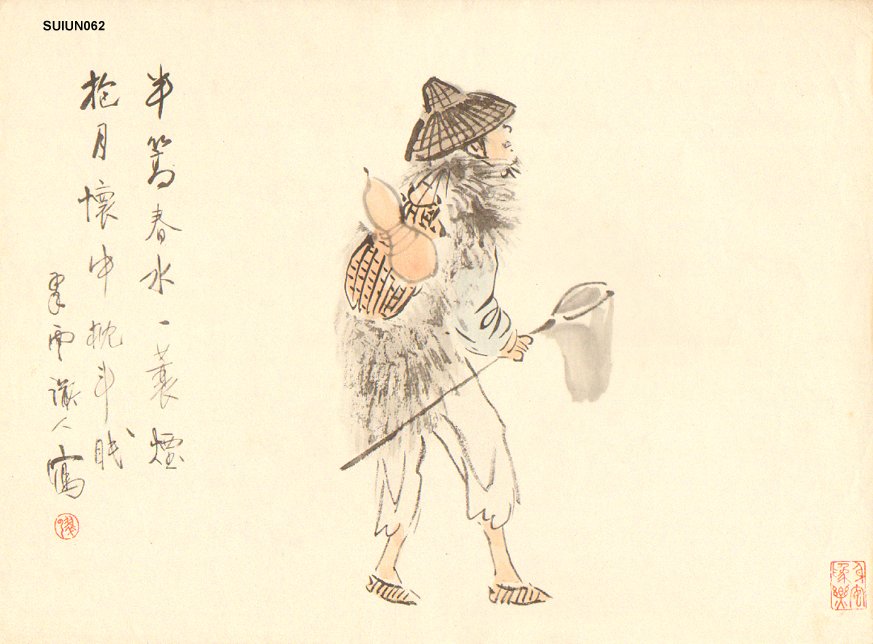
Fisherman
漁夫
Taishō–early Shōwa period (c. 1920s–1930s)
Color woodblock print
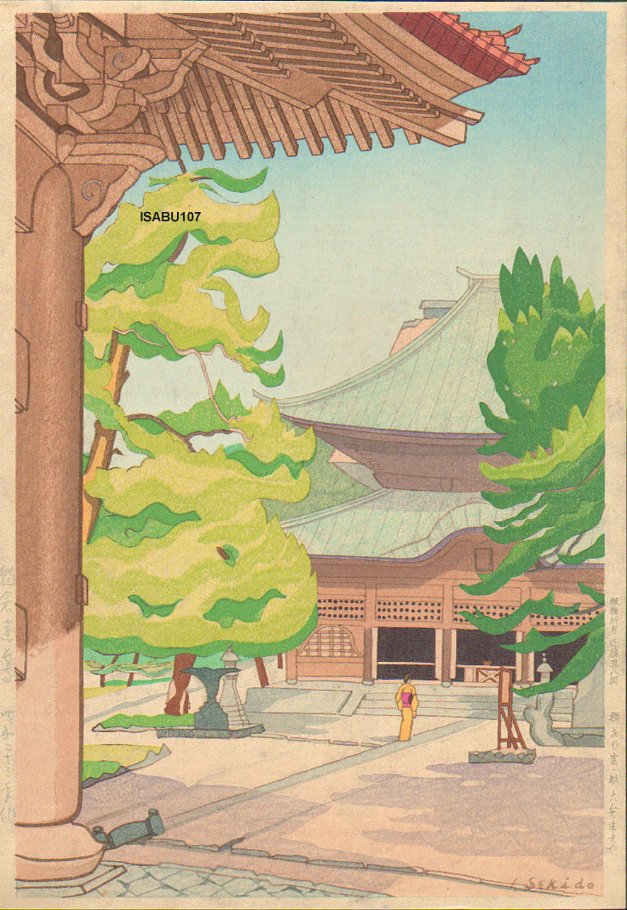
Kenchō-ji Temple in Kamakura
鎌倉建長寺
1948 (posthumous edition)
Color woodblock print
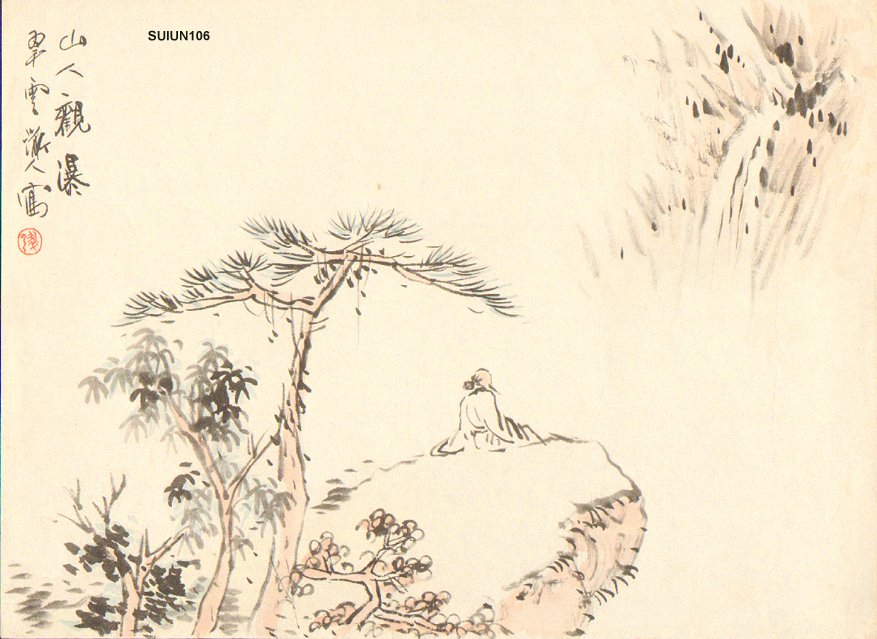
Hermit and Waterfall
高士観瀑図
Taishō–early Shōwa period (c. 1920s–1930s)
Color woodblock print
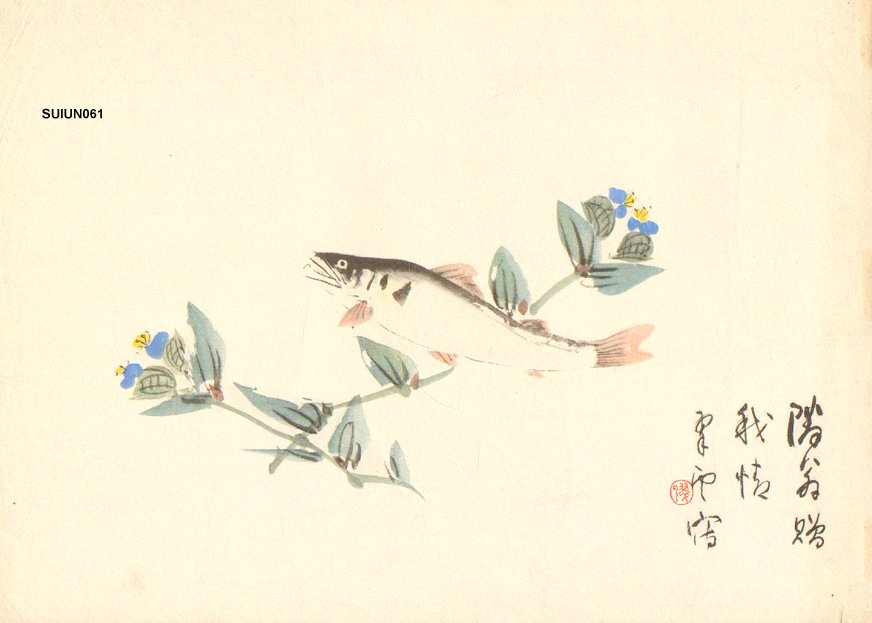
Fish
魚
Taishō–early Shōwa period (c. 1920s–1930s)
Color woodblock print (kachō-e)
Frequently Asked Questions
Daikoku, God of Wealth (大黒) was created by Komuro Suiun (小室翠雲) in Taishō–early Shōwa period (c. 1920s–1930s).