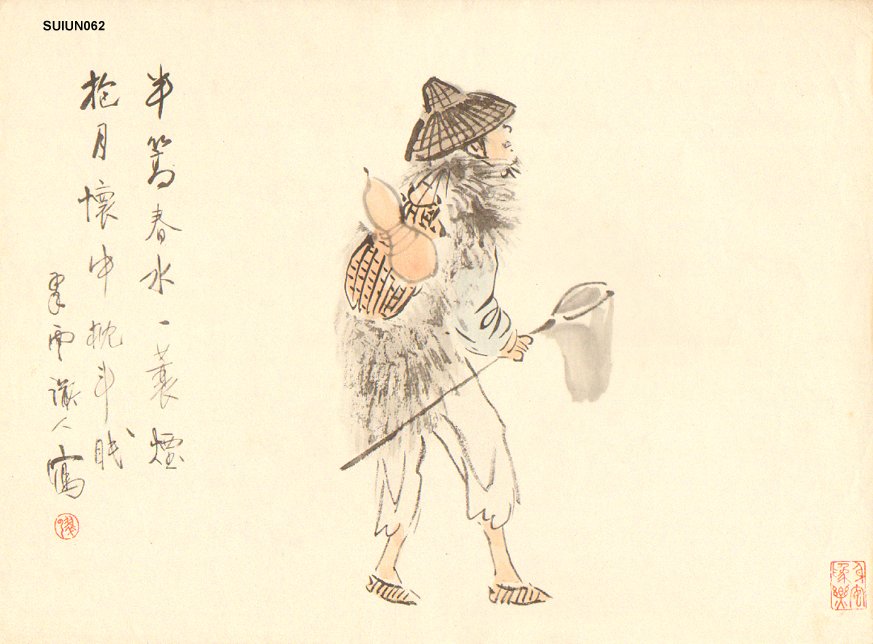
Fisherman
漁夫
by Komuro Suiun
- Date:
- Taishō–early Shōwa period (c. 1920s–1930s)
- Medium:
- Color woodblock print
Description
Fisherman (漁夫) is a color woodblock print after Komuro Suiun's landscape composition, depicting the canonical literati figure subject of the solitary fisherman by a river or lake. The fisherman (gyofu in Japanese, yufu in Chinese) is one of the most heavily encoded figure subjects in the East Asian literati tradition: the figure derives from the Chinese Daoist text of the Zhuangzi and from the medieval Chinese poetry of Liu Zongyuan and the Yuan-dynasty hermit poets, where he serves as an embodiment of the unworldly recluse who has withdrawn from official service to live in voluntary obscurity by the waters of the countryside. The subject was carried into the Japanese nanga tradition by Ike no Taiga and Yosa Buson in the late Edo period, and Suiun's handling continues the long lineage of the fisherman as a vehicle for literati contemplation of the natural world rather than as an actual genre study of the working life. The composition typically shows the small figure of the fisherman in a boat or seated on a rock by the water's edge, with the surrounding landscape — willows, distant mountains, an expanse of water — built up in the bone-line brushwork and controlled wash that distinguished Suiun's mature manner. The print belongs to the small-format landscape and figure subjects that the Tokyo publishers issued from Suiun's drawings in the inter-war decades.
More Prints by Komuro Suiun
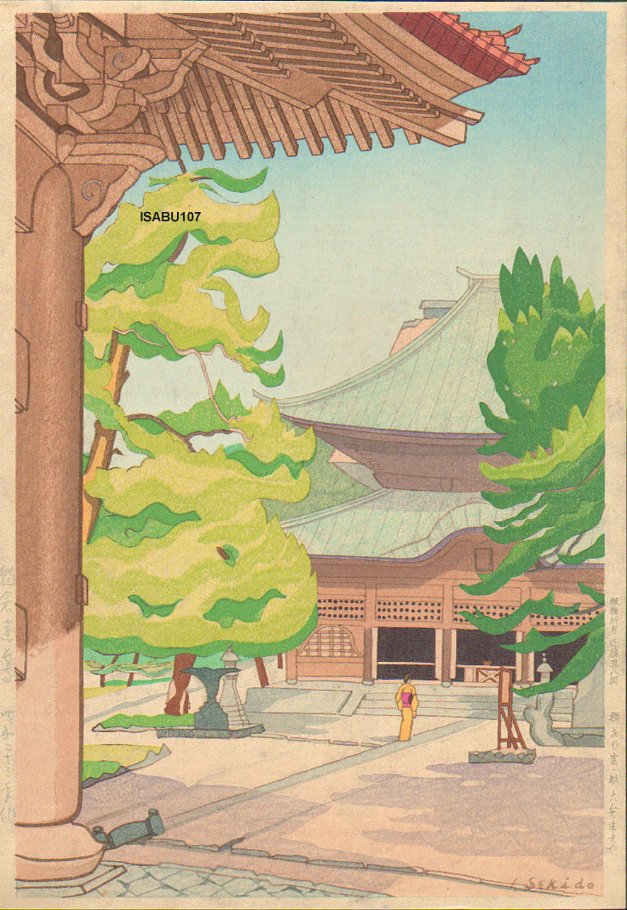
Kenchō-ji Temple in Kamakura
鎌倉建長寺
1948 (posthumous edition)
Color woodblock print
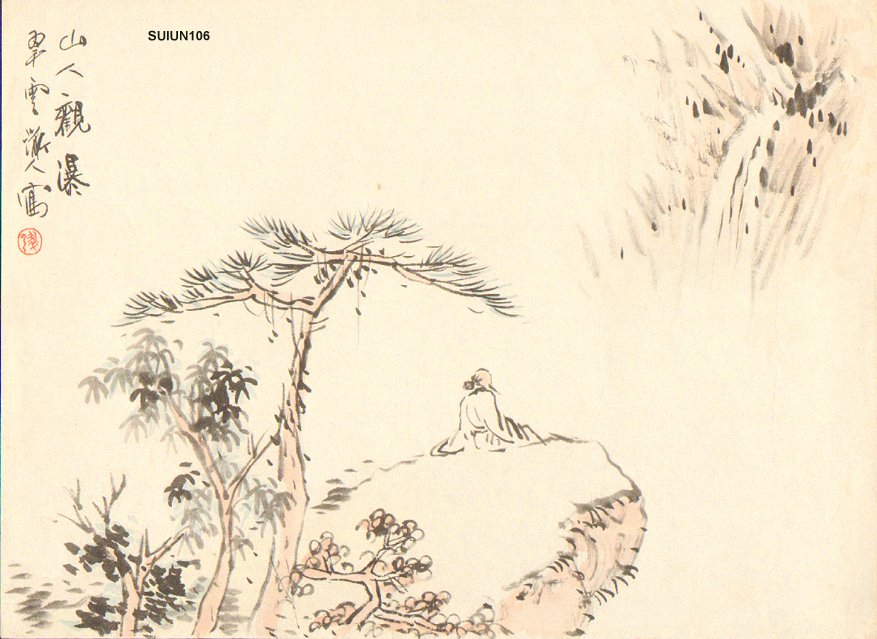
Hermit and Waterfall
高士観瀑図
Taishō–early Shōwa period (c. 1920s–1930s)
Color woodblock print
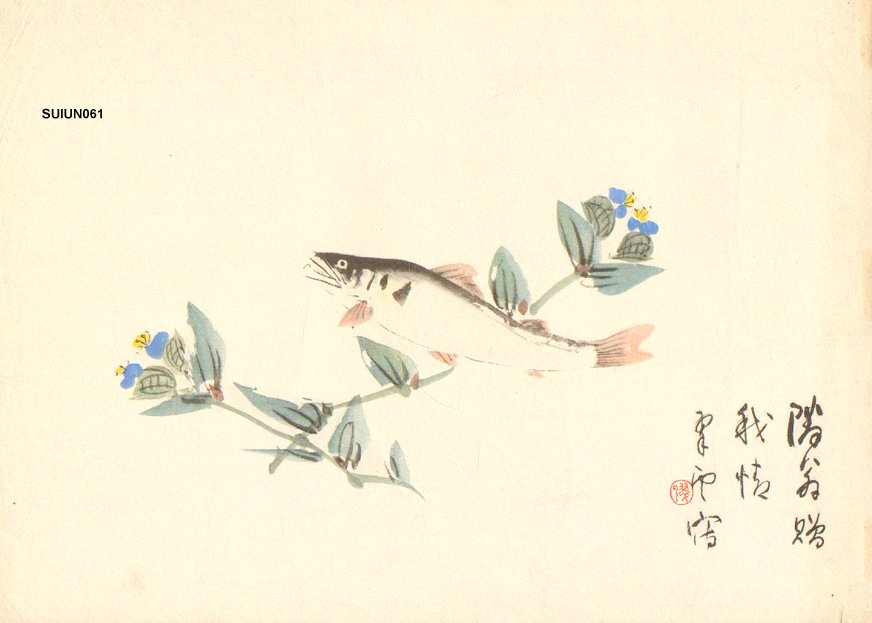
Fish
魚
Taishō–early Shōwa period (c. 1920s–1930s)
Color woodblock print (kachō-e)
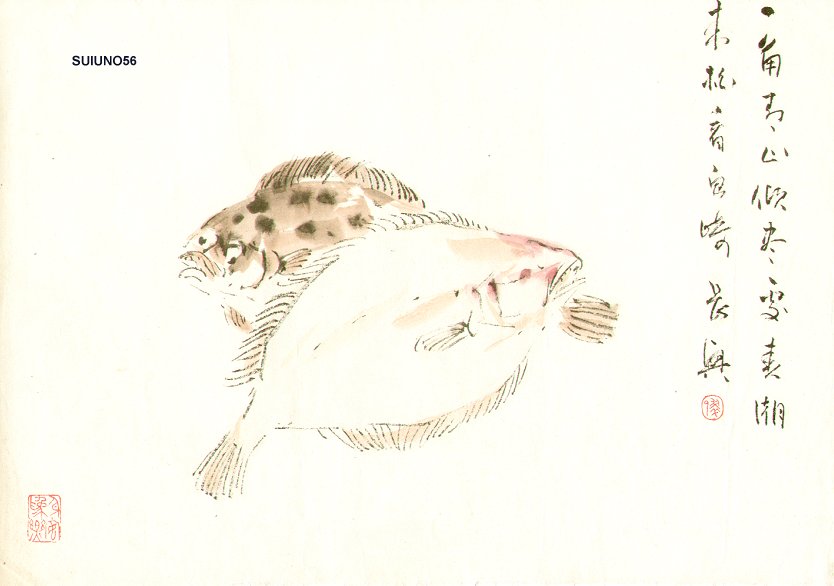
Flounder
鰈
Taishō–early Shōwa period (c. 1920s–1930s)
Color woodblock print (kachō-e)
More Fish Prints


Frequently Asked Questions
Fisherman (漁夫) was created by Komuro Suiun (小室翠雲) in Taishō–early Shōwa period (c. 1920s–1930s).
Fisherman depicts fish.