Biography
Komuro Suiun (1874-1945) was a leading figure of the Taisho and early Showa revival of nanga (Japanese literati painting), the driving force of the Nihon Nangain (Japan Nanga Institute), and one of the last painters in the Sino-Japanese ink-landscape tradition to be elevated to teishitsu gigeiin (Artist to the Imperial Household). At a moment when nanga had been forced to the institutional margins by the Meiji rise of nihonga and yoga, Suiun worked to rebuild the school as a serious modern alternative, drawing on close study of Chinese masters, on his own travels through China, Korea, and Europe, and on a network of associations and exhibition societies that briefly returned bunjinga toward the center of the Japanese ink-landscape conversation in the inter-war decades.
Suiun was born on August 31, 1874 (Meiji 7), in the town of Tatebayashi, north of Tokyo, then part of Tochigi Prefecture and today part of Gunma Prefecture. His birth name was Komuro Teijiro. He received an early classical education in the Sino-Japanese tradition before, around 1890 in his mid-teens, he entered the studio of the painter Tazaki Soun (1815-1898) in nearby Ashikaga, in Tochigi Prefecture. Tazaki Soun was one of the last major nanga painters of the late Edo and early Meiji period and a senior surviving exponent of the Kanto nanga school in the years on either side of the Meiji Restoration. Suiun studied with Soun until the master's death in 1898, roughly eight years that constituted the core of his training, and it was Soun who bestowed on him the art-name Suiun (翠雲, "kingfisher-green clouds") after about three years in the studio. The training was thorough and traditional: copying after Chinese Yuan and Ming masters, close study of the classic painting manuals and late-Edo nanga albums, brushwork drills in the calligraphic ink-line on which the school was founded, and direct sketching from the mountains and rivers of the Ashikaga region. Soun's death in 1898 left Suiun, then in his early twenties, as one of the senior surviving carriers of the orthodox Kanto nanga line.
In 1899 Suiun moved to Tokyo, where he joined the Japan Art Association (Nihon Bijutsu Kyokai) and other exhibition societies through which nanga painters maintained an institutional presence in the capital. The Meiji art establishment had by then largely consolidated around the new categories of nihonga and yoga, and nanga, once the dominant idiom of the late-Edo educated classes, was widely treated as a fading tradition associated with the Tokugawa past. Much of Suiun's career through the first decades of the twentieth century was directed at reasserting nanga's standing within the new exhibition system. In 1907 he helped form the Seiha Doshikai, a conservative Japanese-painting group, together with Takashima Hokkai and Araki Jippo. He became one of the few nanga painters whose work was regularly accepted at the state-run Bunten salon, the first official annual exhibition, founded in 1907, and at its later successors (Teiten, Shin-Bunten) through the Taisho and Showa periods. His landscape "Kanrin Yukyo" won a Second Prize at the seventh Bunten in 1913 and was purchased by the Imperial Household Ministry, and in 1914 he was appointed a juror of the Bunten.
Suiun's personal life in these years included a period within the Noguchi family: in May 1903 he married into the household of the noted painter Noguchi Shohin and briefly exhibited as Noguchi Suiun, before the marriage was annulled in November 1906, after which he reverted to the Komuro name under which he is now known. He settled permanently in Tokyo and devoted the remainder of his life to nanga painting, to the reorganization of its institutional infrastructure, and to the teaching of younger painters.
The turning point of Suiun's career came with the Nihon Nangain (日本南画院, Japan Nanga Institute), founded in Kyoto in 1921 as the principal modern organization devoted to the preservation and renewal of nanga in twentieth-century Japan. Following his return from a 1921 journey to China and Korea, a trip that confirmed for him both the depth of the Chinese ink-landscape tradition and the need to ground modern Japanese nanga in direct study of Chinese sources, Suiun took a leading role in the institute and assumed its effective leadership. Under his direction through the 1920s and into the 1930s the Nihon Nangain held annual exhibitions and developed the most coherent twentieth-century program for the renewal of bunjinga, showcasing the work of Suiun's own generation of nanga painters and training a younger cohort who would carry the tradition into the Showa period. In 1924 Suiun was named a member of the Imperial Art Academy. The institute was eventually dissolved in 1936 following internal disagreements among its senior membership, a familiar pattern in the inter-war Japanese art societies; Suiun continued to exhibit and teach as an independent senior figure through the late 1930s and the wartime years.
In 1931 Suiun travelled to Berlin as a Japanese envoy to an exhibition of contemporary Japanese painting, the first leg of a months-long journey that subsequently took him to France, Italy, Egypt, Ceylon (Sri Lanka), India, and the United States before his return that summer. The trip was both diplomatic and artistic: Suiun used it to study Western painting and museum practice, to deepen his knowledge of the Asian sources of the nanga tradition, and to present Japanese nanga to European and American audiences. The journey reinforced his conviction that nanga belonged within the international conversation of ink-landscape painting that ran from medieval China through Japan, Korea, and the broader Buddhist East, and that the school's revival required both fidelity to its Chinese sources and openness to the internationalism of the inter-war decades.
In 1932 Suiun founded the Nanga Kanshokai (Nanga Appreciation Society), a smaller and more popular organization intended to broaden the audience for nanga among the educated public of Tokyo and the regional cities. The society held lectures, demonstrations, and small exhibitions through the 1930s and contributed to a modest but real revival of nanga collecting in inter-war Japan. Suiun's own production in these years was extensive: ink-and-light-color landscapes in the orthodox nanga manner, with careful attention to the disciplined brush-line of the Chinese Yuan and Ming masters, controlled use of light wash, and the integration of inscription, seal, and composition that distinguished bunjinga from the more pictorial idioms of nihonga and yoga. His subjects included the mountains and rivers of the Kanto region, scenes from his Chinese and European travels, traditional Sino-Japanese themes such as the four gentlemen (plum, orchid, bamboo, and chrysanthemum) and the hermit-and-waterfall topos of Chinese literati painting, and occasional bird-and-flower and figure subjects rendered in the same controlled brush manner.
In 1944, in the final year of the Pacific War and less than a year before his death, Suiun was named teishitsu gigeiin (Artist to the Imperial Household), the highest official honor available to a Japanese visual artist. The teishitsu gigeiin system, instituted in 1890, was held at any one time by no more than a few dozen painters, sculptors, and craftsmen across the entire country, and the 1944 appointment of a senior nanga painter was an unusual recognition of a tradition that had been institutionally marginal for half a century. Suiun thus became one of only a handful of nanga painters in the history of the teishitsu gigeiin system, alongside earlier literati-tradition appointees such as Taki Katei and Tomioka Tessai. He died in Tokyo on March 30, 1945, at the age of seventy, some months before the end of the Pacific War.
Suiun's posthumous standing as a central figure of the twentieth-century nanga revival rests on the combination of his institutional work, the leadership of the Nihon Nangain, the founding of the Nanga Kanshokai, and the broader network of teaching and exhibition organizations through which inter-war nanga was sustained, and on the quality of his own painting, now recognized as among the most disciplined and historically informed of the entire modern revival. His preferred medium was the hanging-scroll ink landscape in the orthodox Yuan-Ming nanga manner, but his production also included folding-screen sets, sliding-door commissions, and small bird-and-flower subjects, and a number of his designs were also issued as color woodblock prints. His work survives in Japanese public collections, including the Gunma Prefectural Museum of Modern Art, and in many private collections in Japan and abroad. His pupils and Nangain associates carried elements of his approach into the post-war nanga of the Showa period, though the school itself never recovered the institutional standing it had held in his lifetime. He is now recognized as a principal exponent of the twentieth-century nanga revival and one of the last painters in the Sino-Japanese ink-landscape tradition to have worked at the highest level of the official Japanese art establishment.
Key Facts
- Active Period
- 1874–1945
- Nationality
- 🇯🇵Japan
- Movement
- Meiji/Taishō Prints
- Subjects
- FishAutumn FoliageWaterfalls
- Works Indexed
- 7
Frequently Asked Questions
Komuro Suiun (1874-1945) was a leading figure of the Taisho and early Showa revival of nanga (Japanese literati painting), the driving force of the Nihon Nangain (Japan Nanga Institute), and one of the last painters in the Sino-Japanese ink-landscape tradition to be elevated to teishitsu gigeiin (Artist to the Imperial Household). At a moment when nanga had been forced to the institutional margins by the Meiji rise of nihonga and yoga, Suiun worked to rebuild the school as a serious modern alternative, drawing on close study of Chinese masters, on his own travels through China, Korea, and Europe, and on a network of associations and exhibition societies that briefly returned bunjinga toward the center of the Japanese ink-landscape conversation in the inter-war decades.
Komuro Suiun was active from 1874 to 1945. They were associated with the Meiji/Taishō Prints movement.
Komuro Suiun's work was shaped by the Meiji/Taishō Prints tradition in Japanese woodblock printmaking. Meiji/Taishō Prints: Meiji and Taishō era prints (1868–1926) bridge the transition from traditional ukiyo-e to the modern shin-hanga and sosaku-hanga movements.
Komuro Suiun's prints frequently feature fish, autumn foliage, waterfalls.
Original prints by Komuro Suiun can be found in collections including Asian Collection Internet Auction (via ukiyo-e.org), Kondō Kihachirō edition (via ukiyo-e.org / Asian Collection Internet Auction).
Woodblock Prints by Komuro Suiun (7)
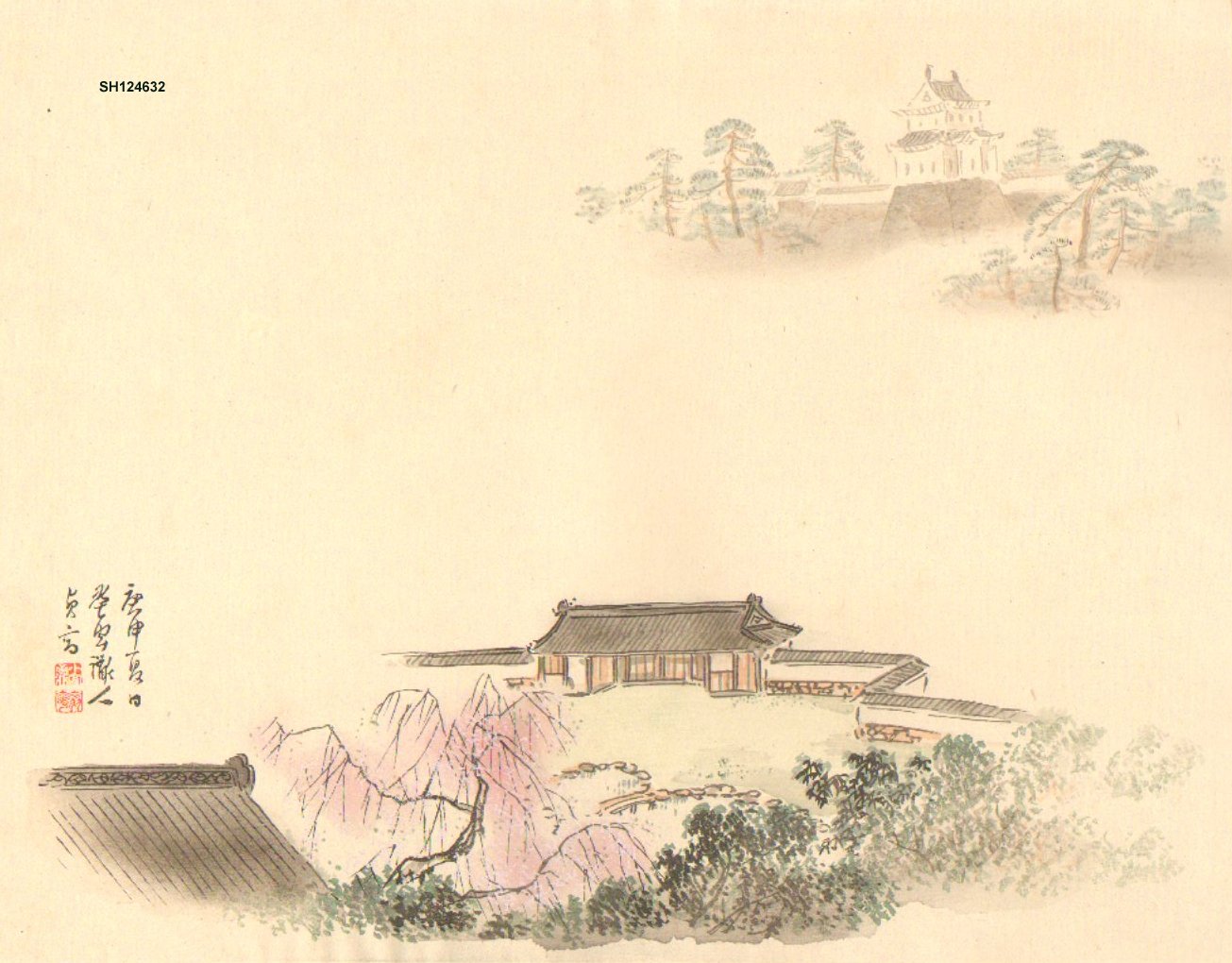
Landscape with Figure
山水人物図
Taishō period (c. 1912–1926)
Color woodblock print
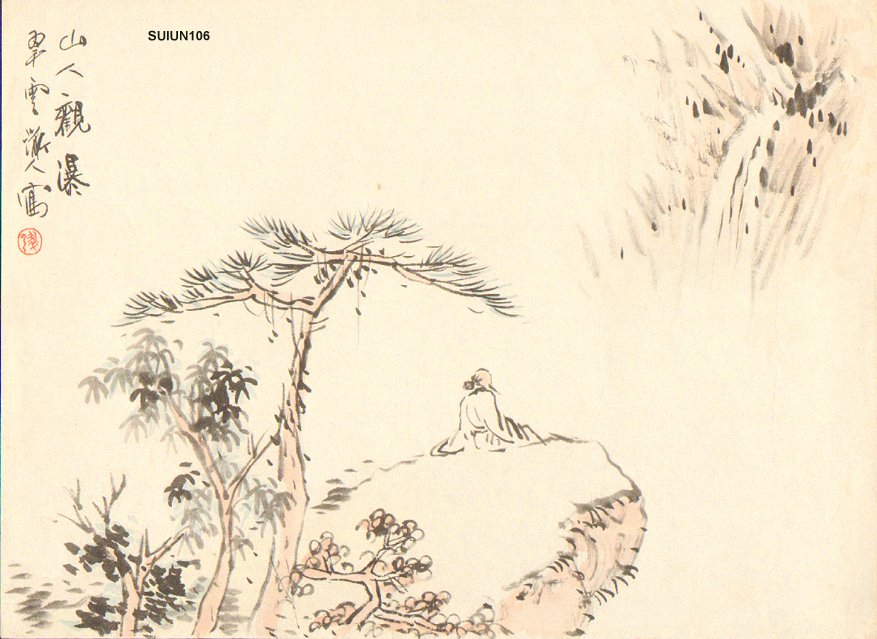
Hermit and Waterfall
高士観瀑図
Taishō–early Shōwa period (c. 1920s–1930s)
Color woodblock print
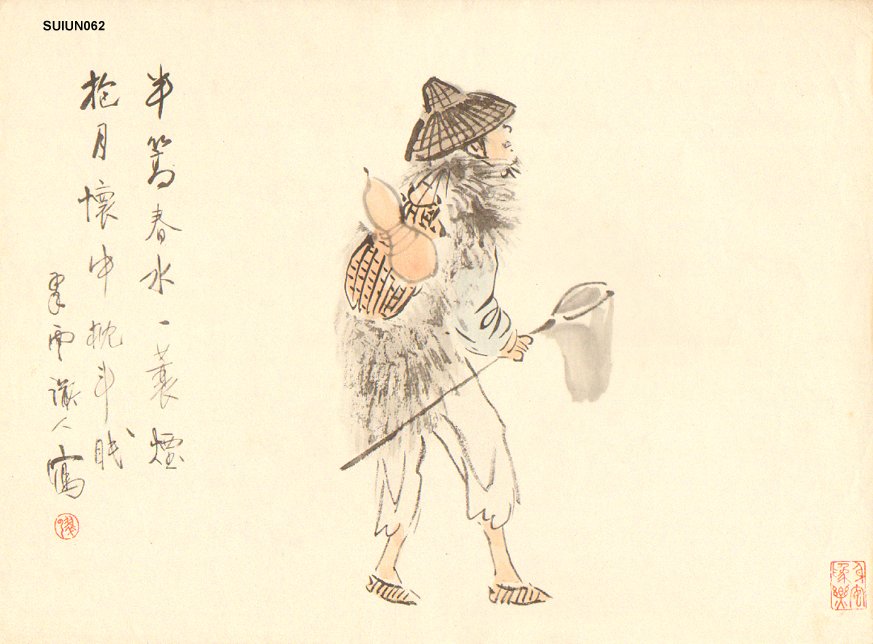
Fisherman
漁夫
Taishō–early Shōwa period (c. 1920s–1930s)
Color woodblock print
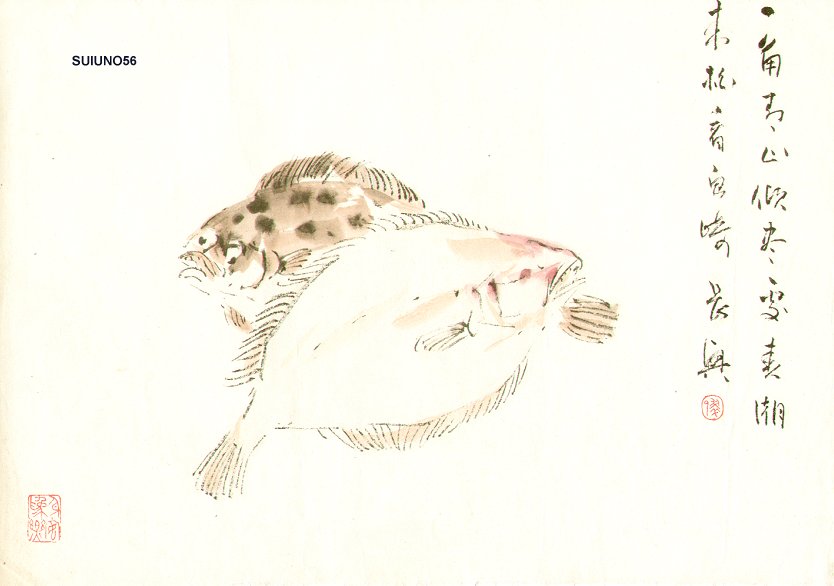
Flounder
鰈
Taishō–early Shōwa period (c. 1920s–1930s)
Color woodblock print (kachō-e)
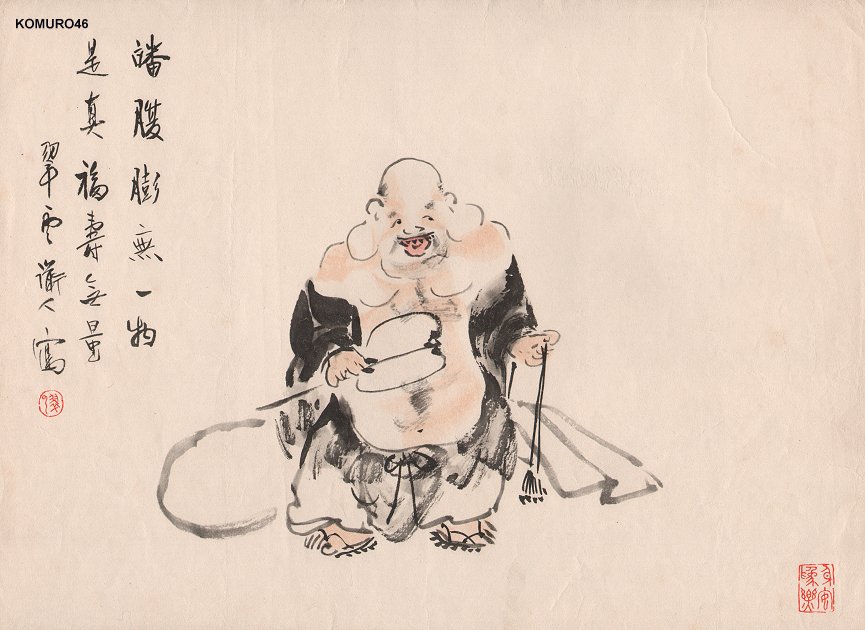
Daikoku, God of Wealth
大黒
Taishō–early Shōwa period (c. 1920s–1930s)
Color woodblock print (New Year's print)
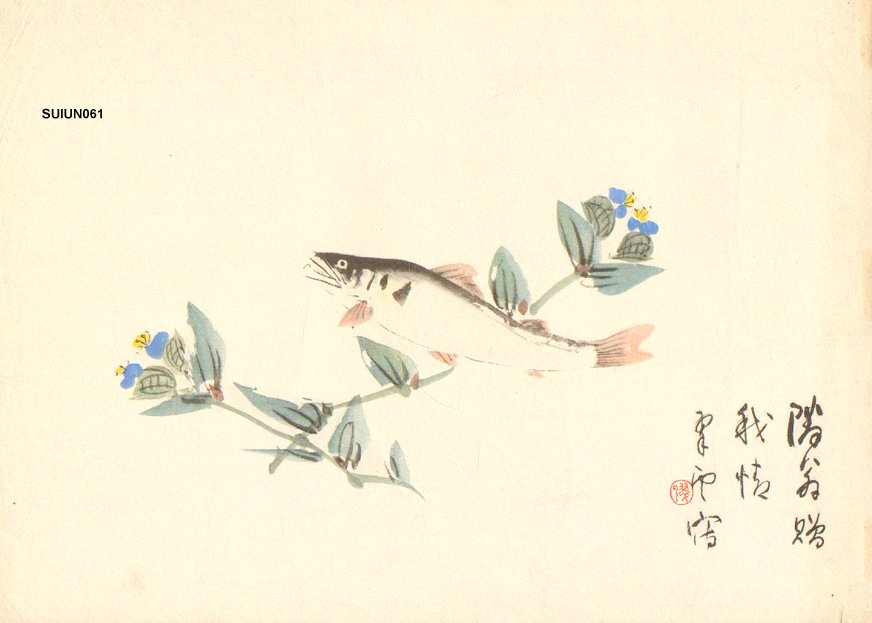
Fish
魚
Taishō–early Shōwa period (c. 1920s–1930s)
Color woodblock print (kachō-e)
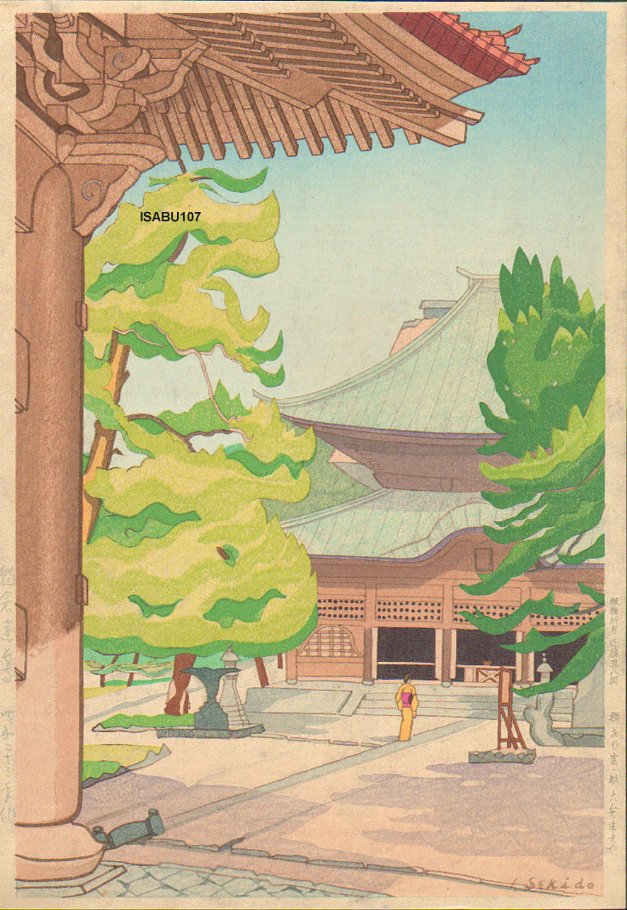
Kenchō-ji Temple in Kamakura
鎌倉建長寺
1948 (posthumous edition)
Color woodblock print