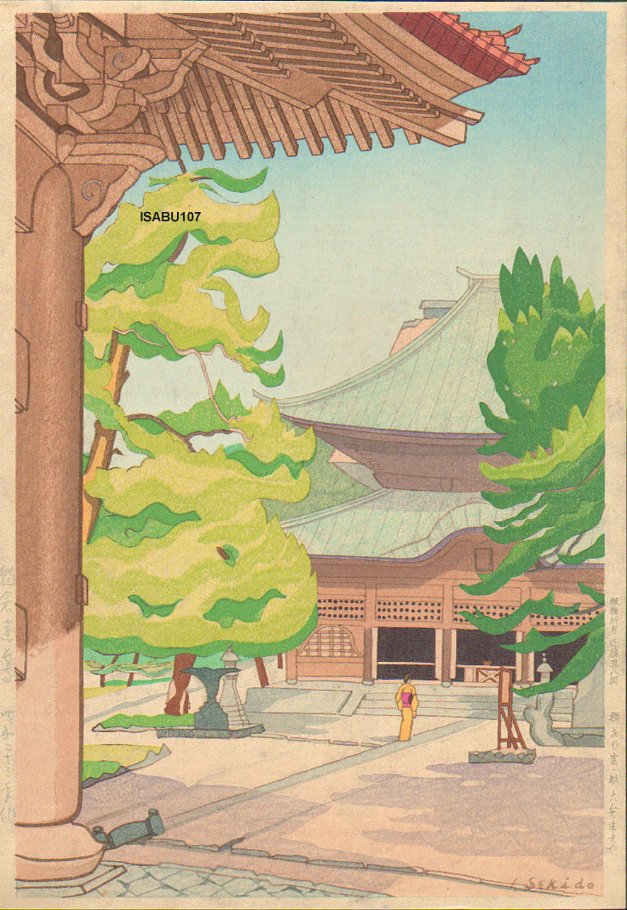
Kenchō-ji Temple in Kamakura
鎌倉建長寺
by Komuro Suiun
- Date:
- 1948 (posthumous edition)
- Medium:
- Color woodblock print
Description
Kenchō-ji Temple in Kamakura (鎌倉建長寺) is a color woodblock print after Komuro Suiun's original drawing, published in 1948 by the Tokyo publisher Kondō Kihachirō as part of a small posthumous edition of Suiun's landscape designs. The print depicts the Kenchō-ji, the principal Rinzai Zen temple of Kamakura founded in 1253 by the Kamakura shogunate as the senior Zen monastic establishment in eastern Japan, in the close-toned ink-and-light-color manner of Suiun's mature nanga landscape style. The composition is built around the temple's main approach and its great Zen gate (sanmon), with the framing mountains and cedars rendered in the bone-line brushwork (kōkotsu) and controlled wash of the Yuan-Ming literati landscape tradition that Suiun spent his career renewing in Japan. The choice of Kenchō-ji is itself a literati gesture: Kamakura was the cradle of medieval Japanese Zen and one of the principal sites of the Sino-Japanese cultural exchange that gave rise to the original nanga tradition, and the temple itself was associated with the Chinese émigré priest Rankei Dōryū (Lanxi Daolong) who founded it in the thirteenth century. The 1948 Kondō Kihachirō edition was one of the principal channels through which Suiun's posthumous work entered the Japanese print market in the immediate post-war years, and surviving impressions document the continued public interest in his landscape designs in the years immediately following his death in March 1945.
More Prints by Komuro Suiun
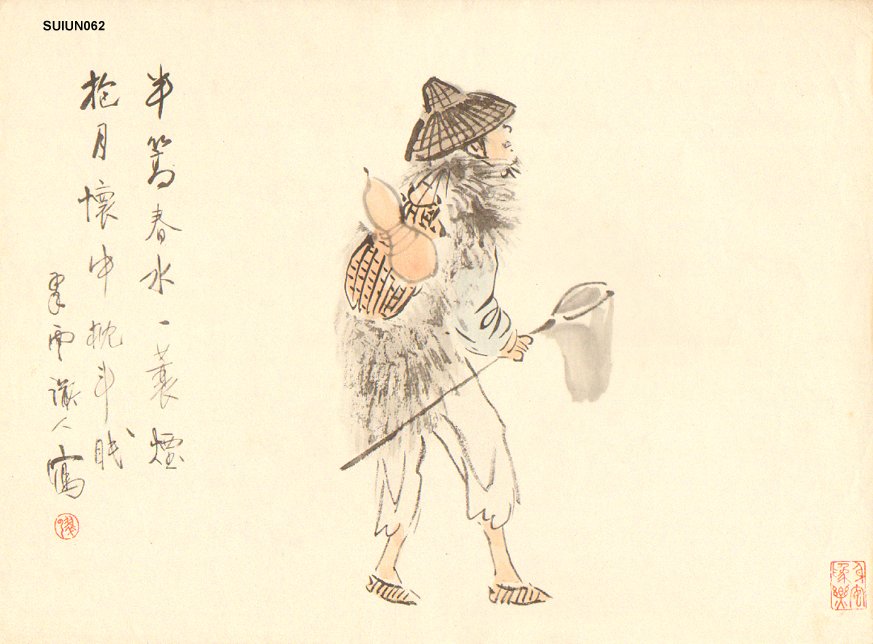
Fisherman
漁夫
Taishō–early Shōwa period (c. 1920s–1930s)
Color woodblock print
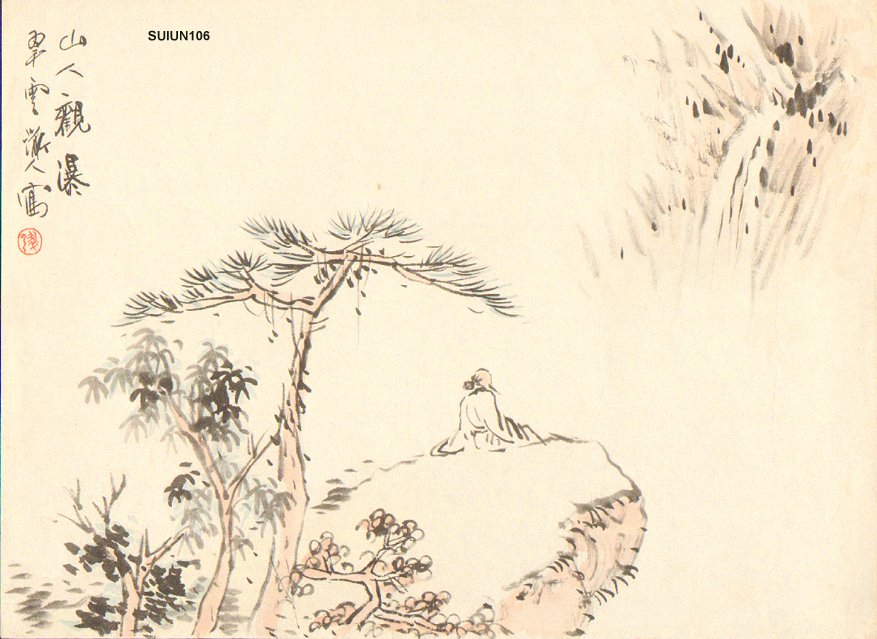
Hermit and Waterfall
高士観瀑図
Taishō–early Shōwa period (c. 1920s–1930s)
Color woodblock print
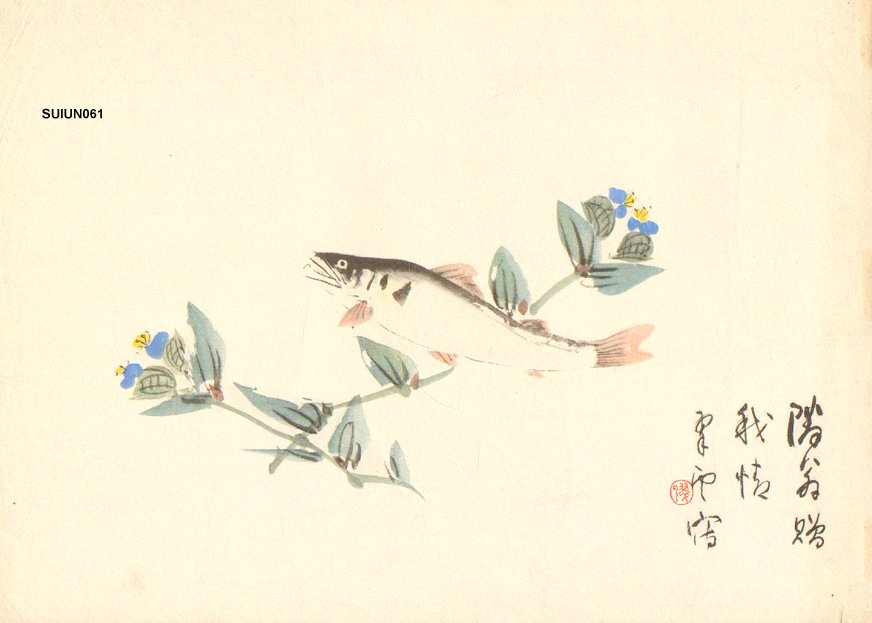
Fish
魚
Taishō–early Shōwa period (c. 1920s–1930s)
Color woodblock print (kachō-e)
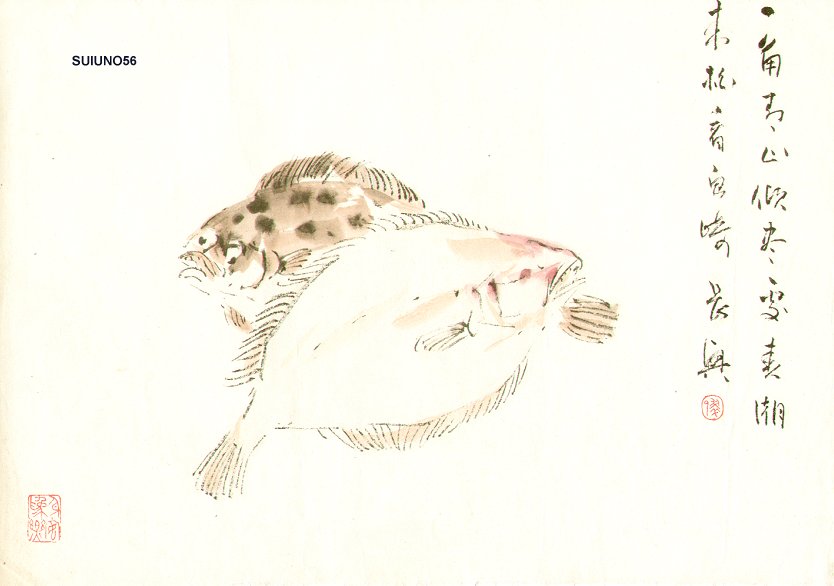
Flounder
鰈
Taishō–early Shōwa period (c. 1920s–1930s)
Color woodblock print (kachō-e)
Frequently Asked Questions
Kenchō-ji Temple in Kamakura (鎌倉建長寺) was created by Komuro Suiun (小室翠雲) in 1948 (posthumous edition).