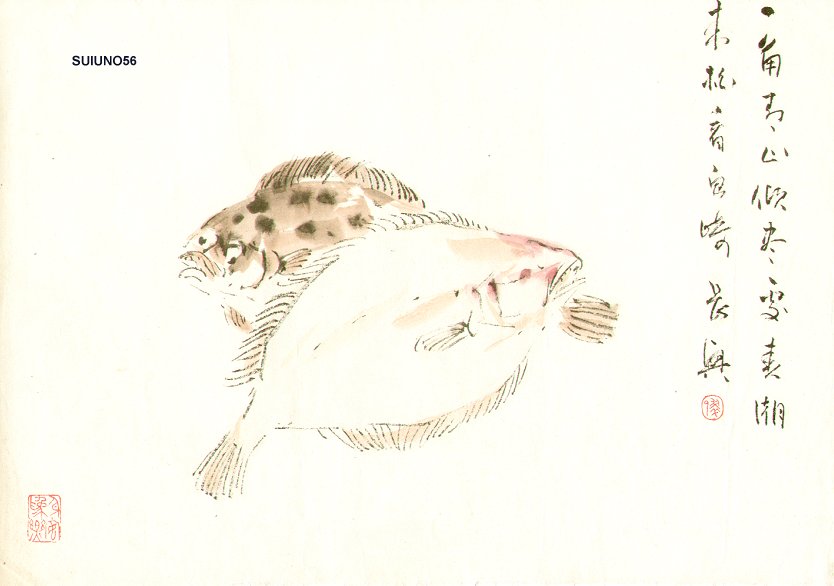
Flounder
鰈
by Komuro Suiun
- Date:
- Taishō–early Shōwa period (c. 1920s–1930s)
- Medium:
- Color woodblock print (kachō-e)
Description
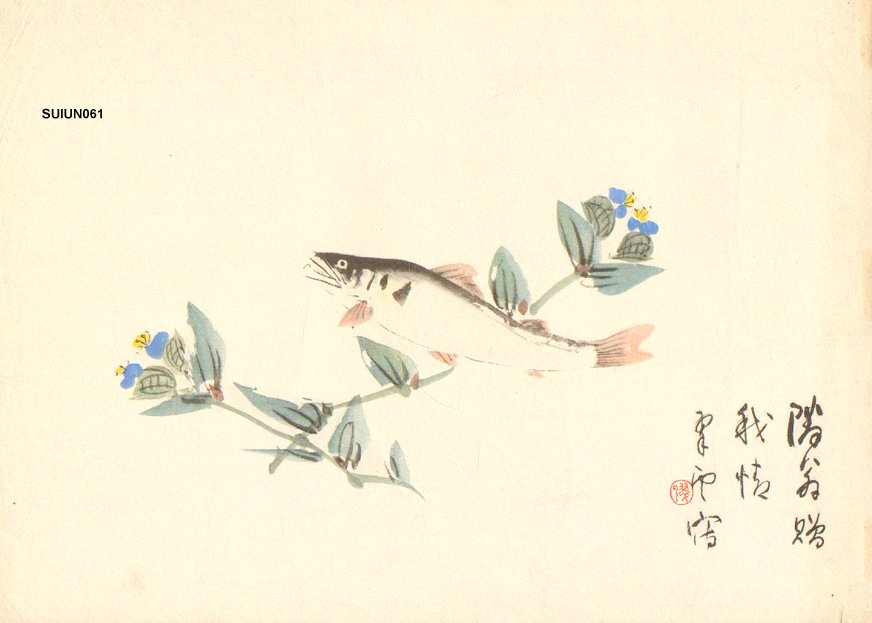
Flounder (鰈) is a color woodblock print after Komuro Suiun's original drawing, depicting the flatfish — one of the canonical subjects of the East Asian kachō-e (bird-and-flower, broadly understood to include fish and shellfish) tradition. The flounder appears in the inherited pictorial vocabulary as a subject associated with seasonal eating and with the close observational drawing of marine subjects that the late-Edo Maruyama-Shijō and nanga schools had developed in parallel: the flat, mottled fish presents the painter with a sustained problem of pattern and silhouette that the literati ink-line was well suited to resolve. Suiun's handling deploys the disciplined brushwork and restrained color that distinguished his mature nanga production, with the fish rendered in profile or three-quarter view and the dark spotting of the upper surface carefully observed against the lighter underbody. The print belongs to the body of small-format kachō-e subjects that the Tokyo publishers issued from Suiun's drawings in the inter-war decades, and represents the more popular wing of his production aimed at the domestic decorative-print market rather than the connoisseur-collector market that consumed his hanging-scroll landscapes.
More Prints by Komuro Suiun
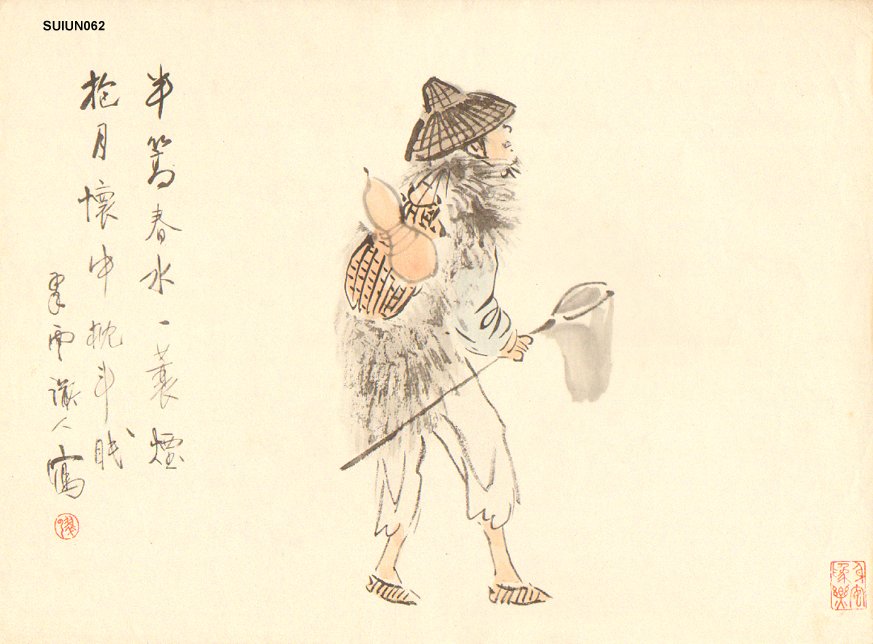
Fisherman
漁夫
Taishō–early Shōwa period (c. 1920s–1930s)
Color woodblock print
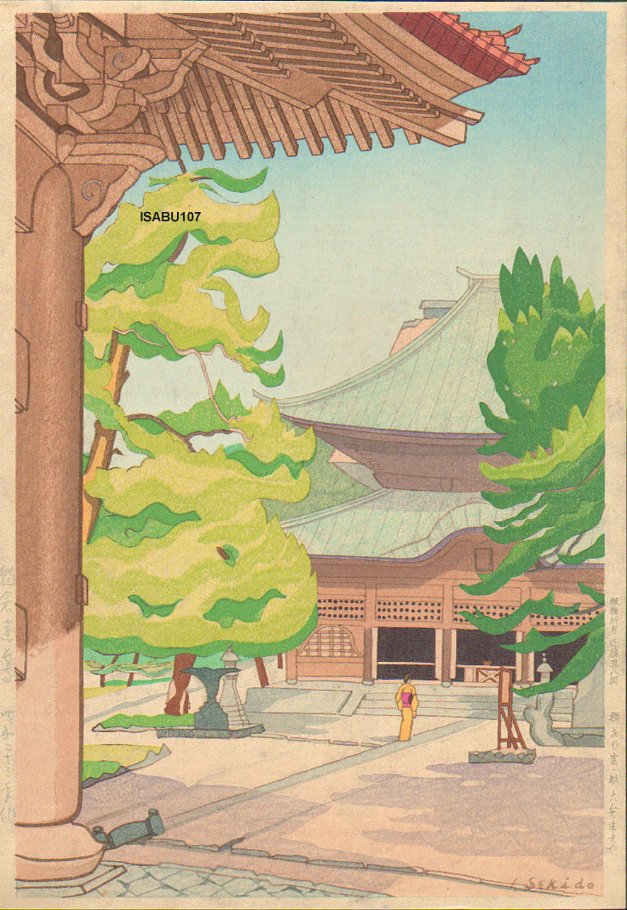
Kenchō-ji Temple in Kamakura
鎌倉建長寺
1948 (posthumous edition)
Color woodblock print
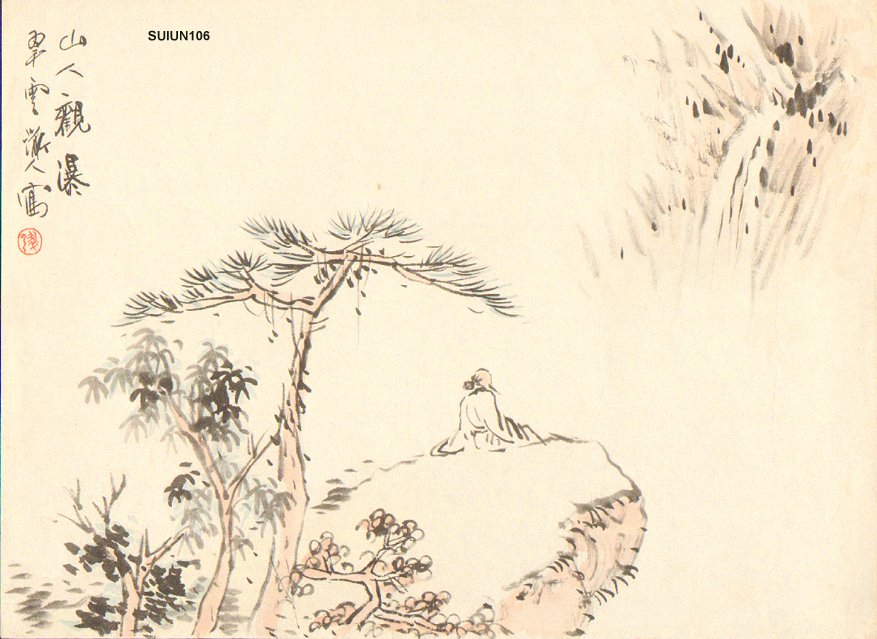
Hermit and Waterfall
高士観瀑図
Taishō–early Shōwa period (c. 1920s–1930s)
Color woodblock print
Fish
魚
Taishō–early Shōwa period (c. 1920s–1930s)
Color woodblock print (kachō-e)
Frequently Asked Questions
Flounder (鰈) was created by Komuro Suiun (小室翠雲) in Taishō–early Shōwa period (c. 1920s–1930s).