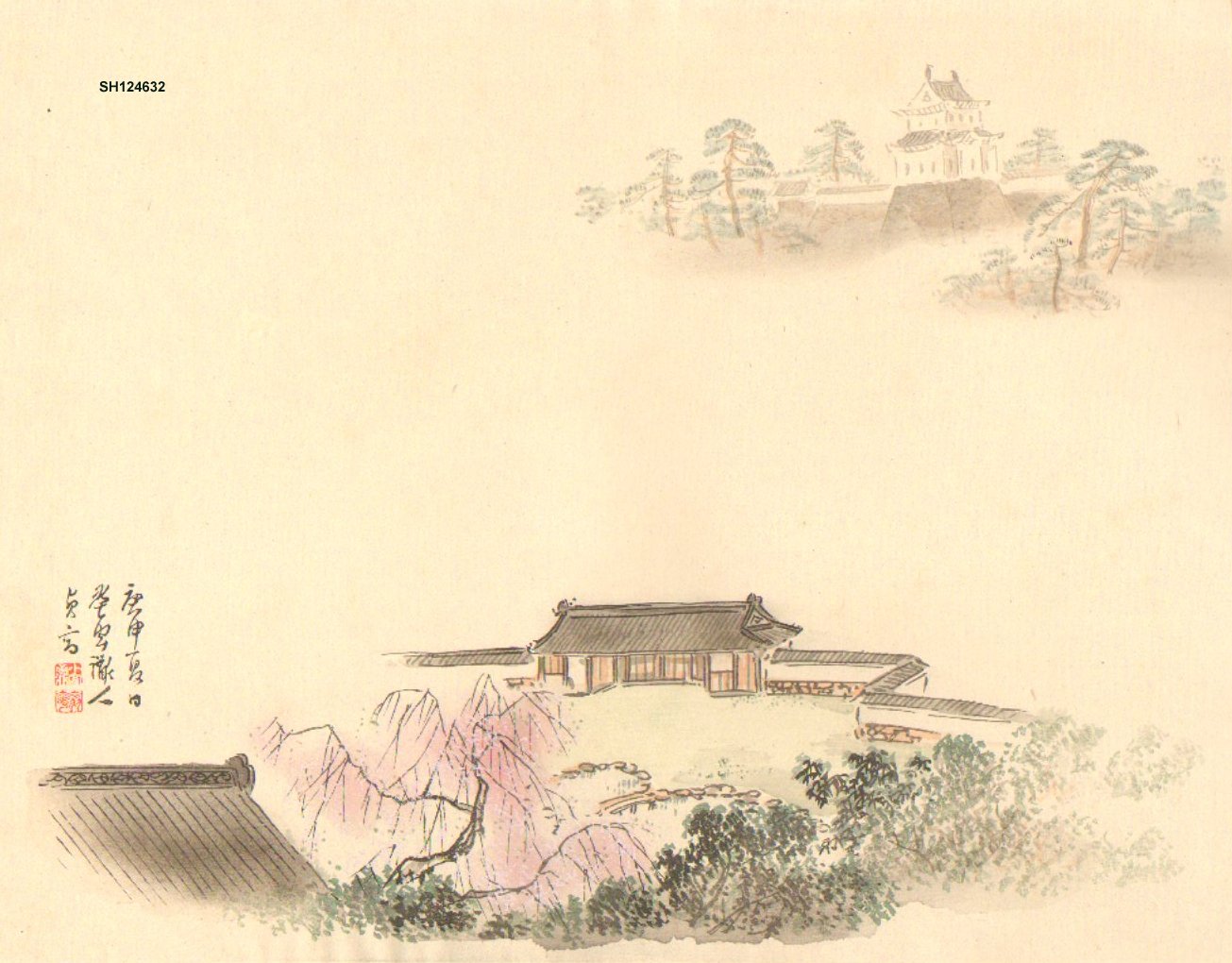
Landscape with Figure
山水人物図
by Komuro Suiun
- Date:
- Taishō period (c. 1912–1926)
- Medium:
- Color woodblock print
Description
Landscape with Figure (山水人物図) is a color woodblock print after Komuro Suiun's original drawing, dating from the Taishō period and exemplifying the central genre of his production: the literati landscape (sansui) populated by a small figure or pair of figures whose presence anchors the scale of the composition and supplies the human reference point around which the surrounding mountains, rivers, and trees are organized. The genre runs through the entire Chinese-Japanese literati landscape tradition from the Tang and Song dynasties through the Yuan and Ming masters and into the late-Edo and modern Japanese nanga revival, and Suiun's handling deploys all of the inherited compositional conventions: the foreground figure or figures (often a scholar with attendant, a hermit, or a traveller) framed by trees in the lower register, the receding mid-ground plane organized by rocks, a stream, or a path, and the distant mountains rising in the upper register and resolved in graduated wash. The bone-line brushwork (kōkotsu) of the foreground rocks and trees, the controlled use of light color over the underlying ink structure, and the integration of inscription and seal at the upper edge follow the orthodox nanga manner that Suiun absorbed from Tazaki Sōun and renewed through his own direct study of Chinese Yuan and Ming sources. The print belongs to the body of small-format landscape subjects that the Tokyo publishers issued from Suiun's drawings in the Taishō and early Shōwa periods.
More Prints by Komuro Suiun
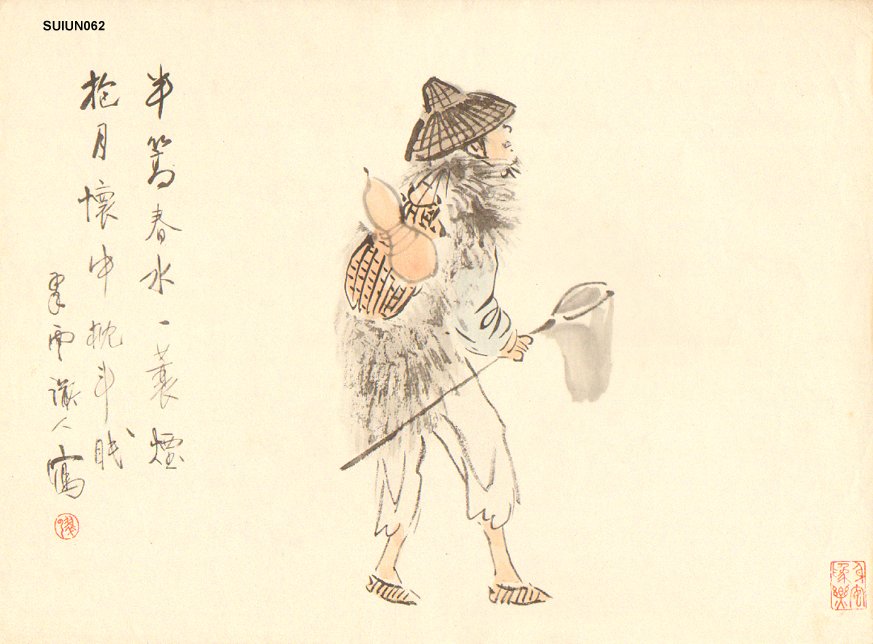
Fisherman
漁夫
Taishō–early Shōwa period (c. 1920s–1930s)
Color woodblock print
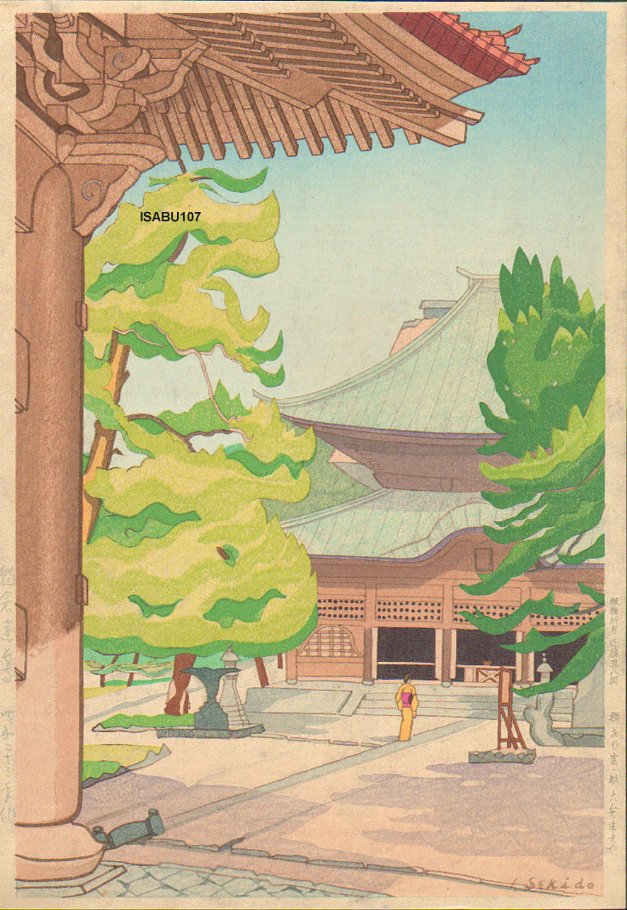
Kenchō-ji Temple in Kamakura
鎌倉建長寺
1948 (posthumous edition)
Color woodblock print
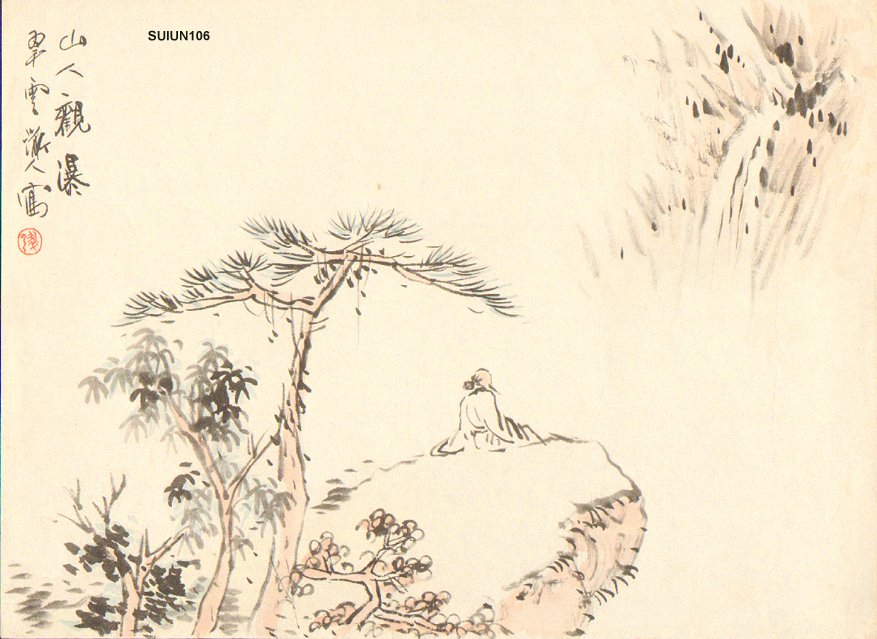
Hermit and Waterfall
高士観瀑図
Taishō–early Shōwa period (c. 1920s–1930s)
Color woodblock print
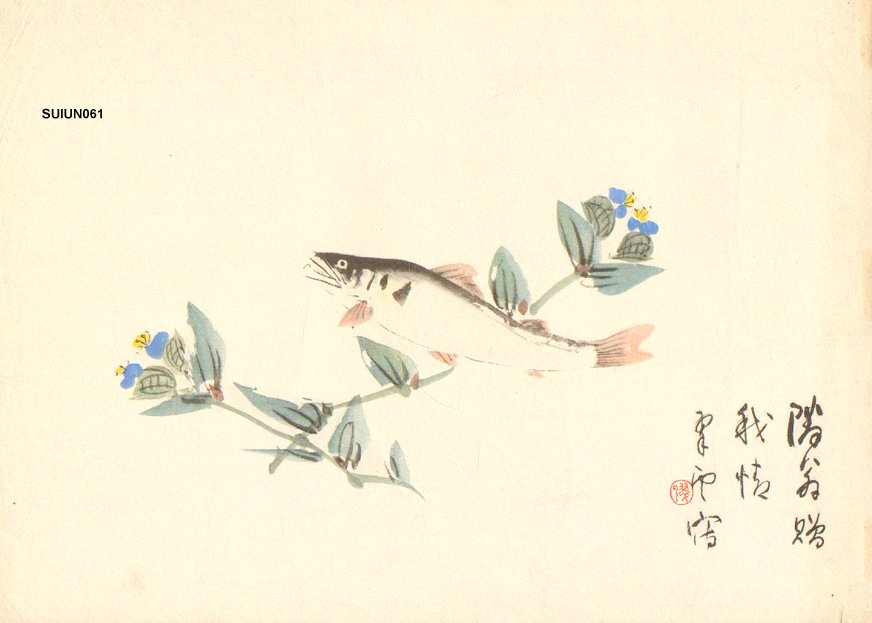
Fish
魚
Taishō–early Shōwa period (c. 1920s–1930s)
Color woodblock print (kachō-e)
Frequently Asked Questions
Landscape with Figure (山水人物図) was created by Komuro Suiun (小室翠雲) in Taishō period (c. 1912–1926).