The Full Moon Viewed on the Seta Karahashi Bridge — 瀬田唐橋
- Medium:
- Woodblock print
- Source:
- Japanese Art Open Database
- Image courtesy of
- Japanese Art Open Database
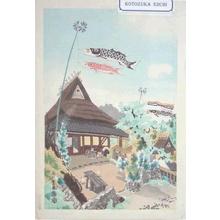
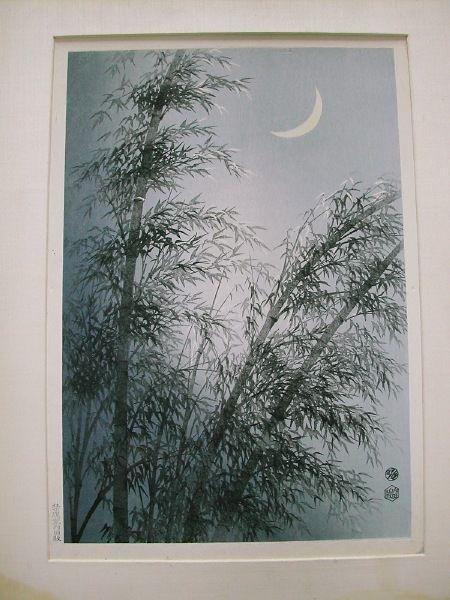
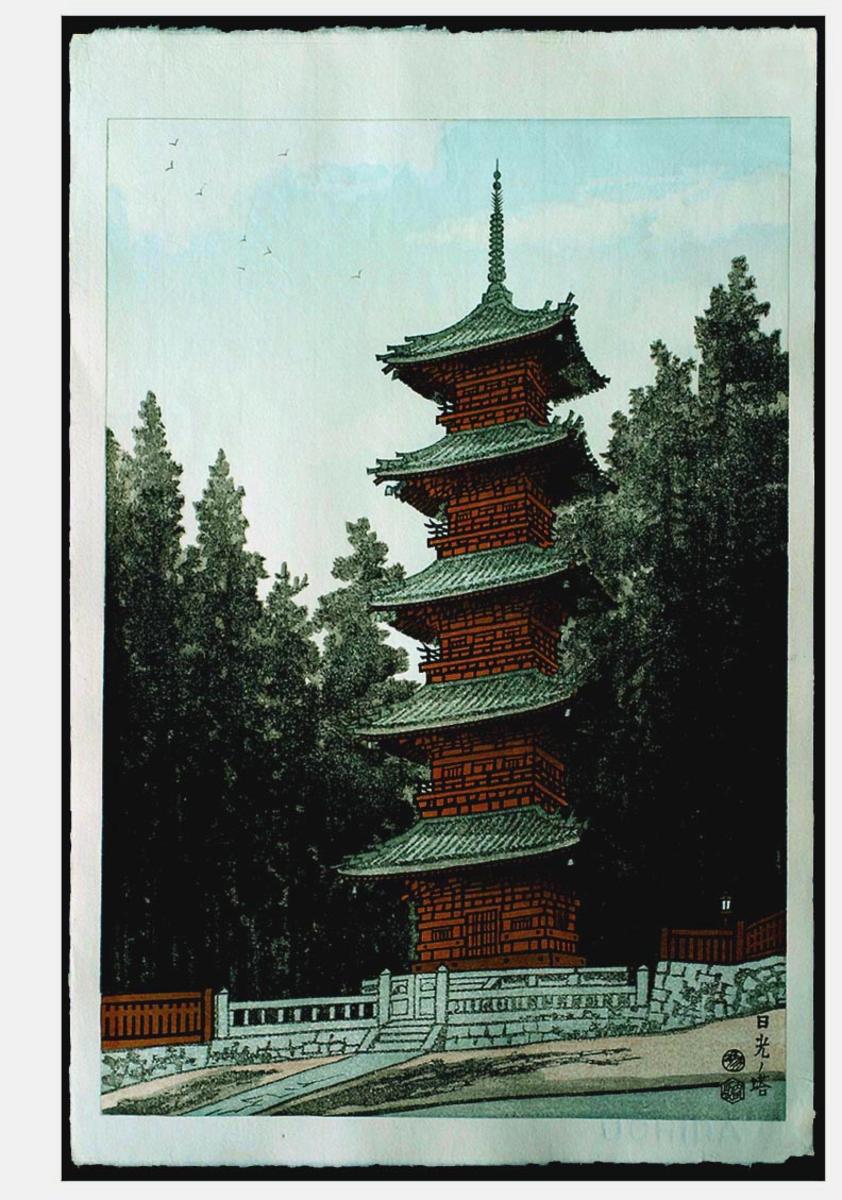
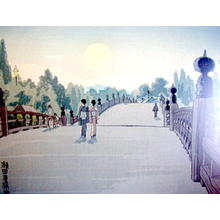
This variant of the Seta Karahashi moon-view subject demonstrates Kotozuka's practice of reworking successful compositions across multiple impression runs. Differences from the companion impression may include adjustments to the moon's size, position, or the density of the night sky gradation, as well as variations in the handling of reflected light on the Seta River surface. The bridge subject at Seta had deep precedent in Japanese landscape iconography — it appeared among the Omi Hakkei (Eight Views of Omi) and had been treated by Hiroshige in the Edo period — giving Kotozuka's version both a topographic and art-historical grounding. The nocturnal otsukimi tradition, combined with a bridge framing a body of water, produced a compositional type well suited to Kotozuka's atmospheric printing technique, with graduated sky blocks requiring careful wiping to achieve even tone across the [washi](/glossary/washi).

Wakasa Kugushiko
1920
Color woodblock print; oban
Woodblock print

1934
Color woodblock print; oban

n.d.
Woodblock print; ishizuri-e, section of harimaze sheet
Curated cross-cuts that include this print.
The Full Moon Viewed on the Seta Karahashi Bridge — 瀬田唐橋 was created by Kotozuka Eiichi (琴塚英一).
The Full Moon Viewed on the Seta Karahashi Bridge — 瀬田唐橋 depicts landscapes.