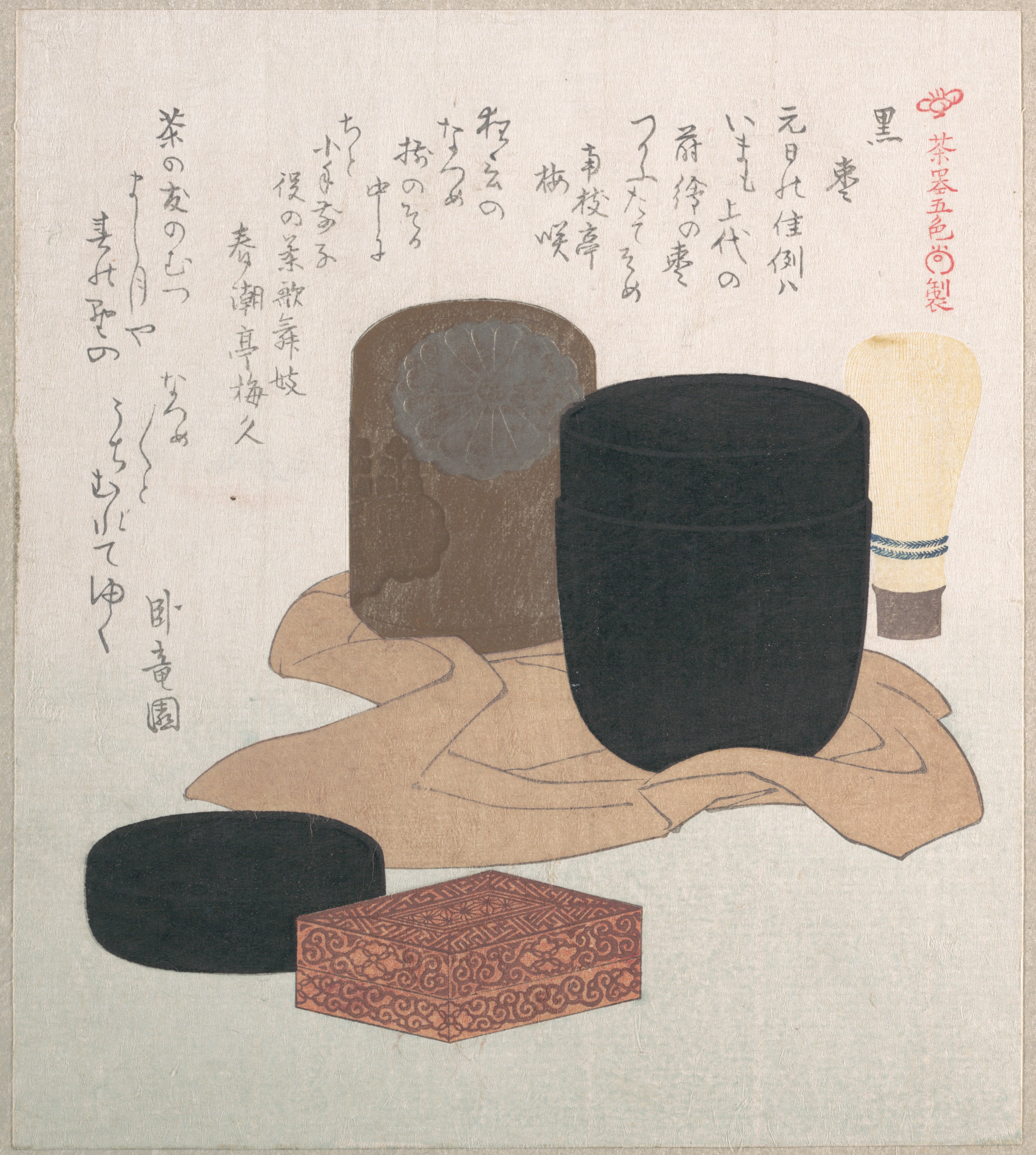
Black
by Kubo Shunman
- Date:
- 19th century
- Medium:
- Part of an album of woodblock prints (surimono); ink and color on paper
- Source:
- Metropolitan Museum of Art
Description
Black, dated to around 1800 and held by the Metropolitan Museum of Art, is one of the more enigmatic titles in Kubo Shunman's catalogued output, suggesting a design that pivots on color, mood, or a category of objects associated with that word in the Japanese poetic lexicon. Black (kuro) carried specific resonances in Edo culture: lacquerware, ink, mourning, the dye of certain robes, the depth of night in a poem. For an Edo ukiyo-e designer like Shunman, whose surimono practice depended on layered associations between image and verse, such a category could provide a productive frame for a kyoka-e: a picture of objects unified by color, or by a metaphorical shading, around which the kyoka poets of his circle could spin variations. Shunman's mature work consistently rewards this kind of close reading, with composition and palette pared down so that every element accrues weight. The print's likely small format and refined surimono printing, with delicate gradations and the possibility of subtle metallic or embossed effects, would have suited a private exchange among poets and patrons rather than a commercial release. Even where the specific iconography requires further research, the work fits squarely within the kyoka-e tradition that Kubo Shunman did so much to shape, and it offers modern viewers a reminder that his designs often used categorical or conceptual prompts as the spine of an entire sheet.
More Prints by Kubo Shunman

Righteousness (Gi), from the series "Five Designs for the Katsushika Poetry Circle (Katsushika goban)"
early 1810s
Color woodblock print; shikishiban, surimono

Soga no Goro, Oiso no Tora, and Kewaizaka no Shosho
1809
Color woodblock print; surimono
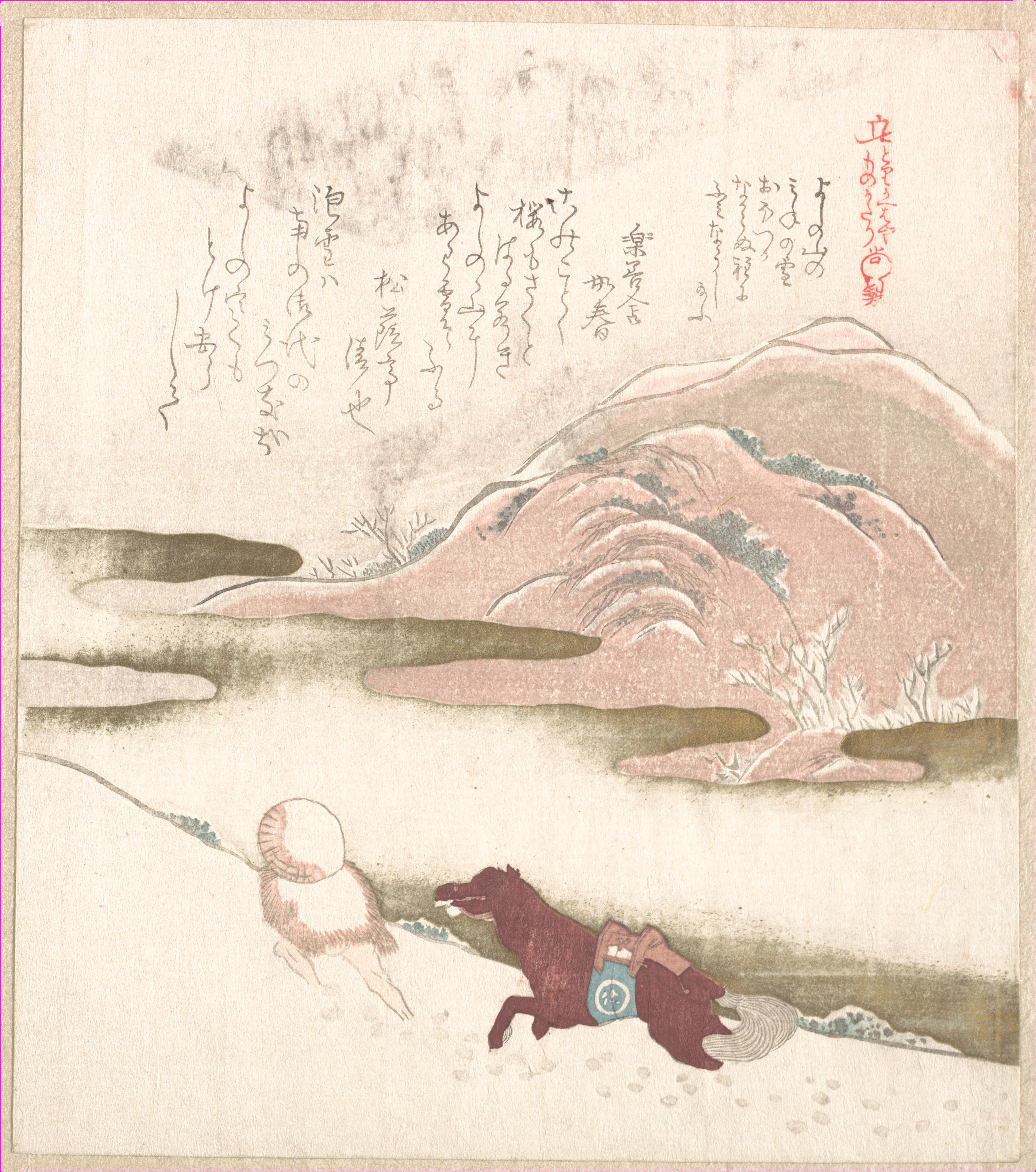
Snowy Landscape
19th century
Woodblock print (surimono); ink and color on paper
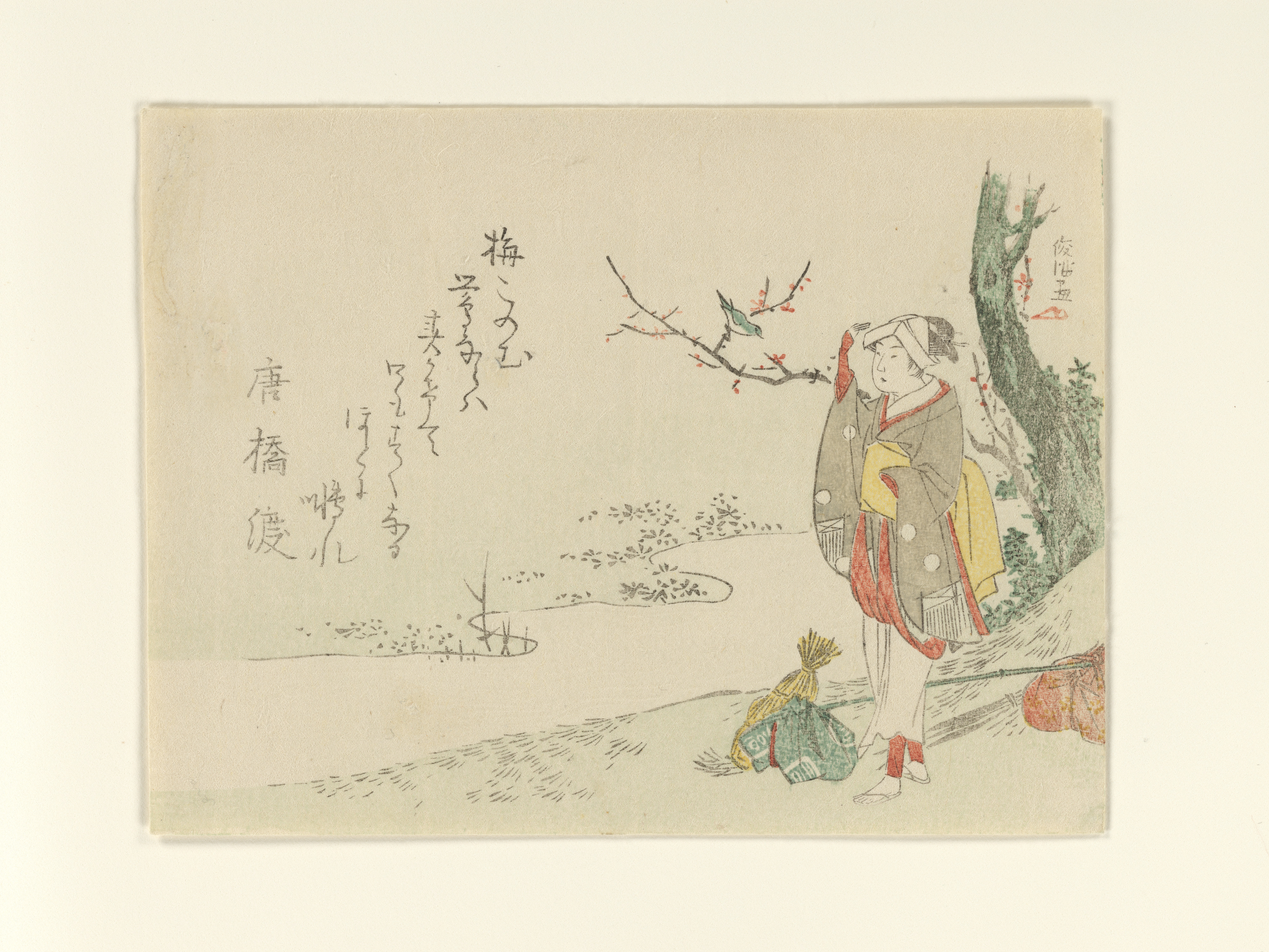
Traveling Woman Pauses to Listen to a Warbler
1797
Woodblock print (surimono); ink and color on paper
Frequently Asked Questions
Black was created by Kubo Shunman (窪俊満) in 19th century.