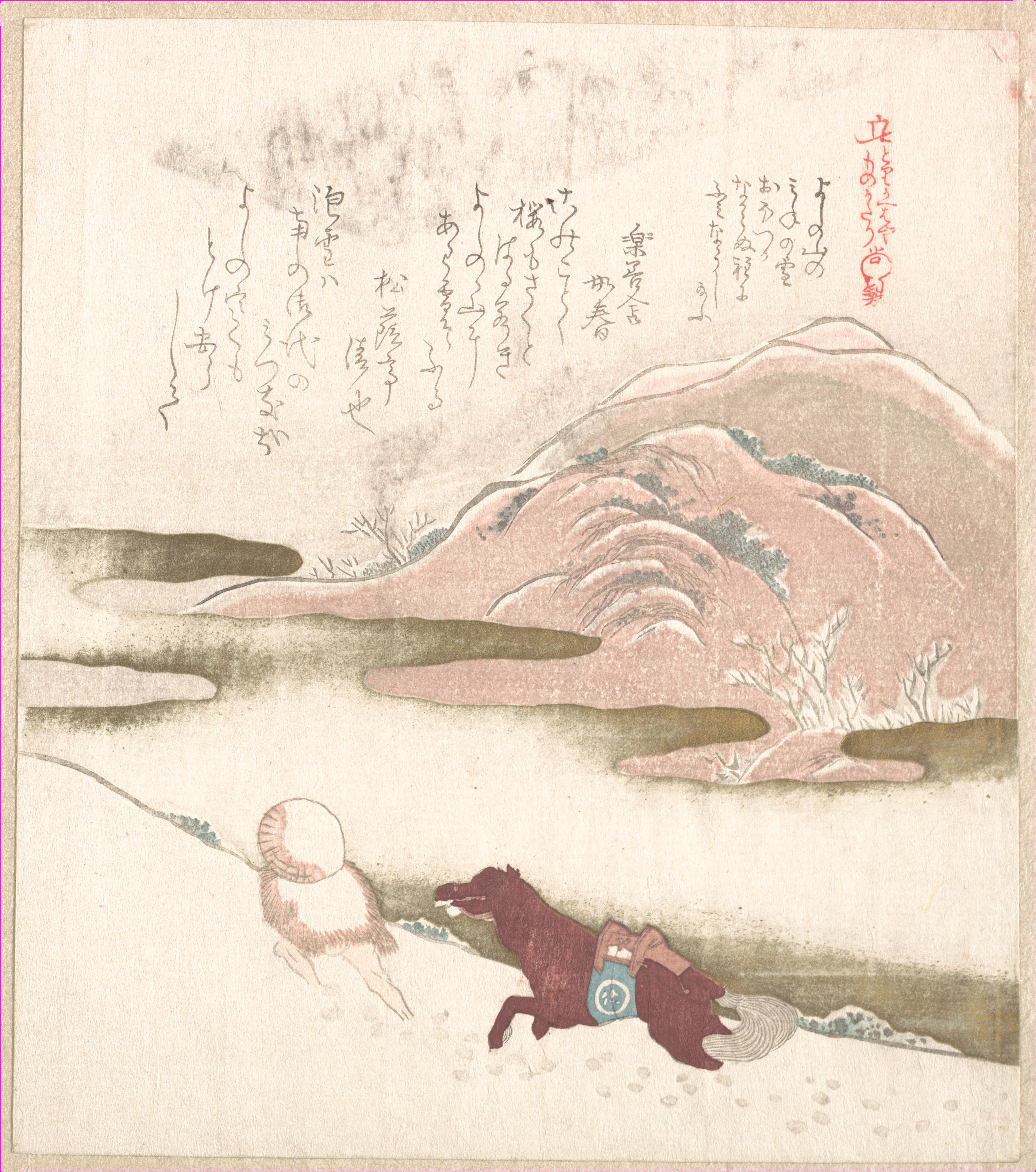
Snowy Landscape
by Kubo Shunman
- Date:
- 19th century
- Medium:
- Woodblock print (surimono); ink and color on paper
- Source:
- Metropolitan Museum of Art
Description
A hooded traveler on foot leads a saddled but riderless dark horse across a snow-covered riverbank, with a low pink-tinged snowy hill dotted with dark shrubs rising behind them and columns of calligraphy filling the upper portion of the sheet. The palette is muted—dusty pink, olive, and grey-brown against unpainted cream paper—with only a small blue and white roundel on the horse's saddle blanket for contrast. This surimono, "Snowy Landscape," was made by Kubo Shunman in 1800 using woodblock printing in ink and color on paper.
More Prints by Kubo Shunman

Righteousness (Gi), from the series "Five Designs for the Katsushika Poetry Circle (Katsushika goban)"
early 1810s
Color woodblock print; shikishiban, surimono

Soga no Goro, Oiso no Tora, and Kewaizaka no Shosho
1809
Color woodblock print; surimono
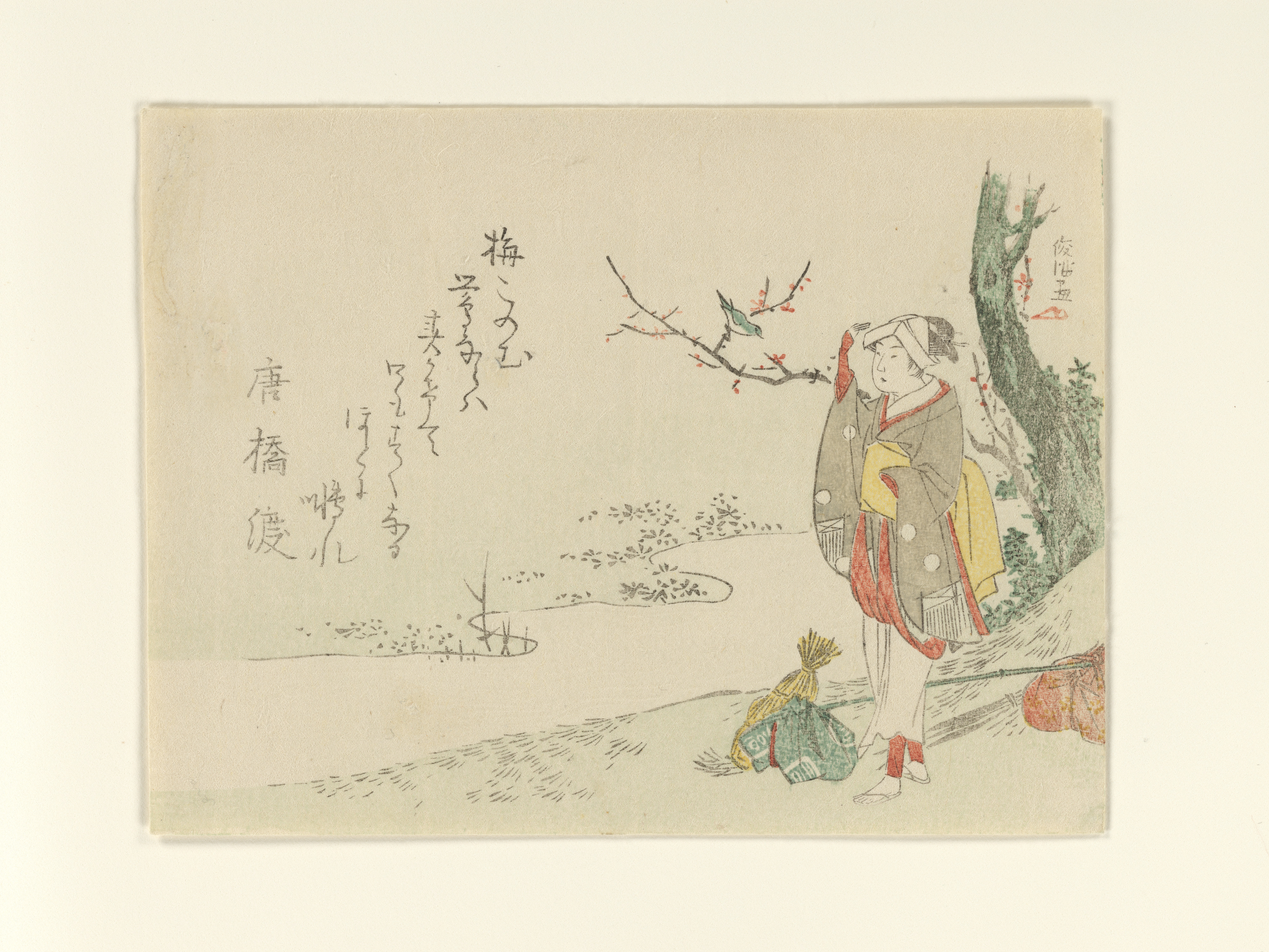
Traveling Woman Pauses to Listen to a Warbler
1797
Woodblock print (surimono); ink and color on paper

Woman and two boys gathering abalone, from the series "The Tosa Diary (Tosa nikki)"
1810s
Color woodblock print; shikishiban, surimono
More Winter Prints
Frequently Asked Questions
Snowy Landscape was created by Kubo Shunman (窪俊満) in 19th century.
Snowy Landscape depicts winter.