
Righteousness (Gi), from the series "Five Designs for the Katsushika Poetry Circle (Katsushika goban)"
by Kubo Shunman
- Date:
- early 1810s
- Medium:
- Color woodblock print; shikishiban, surimono
- Source:
- Art Institute of Chicago
Description
A single woman with an elaborate coiffure secured by numerous long pins and combs bends forward in three-quarter view, her voluminous outer robe pooling around her in loose folds. The robe combines a floral-patterned black ground, a checked panel, and a red-and-white patterned lining, worn over an orange under-kimono, all rendered in muted black, white, orange, and tan tones against a plain cream background. Columns of Japanese text and a red seal fill the upper right, consistent with this 1810 surimono by Kubo Shunman, "Righteousness (Gi)" from the "Five Designs for the Katsushika Poetry Circle."
More Prints by Kubo Shunman

Soga no Goro, Oiso no Tora, and Kewaizaka no Shosho
1809
Color woodblock print; surimono
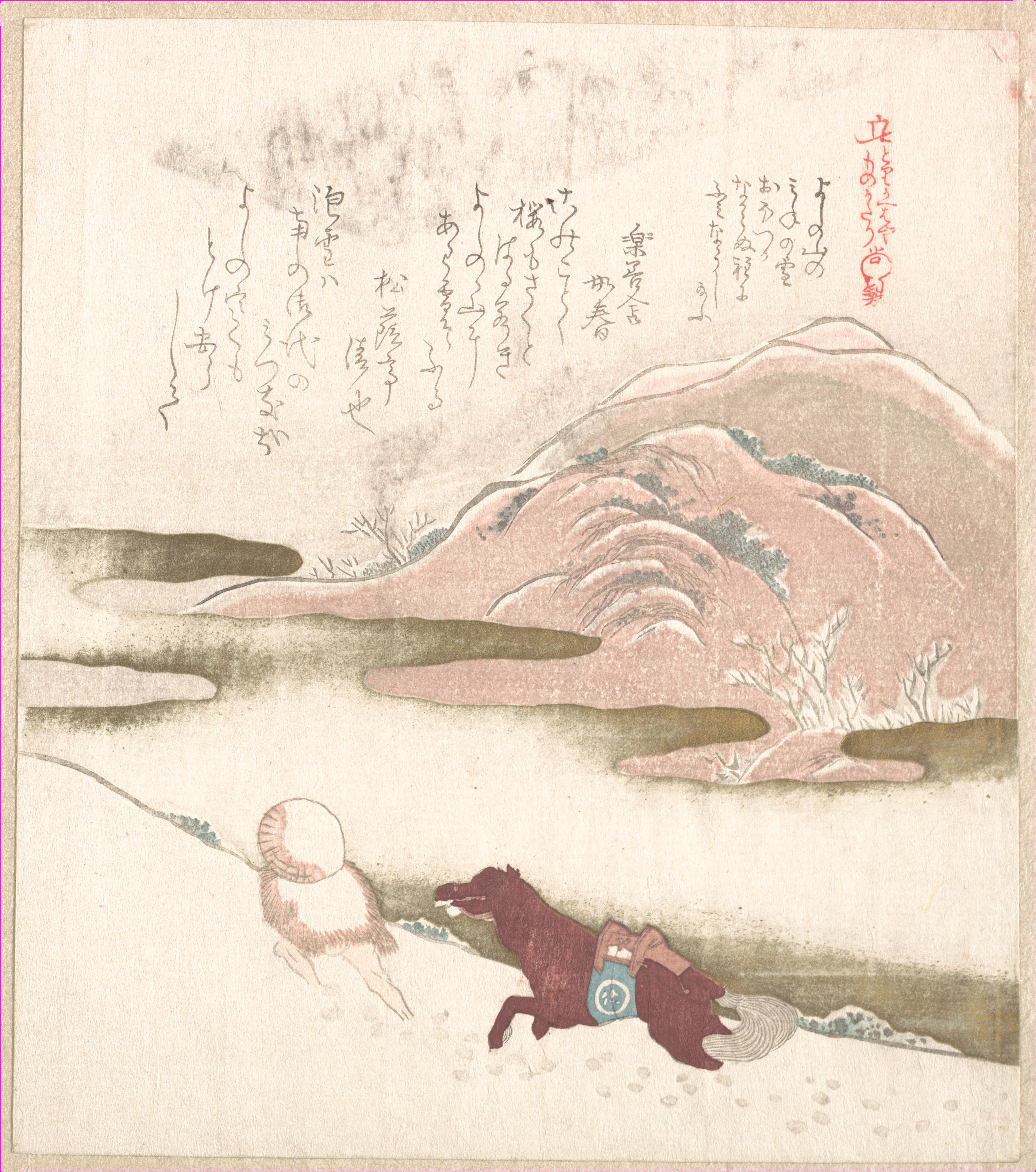
Snowy Landscape
19th century
Woodblock print (surimono); ink and color on paper
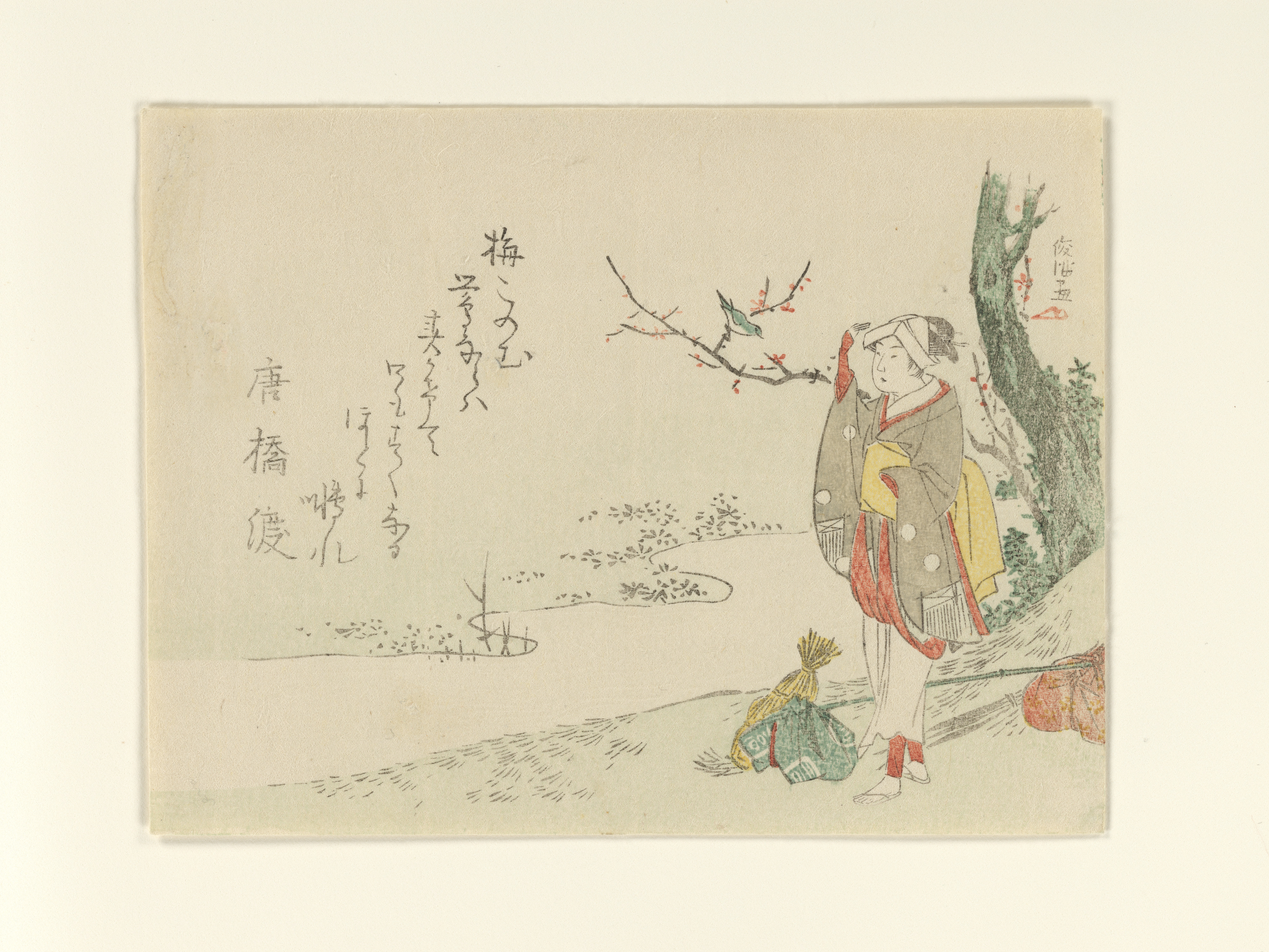
Traveling Woman Pauses to Listen to a Warbler
1797
Woodblock print (surimono); ink and color on paper

Woman and two boys gathering abalone, from the series "The Tosa Diary (Tosa nikki)"
1810s
Color woodblock print; shikishiban, surimono
Frequently Asked Questions
Righteousness (Gi), from the series "Five Designs for the Katsushika Poetry Circle (Katsushika goban)" was created by Kubo Shunman (窪俊満) in early 1810s.