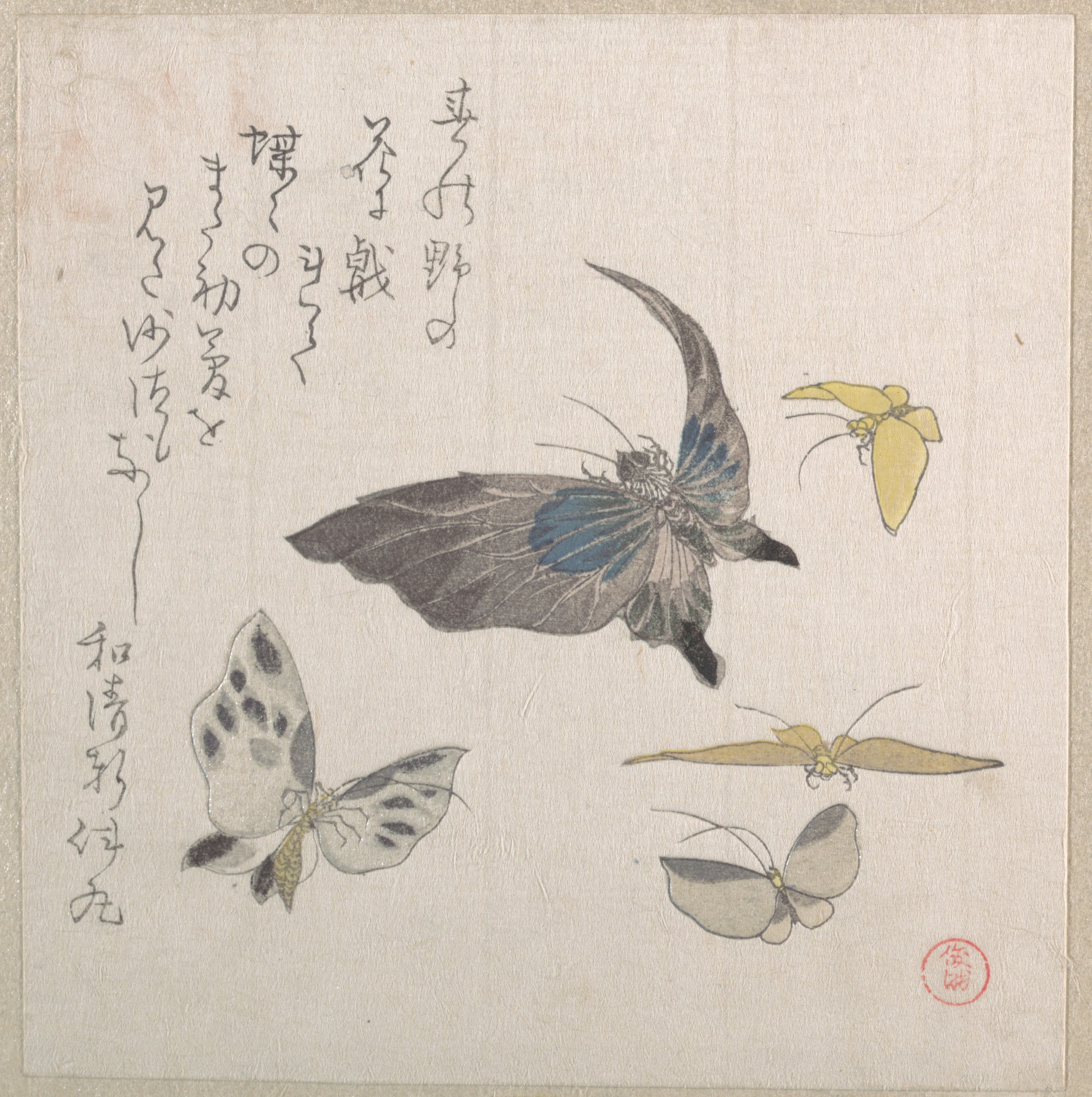
Butterflies
by Kubo Shunman
- Date:
- 19th century
- Medium:
- Part of an album of woodblock prints (surimono); ink and color on paper
- Source:
- Metropolitan Museum of Art
Description
Five butterflies of varying size are scattered across a plain cream-colored paper ground, with no landscape or setting depicted. The largest, at center, has elongated, curving dark gray-brown wings marked with patches of teal blue and pale beige; the others are smaller, in mustard yellow, pale gray with dark spots, and solid gray-mauve tones, each shown with slender curled antennae. Columns of cursive Japanese script occupy the upper left, with a small red seal in the lower right; this is a print from an album of surimono (woodblock prints with ink and color on paper), titled Butterflies, by Kubo Shunman, 1800.
More Prints by Kubo Shunman

Righteousness (Gi), from the series "Five Designs for the Katsushika Poetry Circle (Katsushika goban)"
early 1810s
Color woodblock print; shikishiban, surimono

Soga no Goro, Oiso no Tora, and Kewaizaka no Shosho
1809
Color woodblock print; surimono
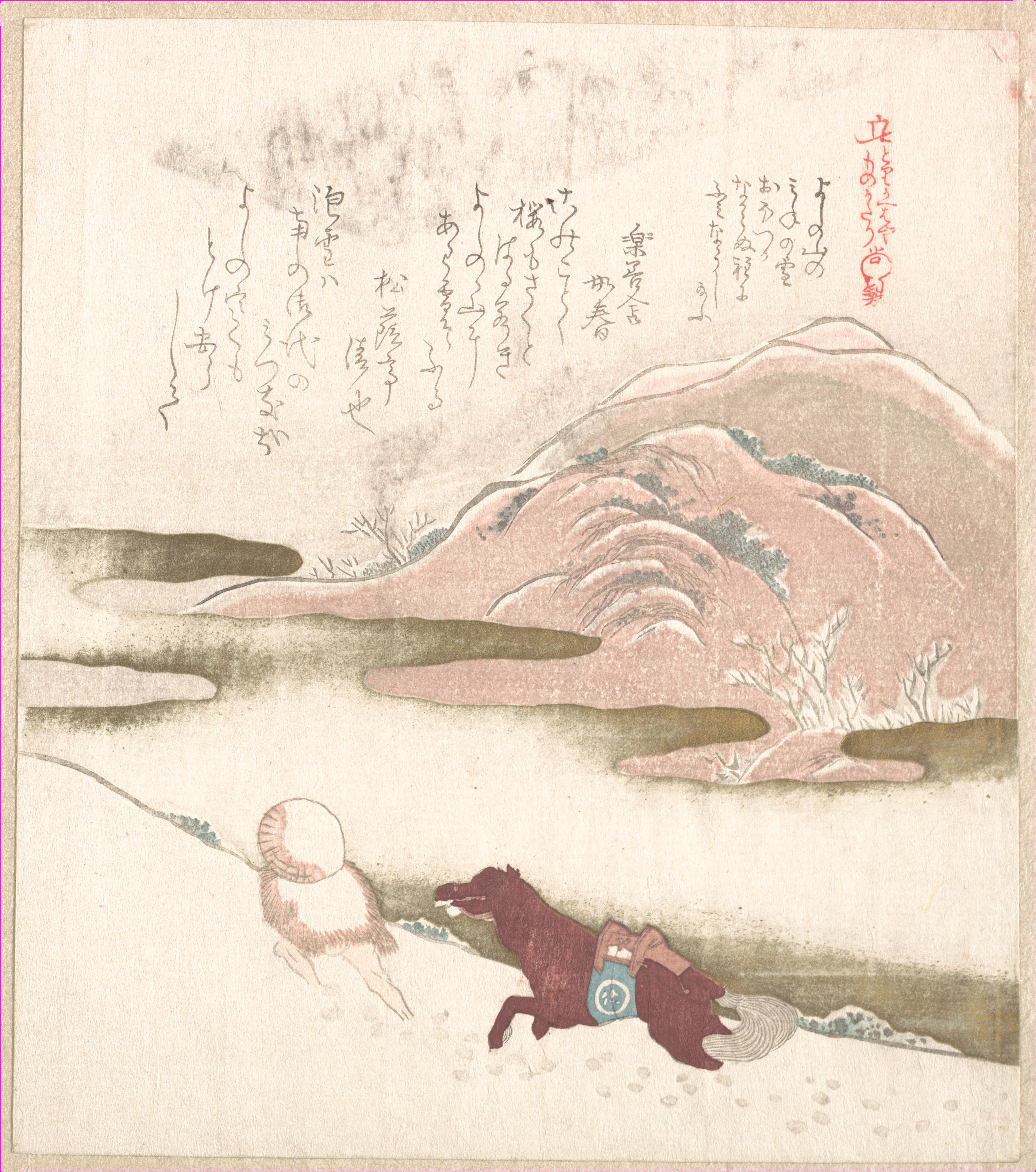
Snowy Landscape
19th century
Woodblock print (surimono); ink and color on paper
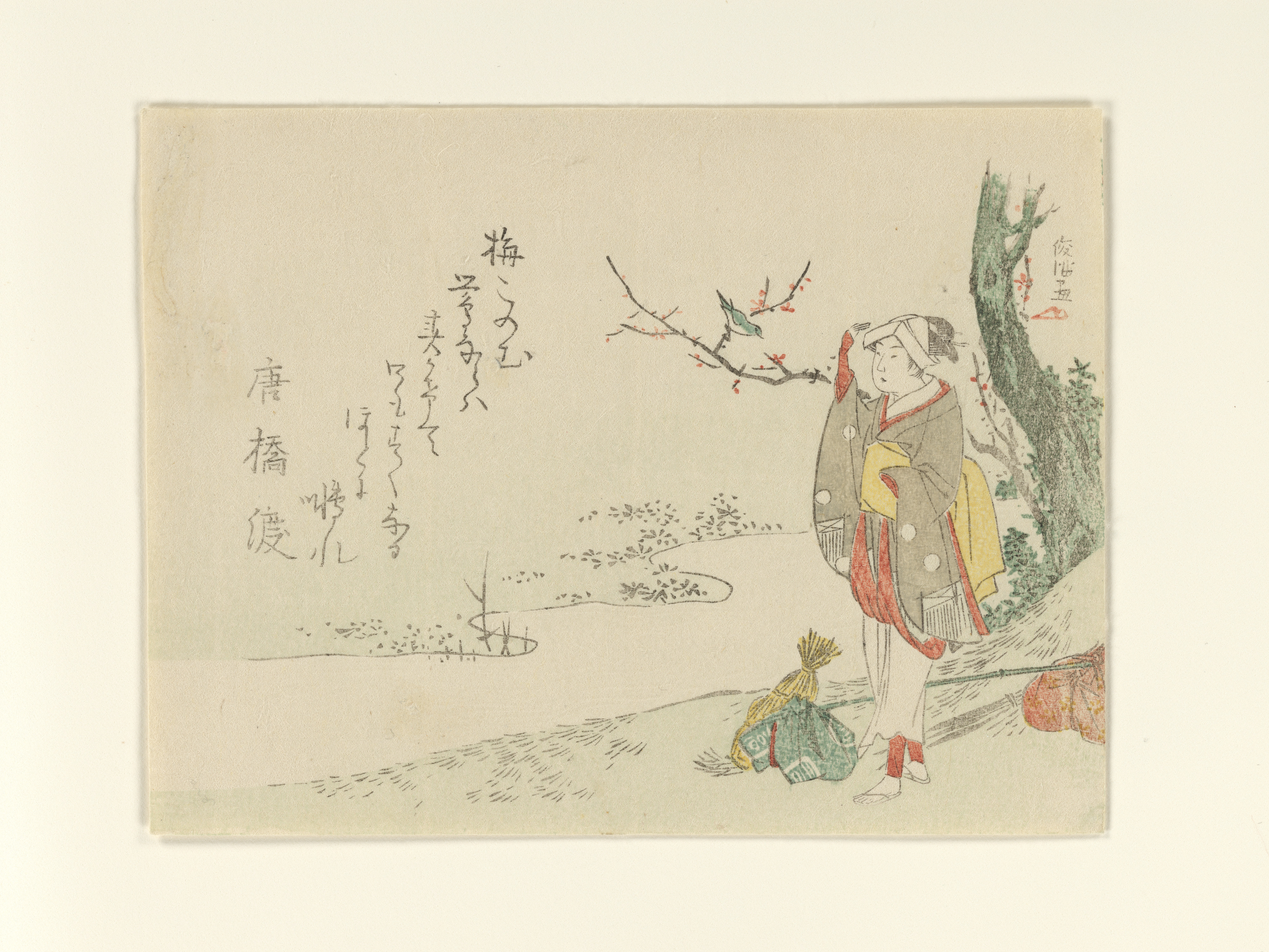
Traveling Woman Pauses to Listen to a Warbler
1797
Woodblock print (surimono); ink and color on paper
Frequently Asked Questions
Butterflies was created by Kubo Shunman (窪俊満) in 19th century.