
Coin Pouch and Potted Adonis
by Kubo Shunman
- Date:
- c. 1802
- Medium:
- Color woodblock print; shikishiban, surimono
- Source:
- Art Institute of Chicago
Description
Coin Pouch and Potted Adonis, in the shikishiban surimono format and dated to around 1802, is held by the Art Institute of Chicago and exemplifies the most distinctive subgenre of Shunman's late work: the still-life surimono, in which a small group of ordinary objects is arranged with the quiet attention of a Dutch still life and the metaphorical richness of a haiku. Here a coin pouch (kinchaku) is paired with a potted Adonis amurensis - fukujuso in Japanese, literally "plant of happiness and longevity," a winter-blooming yellow flower traditionally associated with the New Year and with prosperity. The juxtaposition is a meditation on wealth, both material and spiritual: the pouch holds coins, the plant blooms in midwinter, and together they enact a kyoka wit about the kinds of riches that count. Shunman renders the objects with extraordinary care, the pouch's textile pattern probably emphasized through blind embossing, the plant's yellow petals printed in mineral pigment against a soft neutral ground. The composition is spare almost to the point of austerity, with substantial unprinted white space framing the central arrangement and leaving room for the kyoka inscriptions. This is exactly the kind of small, intimate, formally restrained image that defined the surimono tradition at its height, and Shunman's still-life surimono - this print is a representative example - established a visual vocabulary that Hokusai and his pupils would later extend. The Art Institute of Chicago's holding is part of one of the world's great surimono collections.
More Prints by Kubo Shunman

Righteousness (Gi), from the series "Five Designs for the Katsushika Poetry Circle (Katsushika goban)"
early 1810s
Color woodblock print; shikishiban, surimono

Soga no Goro, Oiso no Tora, and Kewaizaka no Shosho
1809
Color woodblock print; surimono
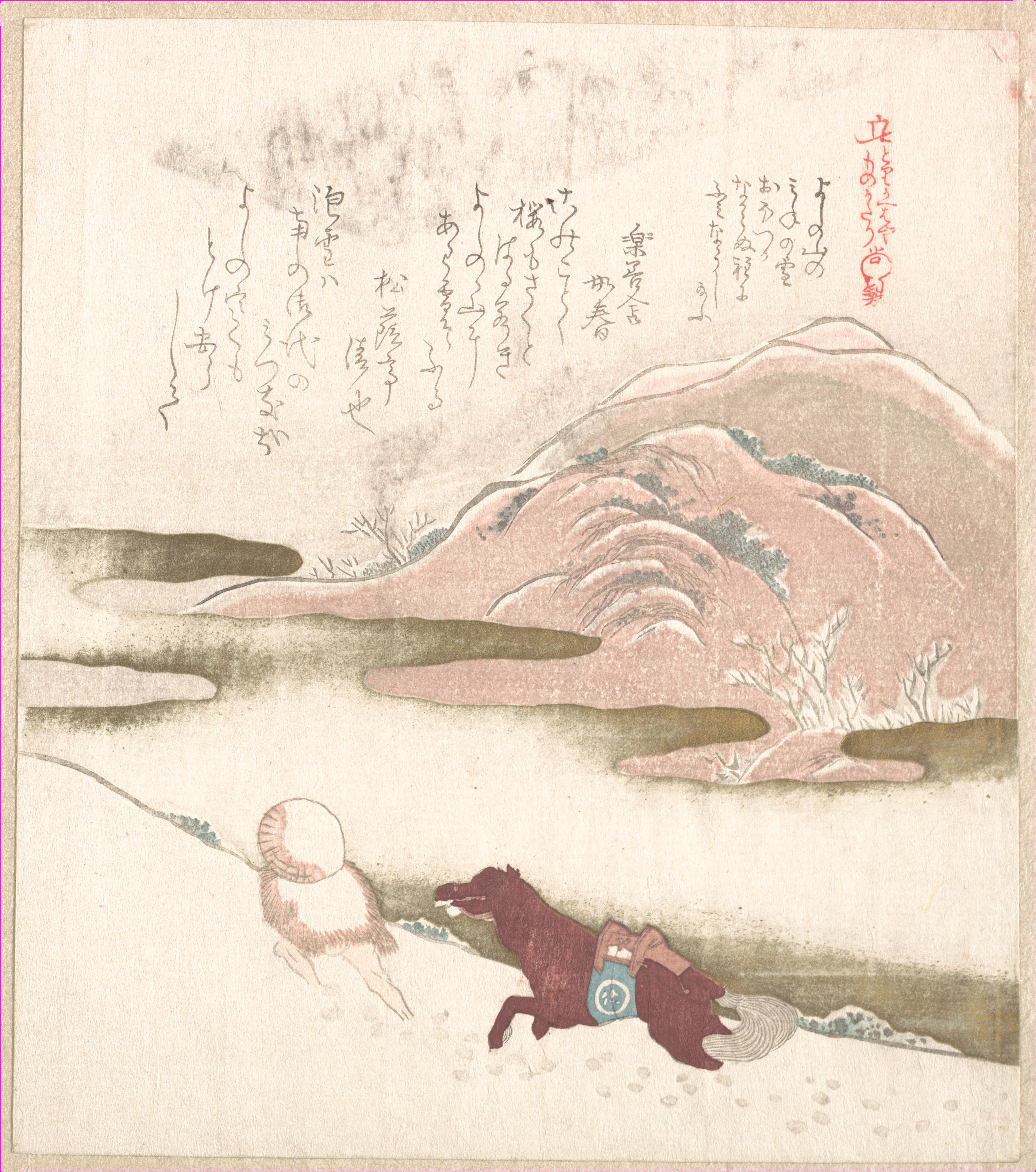
Snowy Landscape
19th century
Woodblock print (surimono); ink and color on paper
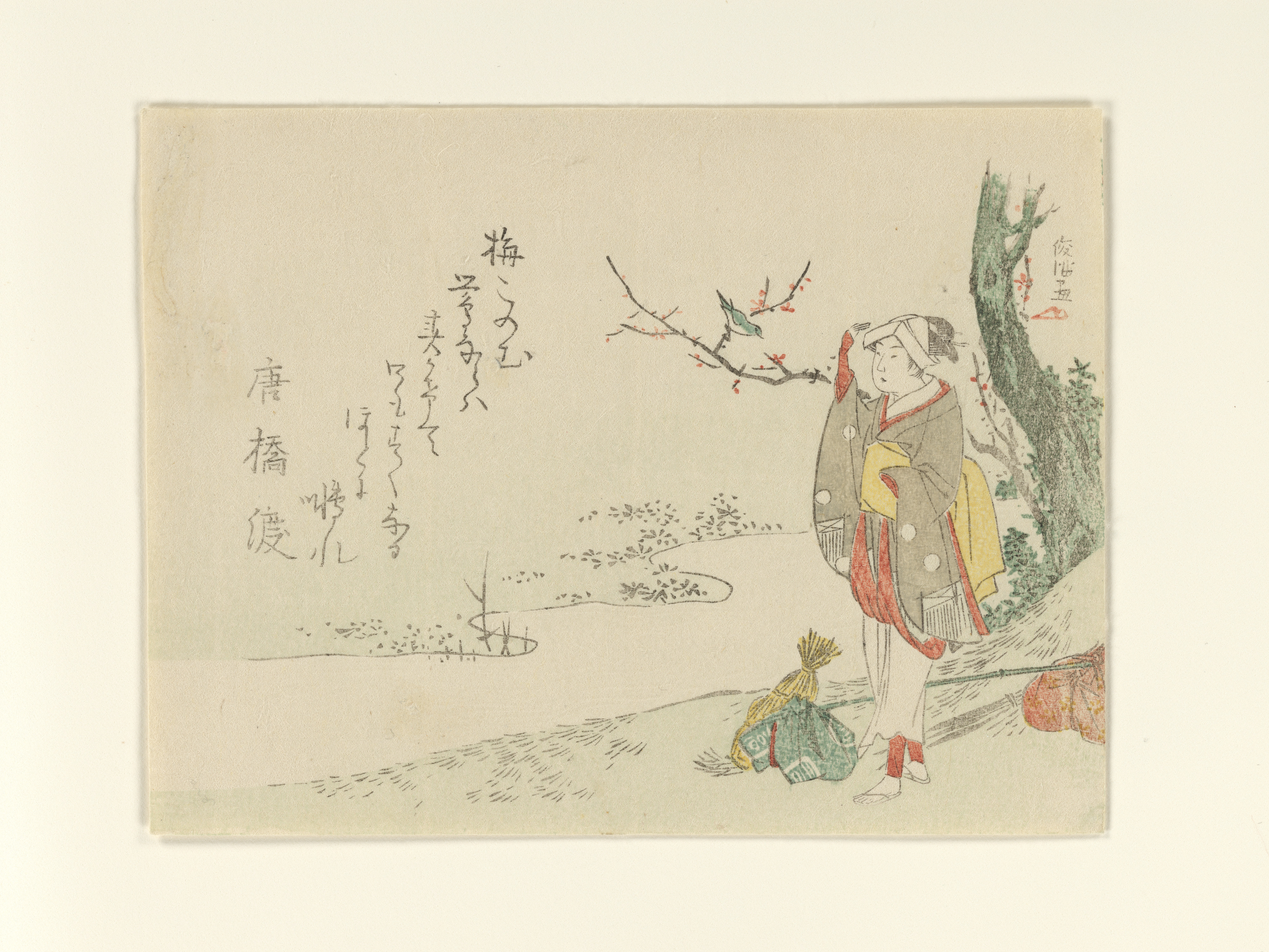
Traveling Woman Pauses to Listen to a Warbler
1797
Woodblock print (surimono); ink and color on paper
Frequently Asked Questions
Coin Pouch and Potted Adonis was created by Kubo Shunman (窪俊満) in c. 1802.