
Court Carriage
by Kubo Shunman
- Date:
- 19th century
- Medium:
- Woodblock print (surimono); ink and color on paper
- Source:
- Metropolitan Museum of Art
Description
Court Carriage, dated to around 1800 and held by the Metropolitan Museum of Art, returns Kubo Shunman to the world of classical Japanese imagery, specifically the ox-drawn carriages used by the Heian and medieval aristocracy. Such vehicles, with their lacquered panels, woven blinds, and ceremonial fittings, were potent visual emblems of court life and appear frequently in Japanese painting and prints as shorthand for the elegance, decorum, and emotional intensity of the classical literary tradition. Shunman, working at the height of his career as an Edo ukiyo-e designer for kyoka circles, treats the carriage as a single object of contemplation, isolated on the sheet so that its details, the curve of the wheel, the patterned fabric of the blinds, the hint of an interior, can be examined in turn. This kind of object-centered surimono was central to his kyoka-e practice: kyoka poets could spin allusions to the Tale of Genji or to courtly romance from such a motif, layering classical reference onto contemporary verse. The print's likely subtle gradations and refined registration are consistent with the high standards of luxury surimono in the period. For modern viewers, Court Carriage demonstrates how Kubo Shunman could compress an entire literary universe, the rituals, journeys, and assignations of the Heian aristocracy, into a single, almost silent picture, leaving the kyoka of the inscribed verses to do the rest of the cultural work.
More Prints by Kubo Shunman

Righteousness (Gi), from the series "Five Designs for the Katsushika Poetry Circle (Katsushika goban)"
early 1810s
Color woodblock print; shikishiban, surimono

Soga no Goro, Oiso no Tora, and Kewaizaka no Shosho
1809
Color woodblock print; surimono
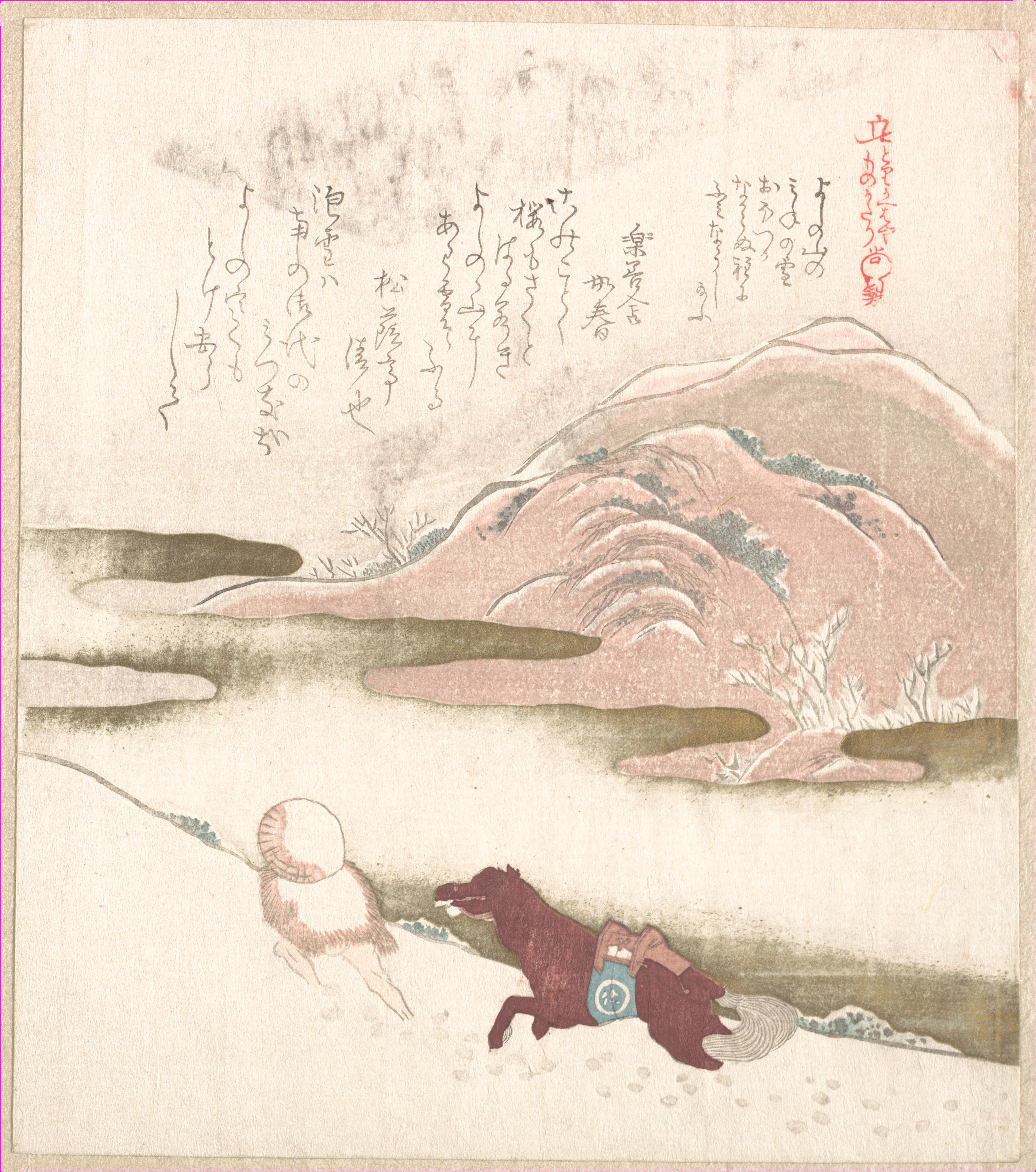
Snowy Landscape
19th century
Woodblock print (surimono); ink and color on paper
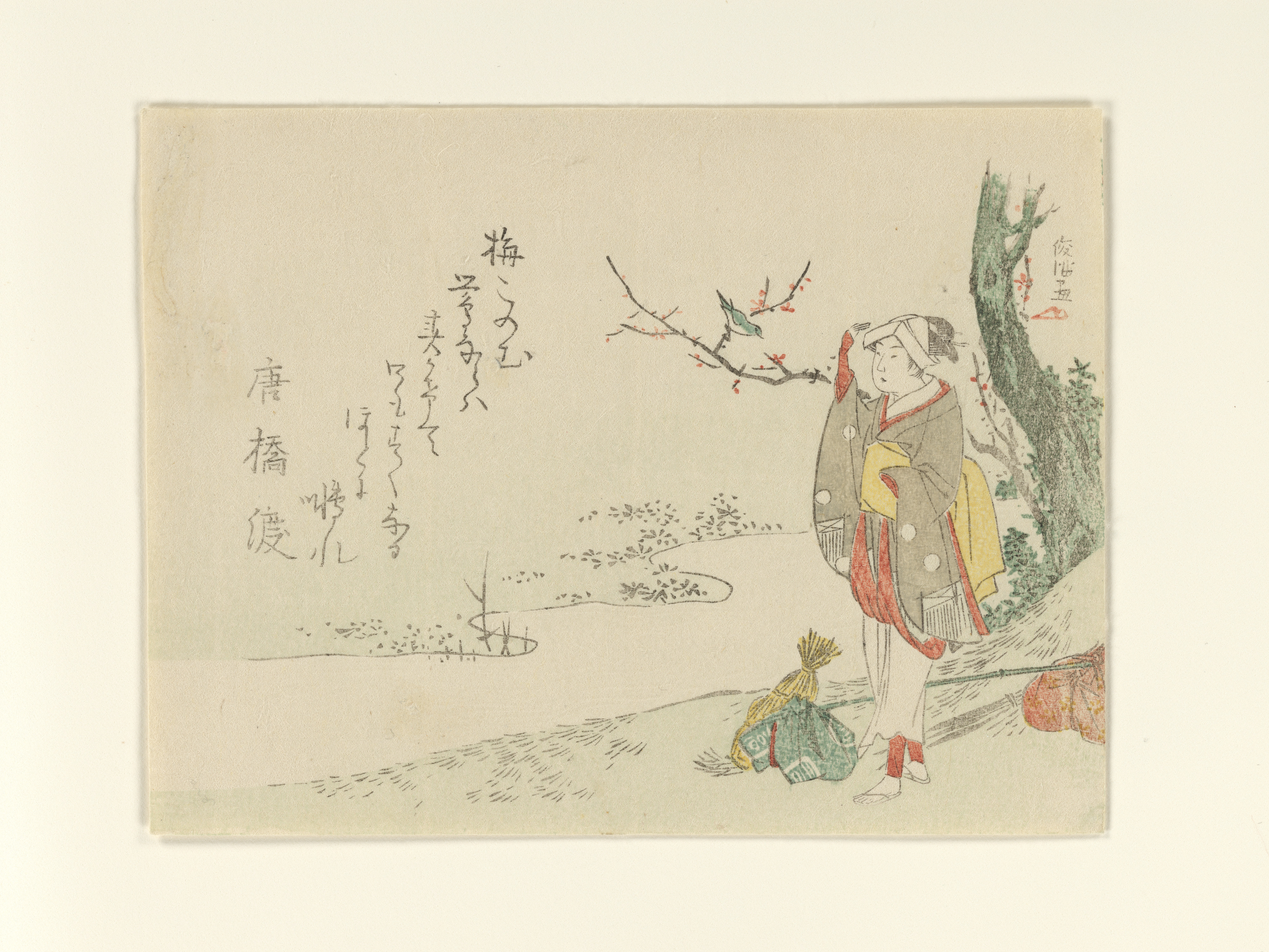
Traveling Woman Pauses to Listen to a Warbler
1797
Woodblock print (surimono); ink and color on paper
Frequently Asked Questions
Court Carriage was created by Kubo Shunman (窪俊満) in 19th century.