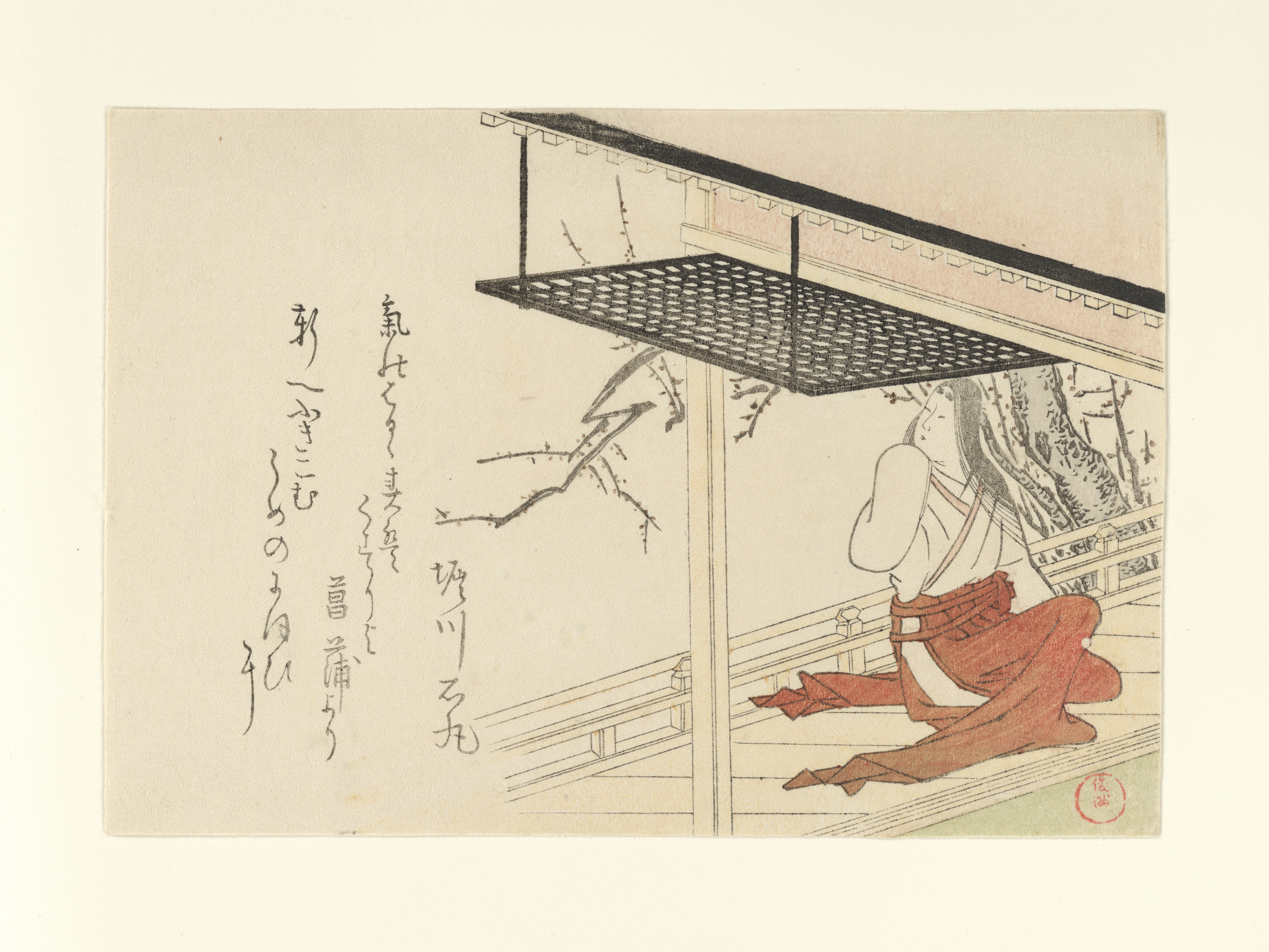
Court Lady on Veranda
by Kubo Shunman
- Date:
- 1796
- Medium:
- Woodblock print (surimono); ink and color on paper
- Source:
- Metropolitan Museum of Art
Description
Court Lady on Veranda, dated to about 1796 and held by the Metropolitan Museum of Art, illustrates Kubo Shunman's interest in subjects drawn from the courtly past as filtered through the urbane sensibility of the late Edo ukiyo-e tradition. The picture frames a high-born woman on a veranda, a setting saturated with classical Japanese literary associations: scenes from the Tale of Genji, from the Tales of Ise, and from the broader stock of Heian and medieval imagery routinely invoked in Edo prints and surimono. Shunman handles the figure with the controlled, calligraphic line and quiet palette that marked his mature work, allowing the architectural framing of the veranda to play a structural role in the composition without overwhelming it. Such courtly motifs were especially congenial to kyoka circles, whose poems often borrowed classical phrasing and imagery to set up contemporary jokes. Even when, as here, the image may have circulated outside the strict surimono format, its visual idiom remains close to the kyoka-e mode Shunman pioneered. The work also reflects the high standards of late eighteenth-century Edo ukiyo-e printing, with careful registration and a measured use of color. For modern collectors approaching Kubo Shunman, Court Lady on Veranda is a clear example of how his fascination with refinement, restraint, and literary memory translated into a print idiom that remains recognizably his own.
More Prints by Kubo Shunman

Righteousness (Gi), from the series "Five Designs for the Katsushika Poetry Circle (Katsushika goban)"
early 1810s
Color woodblock print; shikishiban, surimono

Soga no Goro, Oiso no Tora, and Kewaizaka no Shosho
1809
Color woodblock print; surimono
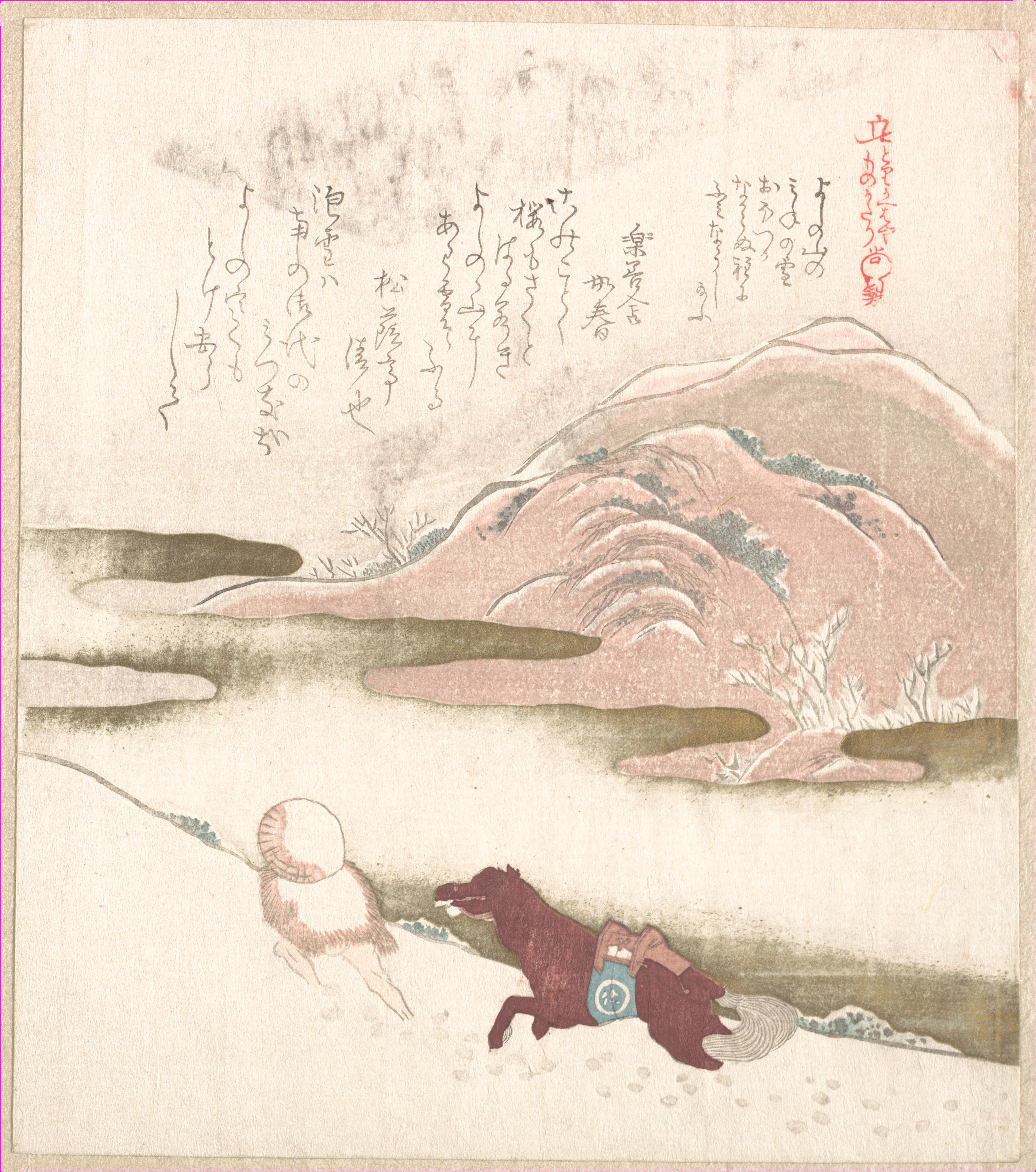
Snowy Landscape
19th century
Woodblock print (surimono); ink and color on paper
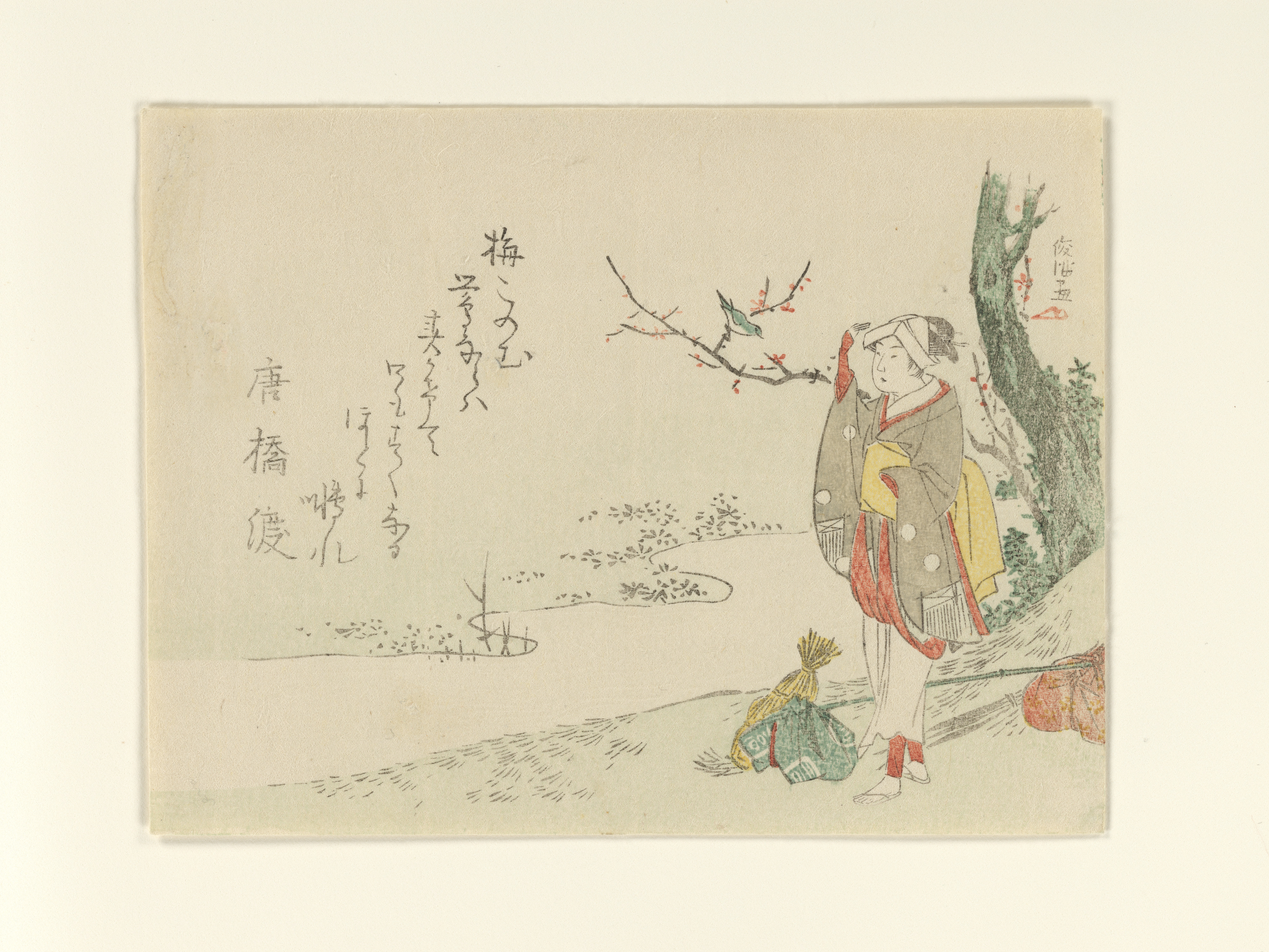
Traveling Woman Pauses to Listen to a Warbler
1797
Woodblock print (surimono); ink and color on paper
Frequently Asked Questions
Court Lady on Veranda was created by Kubo Shunman (窪俊満) in 1796.