
Courtesan Dressed in an Elaborate Gown Embroidered with Emblems of Good Luck
by Kubo Shunman
- Date:
- ca. 1800
- Medium:
- Woodblock print (surimono); ink and color on paper
- Source:
- Metropolitan Museum of Art
Description
Courtesan Dressed in an Elaborate Gown Embroidered with Emblems of Good Luck, dated to around 1790 and held by the Metropolitan Museum of Art, dates from an earlier moment in Kubo Shunman's career, before his work for kyoka circles fully crystallized into the spare surimono idiom of his later years. Even at this stage, however, his characteristic concern with line, surface, and pattern is visible. The picture centers on a high-ranking courtesan whose robe is densely embroidered with emblems of fortune, the cranes, pines, tortoises, treasure motifs, and other auspicious symbols that lent such garments their celebratory presence in the Yoshiwara quarter. Shunman, a key Edo ukiyo-e designer working alongside contemporaries who treated similar subjects more emphatically, approaches the figure as a controlled, almost iconic presence, articulated through careful drawing and precise reproduction of textile detail rather than through bold dramatic effect. The print belongs to the broader bijinga, or pictures of beautiful women, that dominated late eighteenth-century Edo ukiyo-e, but its restraint and its attention to symbolic pattern anticipate the more conceptually loaded surimono and kyoka-e he would produce in the early nineteenth century. For collectors and students of Kubo Shunman, the work is valuable both as evidence of his early engagement with the figural traditions of the school and as a reminder that the symbolic vocabulary he later distilled into compact surimono compositions was already shaping his approach to clothing, ornament, and the gendered iconography of the Yoshiwara.
More Prints by Kubo Shunman

Righteousness (Gi), from the series "Five Designs for the Katsushika Poetry Circle (Katsushika goban)"
early 1810s
Color woodblock print; shikishiban, surimono

Soga no Goro, Oiso no Tora, and Kewaizaka no Shosho
1809
Color woodblock print; surimono
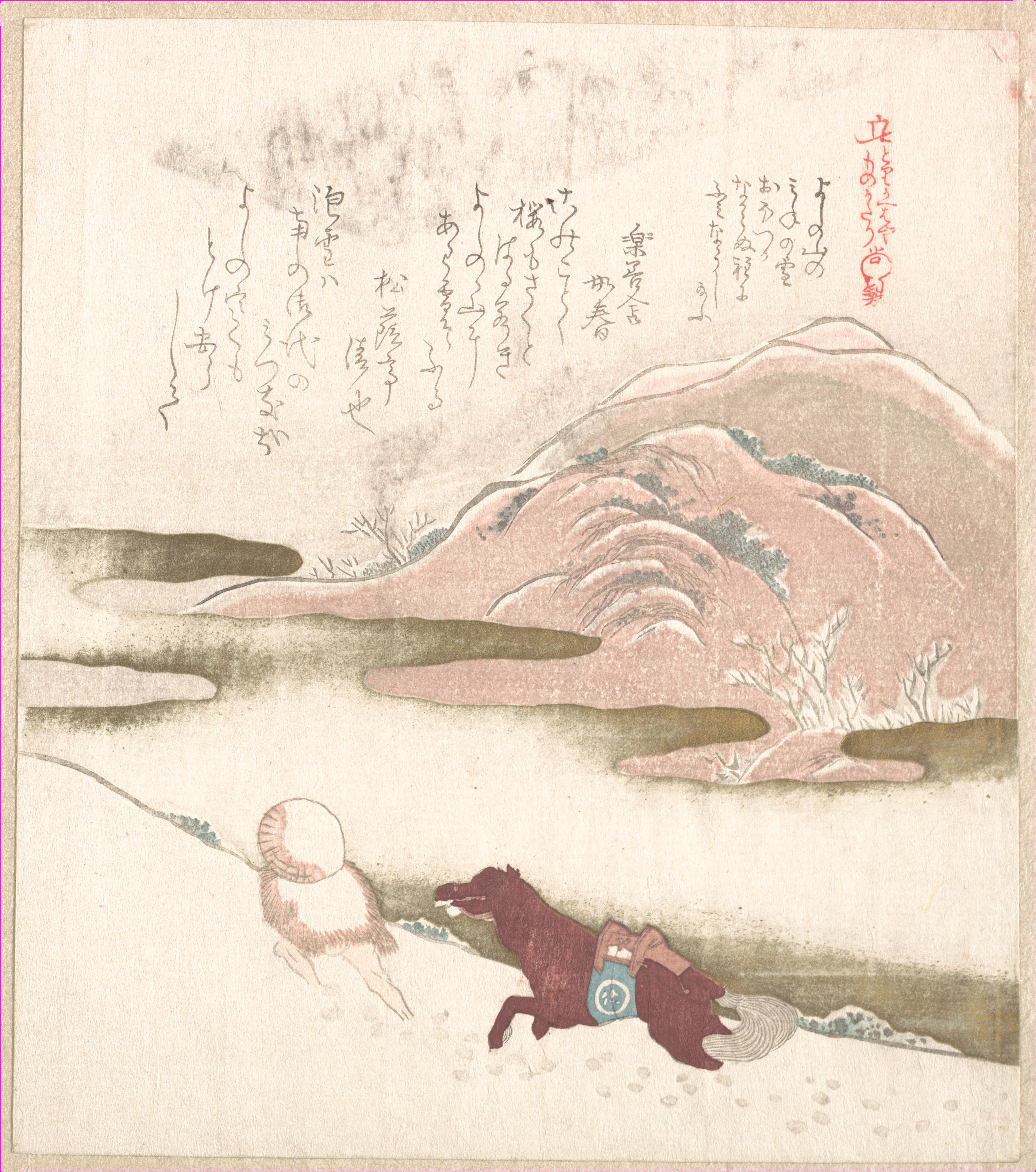
Snowy Landscape
19th century
Woodblock print (surimono); ink and color on paper
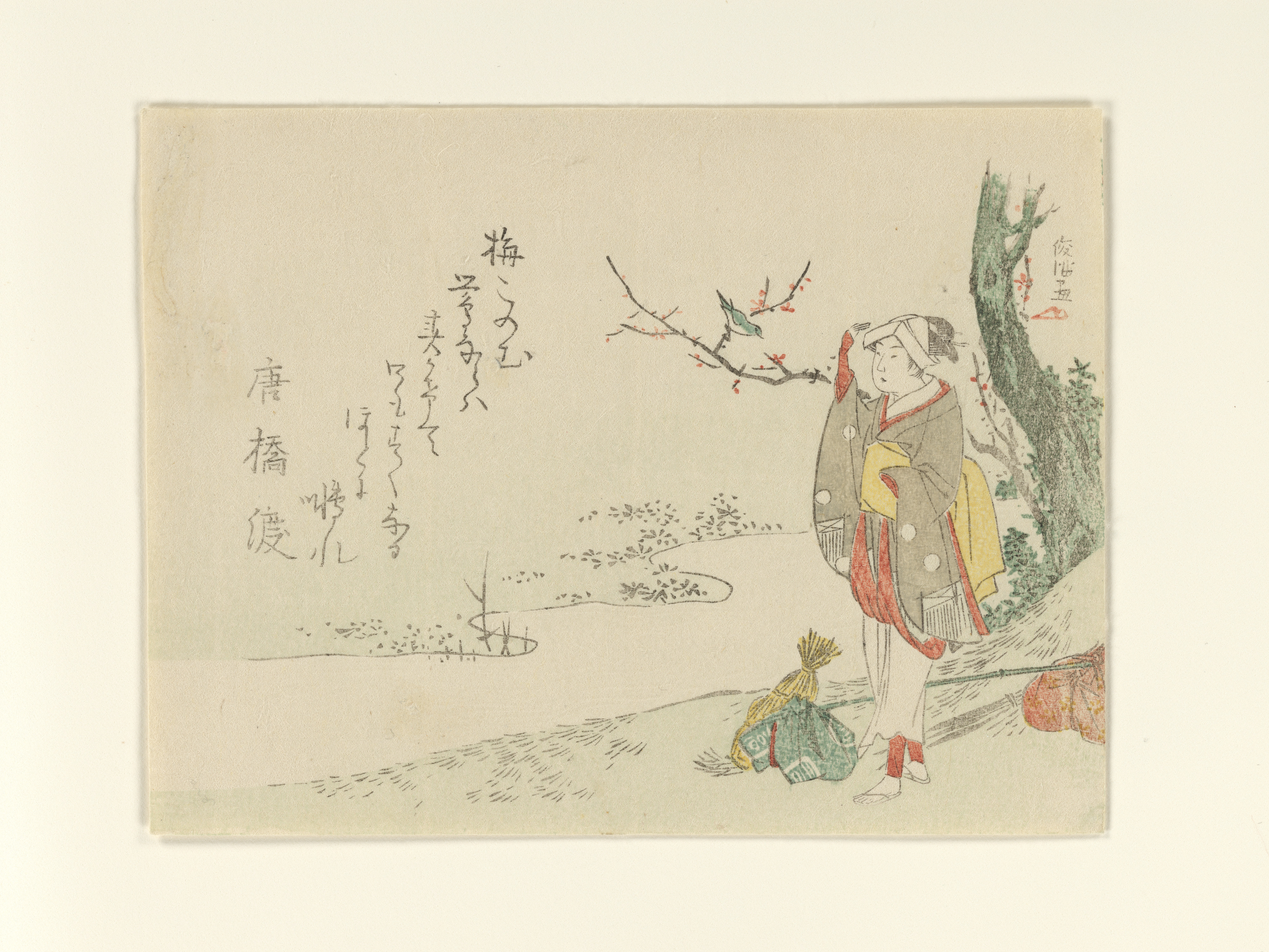
Traveling Woman Pauses to Listen to a Warbler
1797
Woodblock print (surimono); ink and color on paper
Frequently Asked Questions
Courtesan Dressed in an Elaborate Gown Embroidered with Emblems of Good Luck was created by Kubo Shunman (窪俊満) in ca. 1800.