
Five Butterflies (Facsimilie)
by Kubo Shunman
- Date:
- Meiji Period (1868-1912)
- Medium:
- Color woodblock print
- Source:
- Art Institute of Chicago
Description
Five Butterflies (Facsimilie) is a delicate study by Kubo Shunman, an Edo ukiyo-e artist celebrated for his refined surimono and his close ties to the kyoka poetry circles that defined cultivated taste in early nineteenth-century Edo. Shunman trained in the Katsukawa school but quickly developed a personal idiom marked by muted palettes, precise drawing, and an unusual sensitivity to negative space. This composition, which arranges five butterflies across the sheet in carefully spaced flight paths, exemplifies the kind of subject Shunman favored for surimono: small, poetic, and visually quiet, more concerned with seasonal feeling than with narrative drama. The original design likely served as a kyoka-e, the genre of privately commissioned prints that paired pictures with thirty-one syllable comic verse. Butterflies in such contexts often carried multiple readings at once: emblems of transience, of summer, of the soul, or of lovers passing between flowers. As a Western facsimile bearing a much later date than Shunman's lifetime, the present sheet preserves a record of his draftsmanship as it was understood by later collectors and museums. Housed today in the Art Institute of Chicago, the work allows close study of Shunman's economical line and his characteristic restraint with color, qualities that distinguished his contribution to Edo ukiyo-e from the louder commercial production of his contemporaries. For collectors approaching Kubo Shunman, this image offers a clear introduction to the visual mood that runs throughout his surimono output and to the broader sensibility of the kyoka world he served as both designer and poet.
More Prints by Kubo Shunman

Righteousness (Gi), from the series "Five Designs for the Katsushika Poetry Circle (Katsushika goban)"
early 1810s
Color woodblock print; shikishiban, surimono

Soga no Goro, Oiso no Tora, and Kewaizaka no Shosho
1809
Color woodblock print; surimono
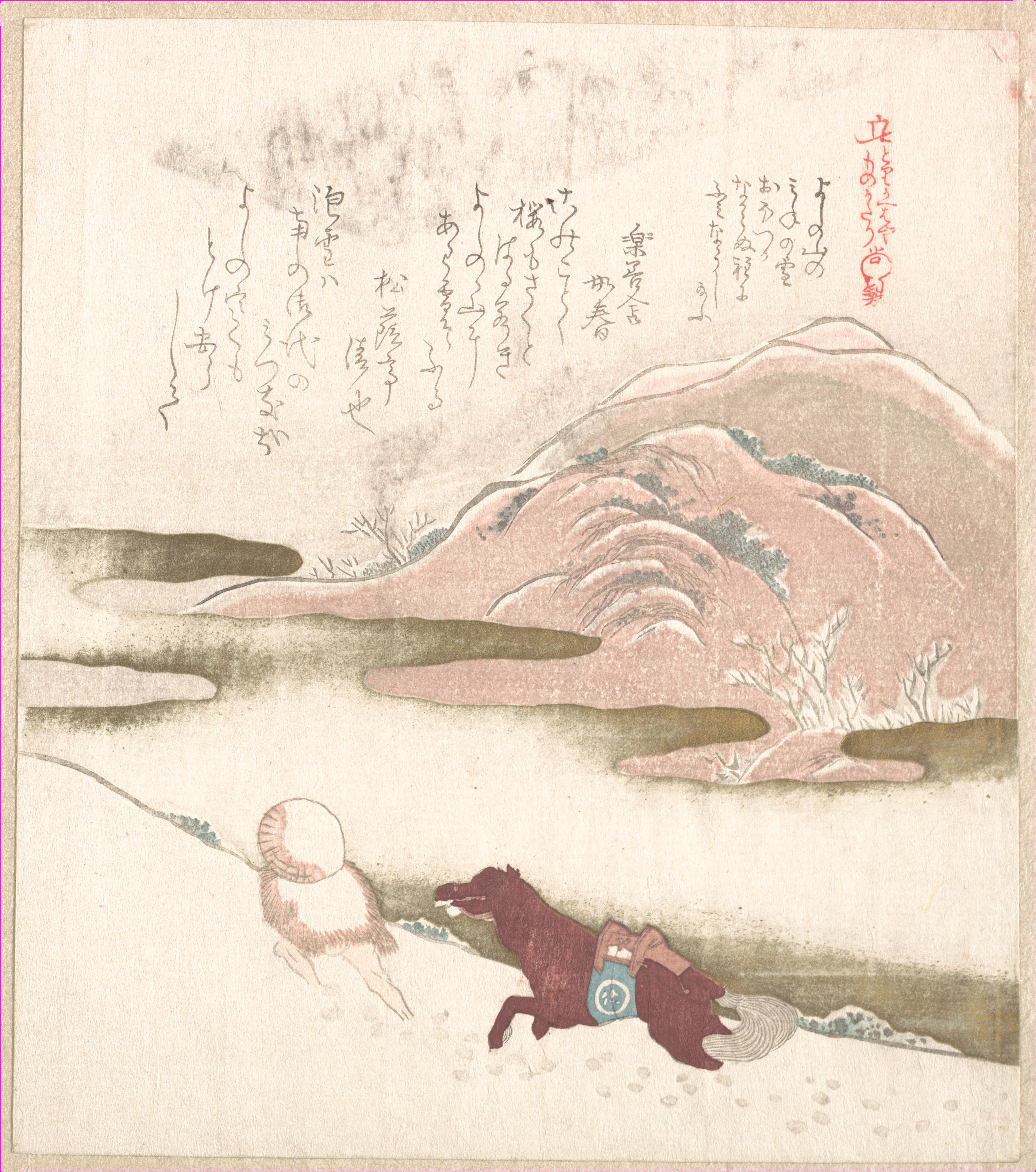
Snowy Landscape
19th century
Woodblock print (surimono); ink and color on paper
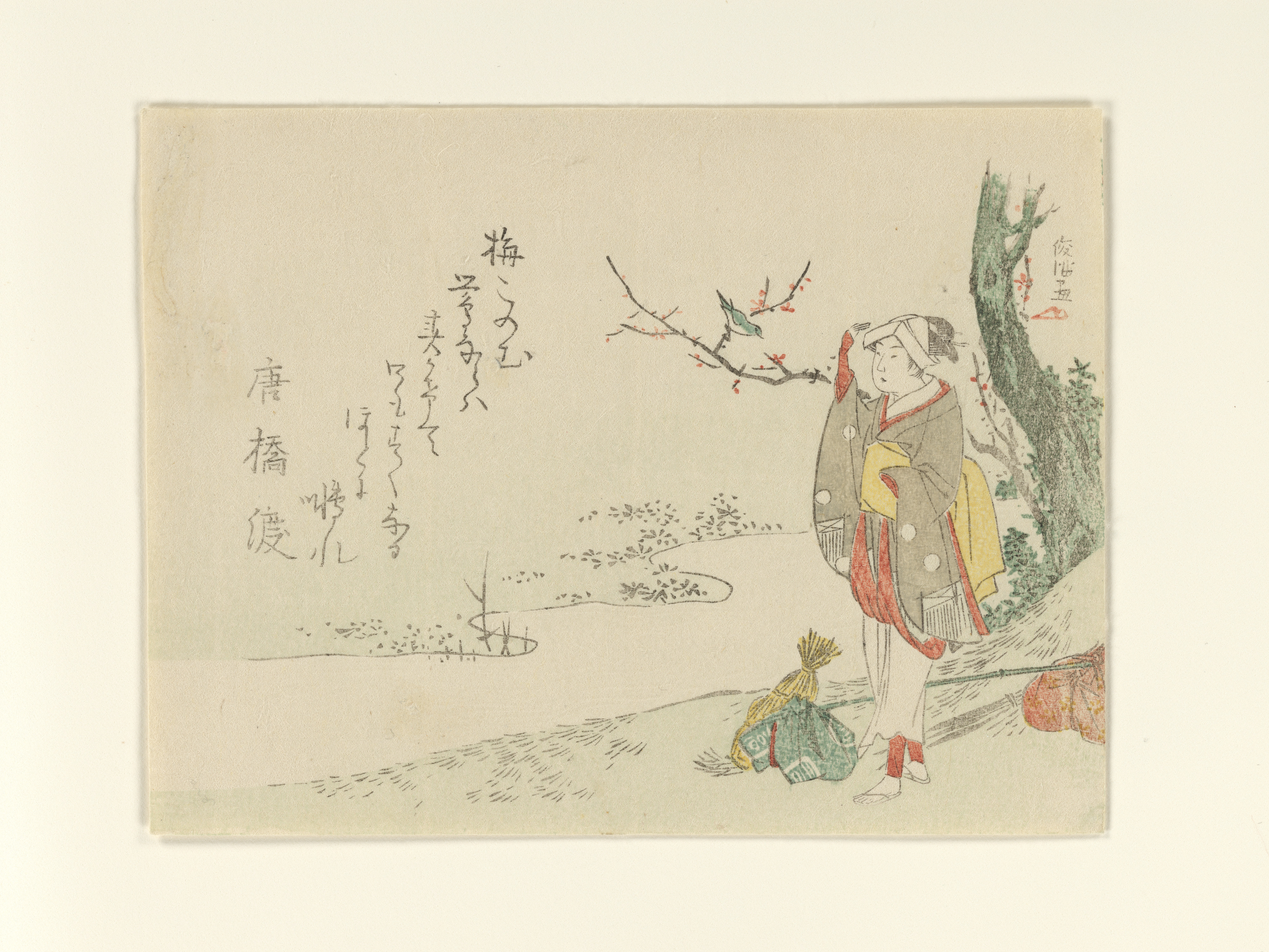
Traveling Woman Pauses to Listen to a Warbler
1797
Woodblock print (surimono); ink and color on paper
Frequently Asked Questions
Five Butterflies (Facsimilie) was created by Kubo Shunman (窪俊満) in Meiji Period (1868-1912).