
Matsukaze and Murasame
by Kubo Shunman
- Date:
- c. 1810
- Medium:
- Color woodblock print; surimono
- Source:
- Art Institute of Chicago
Description
Matsukaze and Murasame, a surimono in the Art Institute of Chicago dated to around 1810, depicts the two sisters who give their names to the Noh play Matsukaze - one of the most beloved works in the Noh repertoire and a favorite source for late-Edo poetic and visual culture. In the play, the ghosts of Matsukaze ("pine wind") and Murasame ("passing shower"), two salt-gathering sisters loved by the courtier Ariwara no Yukihira during his exile at Suma, return to haunt a traveling priest, dancing and grieving for their lost lover before fading into the wind and rain. The story, with its themes of love, exile, ghostly recurrence, and elemental nature, was perfectly suited to kyoka taste, and Matsukaze surimono accordingly proliferated. Shunman's treatment renders the two sisters with the slender elegance characteristic of his bijin-ga inheritance, probably at the dramatic moment of dance or of the brine bucket scene, with the kyoka inscriptions above linking the play to seasonal or autumnal themes. The atmospheric implications - pine wind, passing shower - give the image its emotional register, and Shunman's restrained palette captures the haunted quality without melodrama. The Art Institute of Chicago's preservation of the print testifies to Shunman's fluency with the Noh repertoire as a source for surimono - a fluency that reflected both his own learning and the literary expectations of his patrons.
More Prints by Kubo Shunman

Righteousness (Gi), from the series "Five Designs for the Katsushika Poetry Circle (Katsushika goban)"
early 1810s
Color woodblock print; shikishiban, surimono

Soga no Goro, Oiso no Tora, and Kewaizaka no Shosho
1809
Color woodblock print; surimono
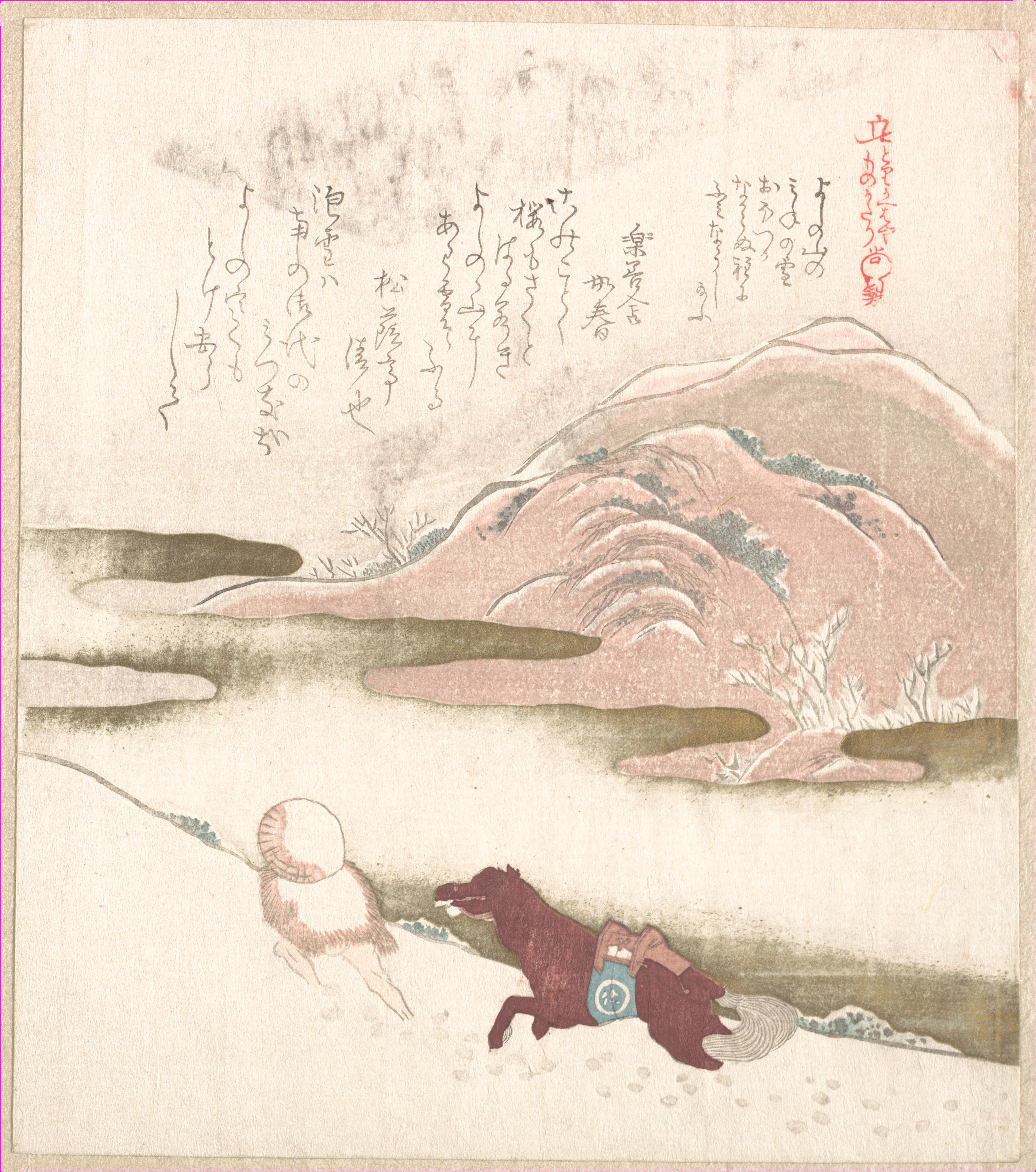
Snowy Landscape
19th century
Woodblock print (surimono); ink and color on paper
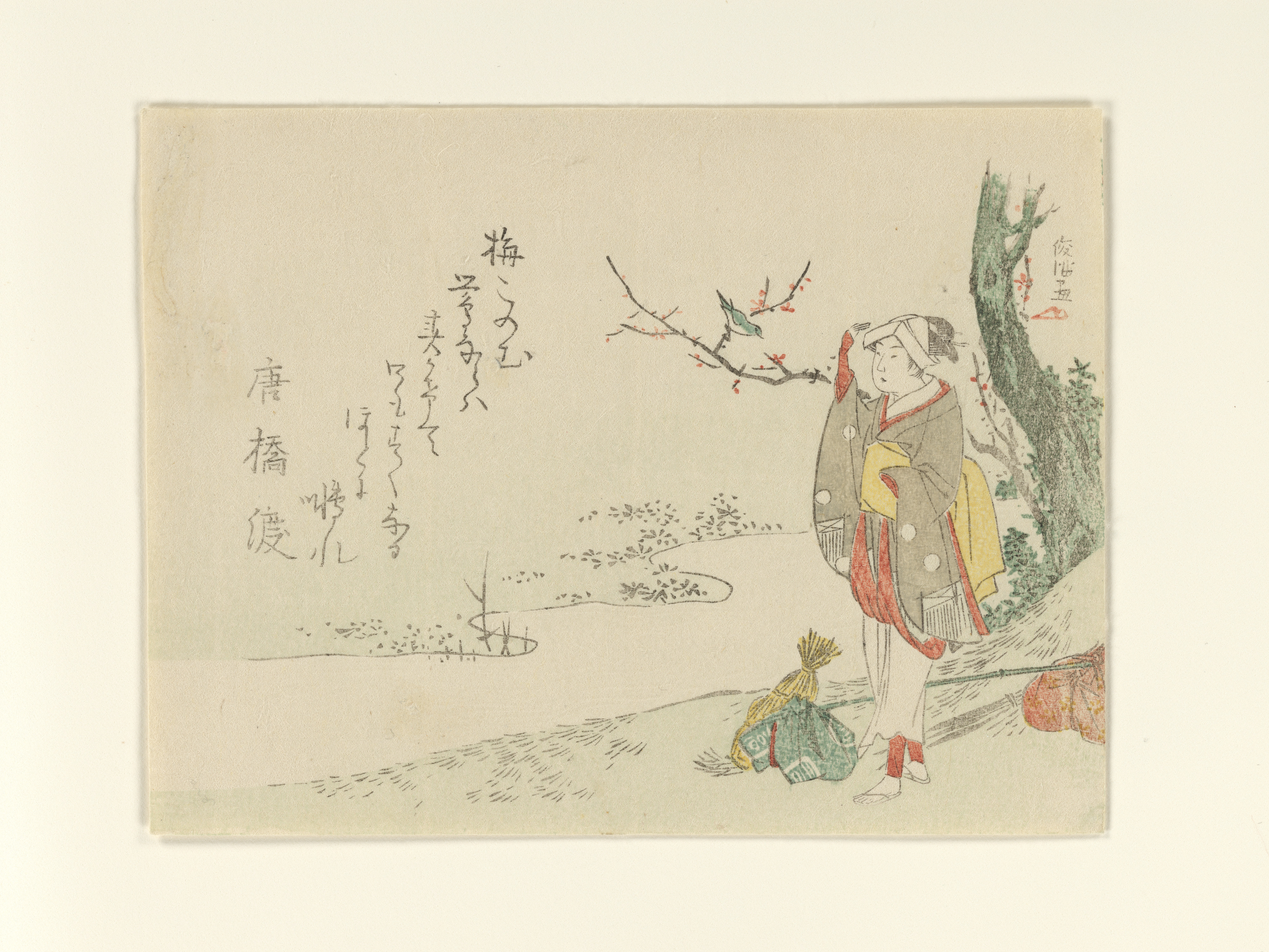
Traveling Woman Pauses to Listen to a Warbler
1797
Woodblock print (surimono); ink and color on paper
Frequently Asked Questions
Matsukaze and Murasame was created by Kubo Shunman (窪俊満) in c. 1810.